UK slashes foreign aid by $6 billion: Pakistan among hardest hit
Synopsis
The UK is cutting foreign aid to its lowest level in decades — below half the 0.7% GNI target it once enshrined in law. Pakistan and Mozambique face the deepest bilateral cuts, even as London frames the retreat as a pivot to private-sector partnerships. For fragile states already absorbing climate shocks and conflict, this donor retrenchment could prove the most consequential development policy shift of the decade.
Key Takeaways
The UK is cutting foreign aid by more than $6 billion , reducing development spending from 0.5% to 0.3% of GNI by 2027 .
Pakistan and Mozambique face the steepest reductions; Yemen , Somalia , and Afghanistan will also see cuts in direct grant funding.
UK aid stood at 0.7% of GNI before the COVID-19 pandemic — the new target is less than half that level.
Foreign Secretary Yvette Cooper cited defence spending priorities and the war in Ukraine as drivers of the reallocation.
Pakistan's overseas diaspora of over 8 million sends approximately $30 billion in remittances annually, providing a partial buffer.
Mozambique, with limited diaspora inflows, is expected to depend more heavily on UN multilateral agencies amid recent flood displacement.
The United Kingdom has announced foreign aid cuts exceeding $6 billion, with Pakistan and Mozambique set to bear the steepest reductions, according to a report by The Borgen Project. The cuts will reduce UK development assistance from 0.5 per cent to 0.3 per cent of gross national income (GNI) by 2027, deepening a decline that began well before the current fiscal squeeze.
Scale of the Cuts
The reductions are concentrated in bilateral aid programmes, which channel funds directly to recipient governments and civil society organisations. Pakistan, Mozambique, Yemen, Somalia, and Afghanistan are all expected to see significant drops in direct grant funding, according to the report. The bilateral channel — typically more flexible and country-specific — is bearing the brunt of London's retrenchment.
Before the COVID-19 pandemic, UK aid spending stood at 0.7 per cent of GNI, a legally mandated target. The latest cut to 0.3 per cent represents less than half that benchmark, marking the sharpest sustained retreat in British development spending in decades.
What the UK Government Said
UK Foreign Secretary Yvette Cooper told Parliament that 'hard choices and unavoidable trade-offs' were necessary as the government redirects resources toward defence spending amid global security pressures, including the ongoing war in Ukraine. The government indicated it would pivot toward 'partnerships for investment' — a model designed to attract private capital and expertise into developing economies — while multilateral organisations are expected to absorb a larger share of responsibility in areas such as healthcare and infectious disease control.
Impact on Pakistan
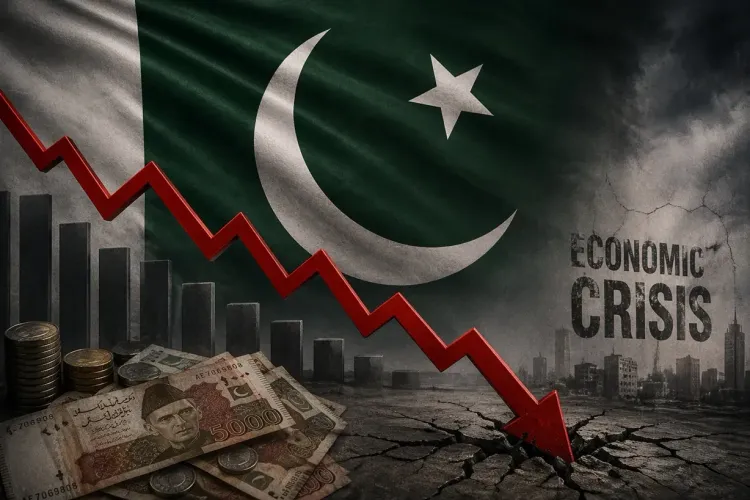
Pakistan's exposure is significant, but the country has a partial buffer. Remittances from more than eight million overseas Pakistanis have risen sharply, reaching approximately $30 billion, which has helped offset some of the earlier decline in aid inflows. Critics argue, however, that remittances are household-level transfers and cannot substitute for the structural development funding that bilateral aid supports — including public health infrastructure, education, and governance programmes.
Mozambique and Other Vulnerable States
Mozambique faces a more acute challenge. With limited diaspora remittance flows, the country is expected to lean more heavily on multilateral agencies, including United Nations bodies, particularly following recent flooding that displaced hundreds of thousands of people. The convergence of a humanitarian crisis and reduced bilateral aid creates a compounding vulnerability that multilateral mechanisms may struggle to fully address.
Broader Development Implications
The UK's cuts are part of a wider pattern. Similar reductions by other major donor countries are expected to strain development programmes across multiple regions and increase reliance on alternative funding sources. The Borgen Project report noted that this collective donor retreat risks widening gaps in healthcare, food security, and climate resilience — particularly in fragile states already under stress. This is not the first time UK aid has been cut; a temporary reduction to 0.5 per cent was introduced in 2021 amid post-pandemic fiscal pressures, with a promise to restore the 0.7 per cent target that has not materialised.
Point of View
Because the risk-return calculus is incompatible with the world's most fragile states. Pakistan has remittances as a cushion; Mozambique does not. The burden will fall on multilateral agencies that are themselves under funding pressure. What mainstream coverage underplays is that this is a collective donor retreat — the UK is not acting alone — and the cumulative effect on public health and food security in conflict-affected states could dwarf the headline dollar figure.
NationPress
15 Oct 2026
Frequently Asked Questions
Why is the UK cutting its foreign aid budget?
The UK government says the cuts are driven by the need to redirect resources toward defence spending amid global security challenges, including the war in Ukraine. Foreign Secretary Yvette Cooper told Parliament that 'hard choices and unavoidable trade-offs' were unavoidable in the current fiscal environment.
How much is the UK reducing its foreign aid?
The UK is cutting development assistance by more than $6 billion, lowering its aid-to-GNI ratio from 0.5% to 0.3% by 2027. Before the COVID-19 pandemic, the UK spent 0.7% of GNI on aid — a target it had enshrined in law.
Why is Pakistan among the worst affected by UK aid cuts?
Pakistan is heavily reliant on bilateral aid programmes, which are facing the deepest reductions. However, remittances from over eight million overseas Pakistanis — totalling around $30 billion — provide a partial offset that countries like Mozambique do not have.
How will Mozambique cope with reduced UK aid?
Mozambique, which has limited diaspora remittance inflows, is expected to depend more heavily on multilateral agencies including UN bodies. This challenge is compounded by recent flooding that has displaced hundreds of thousands of people in the country.
What is the UK's alternative to direct foreign aid?
The UK government says it will focus on 'partnerships for investment' to attract private capital and expertise into developing countries, while multilateral organisations are expected to take on a larger role in healthcare and infectious disease control.