UN chief urges justice in natural resource value chains at Security Council
Synopsis
At a UN Security Council debate, António Guterres didn't mince words: the global system of resource extraction is rigged against producing nations. His call to end the 'sovereignty deficit' — especially in Africa — and choke off illicit flows that fuel conflict marks one of the most direct UN challenges yet to the structure of global commodity supply chains.
Key Takeaways
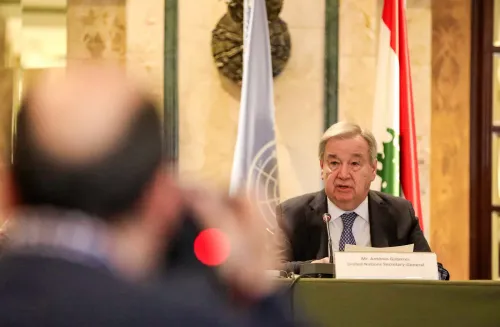
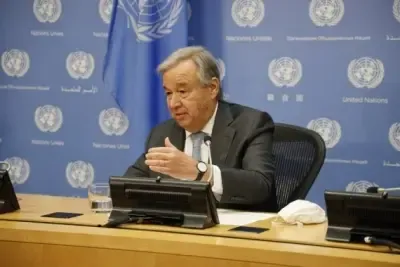
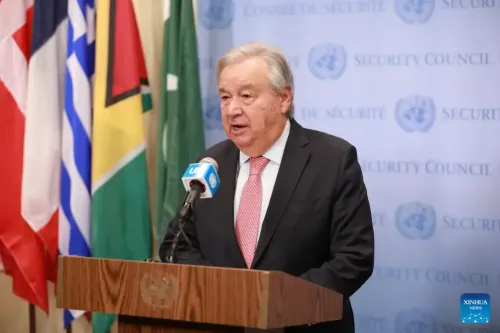
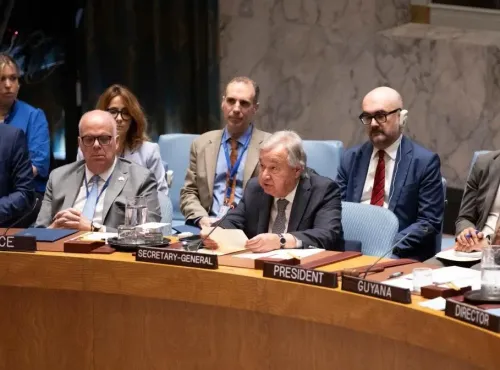
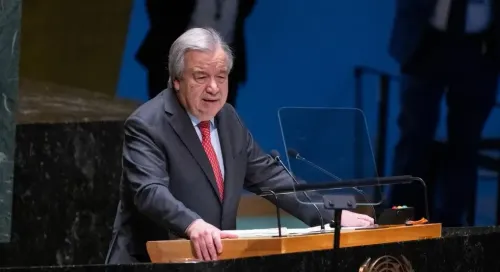
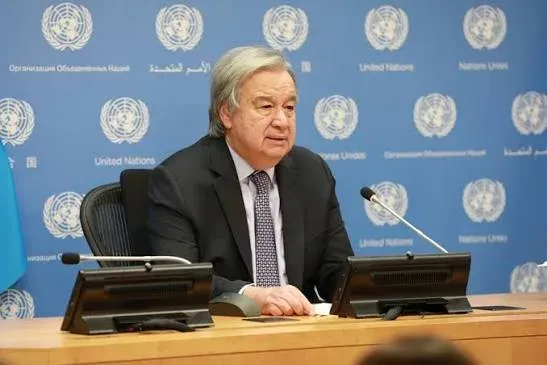
UN Secretary-General António Guterres addressed a Security Council open debate on natural resources governance on Wednesday, 23 July .
He called for producing countries and communities to benefit 'first and most' from their own natural resources.
Guterres identified Africa as the region with the widest gap between recognised resource sovereignty and its practical exercise.
He urged enforceable legal frameworks, stronger traceability, and due diligence to curb illicit mineral flows entering legitimate markets.
The UN chief warned that failure to act will continue to drive inequality, instability, and violence linked to resource exploitation.
Guterres framed the challenge as a political choice , calling on states, financial institutions, and industry to act collectively across the full value chain.
UN Secretary-General António Guterres on Wednesday called for a fundamental overhaul of how natural resources are extracted, processed, and traded globally, demanding that producing countries and their communities receive a fair share of the wealth generated from their own land. Speaking at a United Nations Security Council open debate on natural resources governance, Guterres said the current system perpetuates inequality, conflict, and environmental harm.
The Core Demand: End the Extraction Gap
Guterres was unequivocal in his diagnosis of the problem. 'We must ensure mineral development delivers fair and sustainable outcomes for resource-endowed countries and communities,' he said. 'It is time to break the age-old pattern — where resources are extracted, value is captured elsewhere, and impoverished communities are left behind to cope with the environmental and socioeconomic damage.'
He argued that natural resources are routinely extracted in one country, transported through another, processed elsewhere, and sold on global markets — with little of the added value returning to the source. 'Effective action must address the full value chain, not just the point of extraction,' he said.
Africa at the Centre of the Sovereignty Deficit
Guterres highlighted a critical gap between a state's recognised sovereignty over its natural resources and what that sovereignty actually means in practice. He noted that this 'sovereignty deficit' is widest in Africa — a continent rich in minerals yet where communities have historically seen the least benefit. 'Countries and communities must benefit — first and most — from the resources in their own backyard,' he said.
This is not a new grievance. Decades of extraction-driven development models across sub-Saharan Africa and parts of Latin America and Southeast Asia have produced similar patterns: resource booms that enrich multinationals and transit economies while leaving source communities with degraded land and weak institutions.
Tackling Illicit Flows and Armed Group Financing
The UN chief stressed the urgent need to curb illicit financial flows and build transparency across mineral supply chains. He called on international and regional organisations, financial institutions, and industry to work together to prevent illicitly sourced resources from entering legitimate markets — through 'enforceable legal frameworks and stronger traceability, due diligence, and information-sharing.'
Guterres also flagged the security dimension: armed groups and criminal networks that finance protracted conflicts through illegal resource exploitation must be denied those revenue streams. 'If we fail to act, the illicit exploitation of natural resources will continue to drive inequality, instability, and violence,' he warned.
A Political Choice, Not Just a Technical Problem
Cooperation among producing, transit, and consuming states, Guterres argued, is essential to closing regulatory and enforcement gaps that currently allow illicit flows to persist. He framed the challenge as ultimately one of political will rather than technical capacity. 'No more exploitation. No more plundering,' he said. 'Ultimately, this is a political choice.'
He called for natural resources to be managed in ways that finance inclusive and sustainable development, strengthen institutions, and 'advance peace and prosperity for all.' With the global energy transition accelerating demand for critical minerals — lithium, cobalt, nickel — the governance frameworks Guterres is calling for are more urgent than ever.
Point of View
But the structural problem he describes has resisted UN rhetoric for decades. The real test is whether the Security Council — whose permanent members include the world's largest resource consumers and home jurisdictions of major mining multinationals — will back enforceable frameworks or settle for voluntary commitments that have repeatedly failed. With the energy transition driving a new scramble for critical minerals, the window to build fairer governance is narrow. The risk is that 'No more exploitation' becomes another memorable phrase without a binding mechanism behind it.
NationPress
23 Jul 2026
Frequently Asked Questions
What did UN Secretary-General Guterres say about natural resources?
Guterres called for an end to the pattern where resources are extracted from poorer nations, value is captured elsewhere, and communities are left with environmental and socioeconomic damage. He made these remarks at a UN Security Council open debate on natural resources governance on 23 July.
Why did Guterres single out Africa in his speech?
Guterres said the gap between a state's recognised sovereignty over its natural resources and its actual sovereign rights in practice is widest in Africa. He argued African countries and communities must be the primary beneficiaries of their own resources, which has historically not been the case.
What did Guterres say about illicit resource flows?
He stressed the need to curb illicit financial flows and strengthen transparency across mineral supply chains. Guterres called for enforceable legal frameworks, stronger traceability, due diligence, and information-sharing to prevent illicitly sourced resources from entering legitimate global markets.
How are natural resources linked to armed conflict, according to Guterres?
Guterres warned that armed groups and criminal networks use revenues from illicit resource exploitation to finance protracted conflicts. He said failure to act would continue to drive inequality, instability, and violence.
What kind of cooperation did Guterres call for?
He called for cooperation among producing, transit, and consuming states to close regulatory and enforcement gaps. International and regional organisations, financial institutions, and industry were all urged to play an active role in ensuring the full value chain — not just the point of extraction — is governed fairly.