UN experts flag Pakistan's crackdown on dissent in PoK, question JAAC terror tag
Synopsis
Six UN Special Rapporteurs have formally challenged Pakistan's labelling of the Joint Awami Action Committee as a terrorist organisation in PoK — a region that has long escaped international human rights scrutiny. The intervention signals a potential turning point: what began as protests over electricity tariffs has escalated into a wider crisis of governance, accountability, and political representation that the world body can no longer ignore.
Key Takeaways
Six UN Special Rapporteurs formally questioned Pakistan's designation of the JAAC as a terrorist organisation in Pakistan-occupied Kashmir (PoK) .
The mandate holders cover counter-terrorism, freedom of expression, arbitrary detention, peaceful assembly, and human rights defenders.
Alleged abuses include state violence against protesters, deaths, and hundreds of arrests over a prolonged period.
The JAAC originally emerged as a popular movement demanding lower electricity tariffs and greater accountability — not as a security threat.
Heavy deployment of police and paramilitary, communication disruptions, and service shutdowns have reportedly failed to quell underlying grievances.
The UN communication marks a significant shift, as PoK has historically remained largely outside international human rights scrutiny.
Six United Nations Special Rapporteurs have formally raised concerns over Pakistan's designation of the Joint Awami Action Committee (JAAC) as a terrorist organisation in Pakistan-occupied Kashmir (PoK), bringing the region's escalating repression of political dissent under unprecedented international human rights scrutiny. The intervention marks a significant shift, as PoK has historically remained largely outside the orbit of global rights oversight.
The UN Intervention
The letter, signed by six special mandate holders — covering counter-terrorism, freedom of expression, arbitrary detention, peaceful assembly, and human rights defenders — was addressed directly to the Pakistani government. The UN experts questioned whether a broad-based popular movement seeking economic relief and political accountability has been recast as a security threat for challenging established power structures, according to a report in 'Nepal Aaja'.
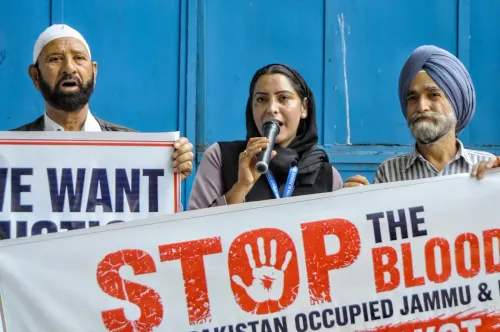
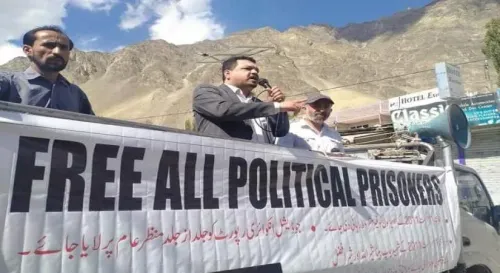
The communication specifically challenged the reported use of counter-terrorism measures against the JAAC and individuals associated with it, citing alleged state violence against protesters, deaths, hundreds of arrests, and other human rights abuses over a prolonged period.
What the JAAC Movement Represents
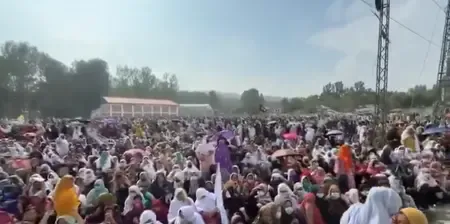
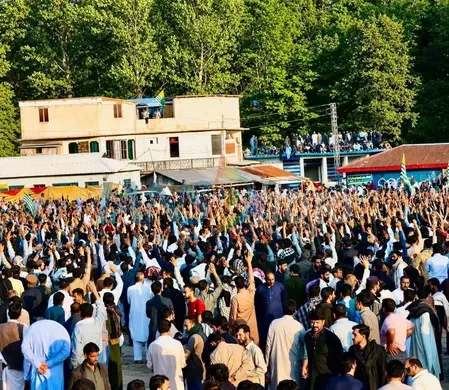
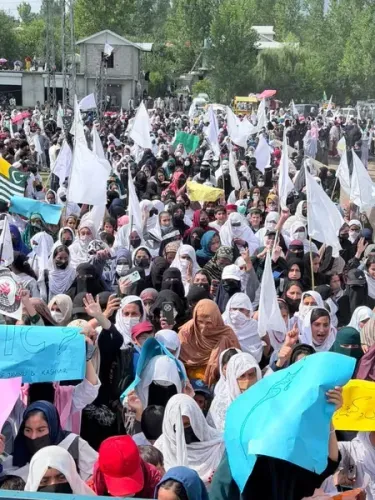
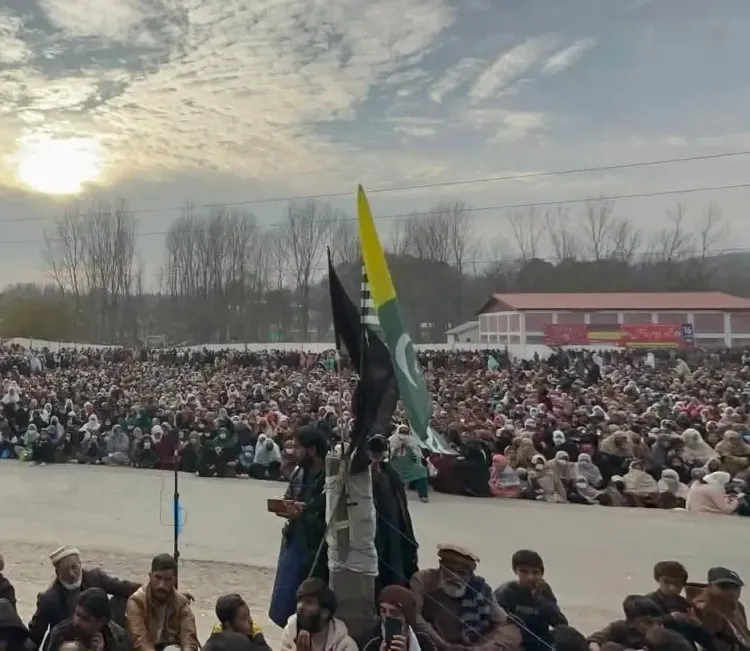
'The JAAC emerged as a broad-based popular movement demanding lower electricity tariffs, affordable access to basic commodities, and greater accountability from authorities,' the report noted. The movement drew support from ordinary residents frustrated by rising living costs, governance failures, and perceptions of political marginalisation.
Yet instead of prompting meaningful dialogue, the protests reportedly triggered an increasingly coercive response from authorities. For many residents of PoK, the crisis has since evolved beyond electricity tariffs and economic hardship into a wider debate over political representation and whether institutions making decisions affecting Kashmiris are genuinely answerable to them.
The Pattern of Repression
Authorities reportedly deployed heavy contingents of police and paramilitary personnel, imposed prolonged restrictions on public activity, disrupted communications, and shut down public services. According to the report, these measures have not extinguished underlying grievances — instead, they have reinforced perceptions that the authorities are unwilling or unable to address the political roots of public dissatisfaction.
'This helps explain why the unrest has persisted despite repeated crackdowns,' the report highlighted, underscoring what it described as a governance failure rather than a security challenge.
Accountability and What Comes Next
The report raised a central question: whether the authorities in PoK will prioritise accountability and dialogue, or increasingly rely on repression to govern the region. For the families of those reportedly killed and the hundreds believed to have been arrested, that question carries immediate urgency.
Critically, developments have raised broader questions about whether dissent in PoK can be accommodated within any democratic framework, or whether political mobilisation will increasingly be met with counter-terrorism measures — a trajectory that the UN's formal communication now puts on the international record.
Point of View
Freedom of expression, and peaceful assembly all align on the same letter, it is not a procedural protest — it is a coordinated escalation. The deeper question mainstream coverage misses is structural: PoK's governance model, in which Islamabad retains effective control while formal democratic accountability remains limited, creates the precise conditions in which a movement over electricity bills mutates into an existential challenge to state authority. Unless Islamabad engages substantively rather than punitively, the UN communication is unlikely to be the last.
NationPress
21 Nov 2026
Frequently Asked Questions
Why have UN experts intervened over Pakistan-occupied Kashmir?
Six UN Special Rapporteurs wrote to the Pakistani government to question its designation of the Joint Awami Action Committee (JAAC) as a terrorist organisation in PoK, citing alleged state violence, deaths, mass arrests, and other human rights abuses. The intervention is significant because PoK has historically remained largely outside international human rights scrutiny.
What is the Joint Awami Action Committee (JAAC)?
The JAAC is a broad-based popular movement in Pakistan-occupied Kashmir that originally organised around demands for lower electricity tariffs, affordable basic commodities, and greater governmental accountability. It drew support from ordinary residents frustrated by rising living costs and governance failures before being designated a terrorist organisation by Pakistani authorities.
What human rights violations have been alleged in PoK?
According to the report, alleged abuses include state violence against protesters, killings, the arrest of hundreds of individuals, heavy deployment of police and paramilitary forces, prolonged restrictions on public activity, communication disruptions, and closure of public services.
Who signed the UN letter to Pakistan?
The letter was signed by six UN special mandate holders, covering areas including counter-terrorism, freedom of expression, arbitrary detention, peaceful assembly, and the protection of human rights defenders. It was addressed directly to the Pakistani government.
What are the broader implications of the UN intervention for PoK?
The UN communication marks a shift in international attention toward a region that had largely escaped global rights oversight. It raises the question of whether Pakistani authorities will pursue accountability and dialogue or continue to rely on coercive measures — with direct consequences for residents, the families of those reportedly killed, and the hundreds believed to have been arrested.