US lawmakers introduce India-US parliamentary group bill, 180-day negotiation deadline
Synopsis
Four bipartisan US lawmakers have introduced a bill to create a permanent congressional dialogue with India's Parliament — a structural gap in one of the world's most important democratic partnerships. The proposal sets a 180-day clock for the State Department to begin negotiations and would mandate at least one annual joint meeting with the Lok Sabha and Rajya Sabha.
Key Takeaways
The United States-India Interparliamentary Group Act was introduced by four bipartisan US lawmakers on 20 October 2025 .
The bill's sponsors include Republicans James Gallagher and Bill Huizenga , and Democrats Mike Thompson and Shri Thanedar .
The US Secretary of State would have 180 days after enactment to begin negotiations with India for a written agreement.
The American delegation would comprise up to 12 members of Congress , equally split between the House and Senate and across party lines.
The joint group would meet with representatives of the Lok Sabha and Rajya Sabha at least once annually .
The bill authorises $100,000 annually for the American delegation's expenses, subject to appropriations.
A bipartisan group of four US lawmakers has introduced the United States-India Interparliamentary Group Act, proposing a permanent institutional mechanism for congressional dialogue with India's Parliament on trade, defence, emerging technologies and other pillars of the bilateral relationship. The legislation, announced on Monday, 20 October 2025, marks a notable attempt to give the US Congress a structured, recurring role in shaping one of Washington's most strategically consequential partnerships.
Who Is Behind the Legislation
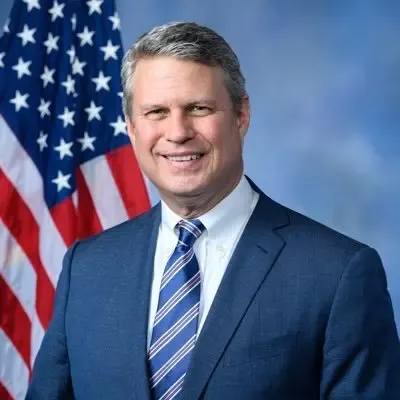
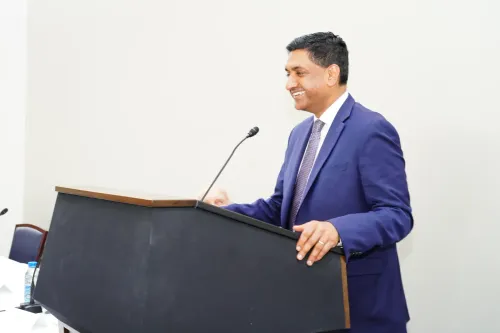
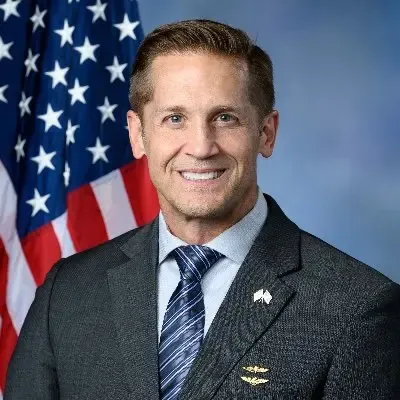
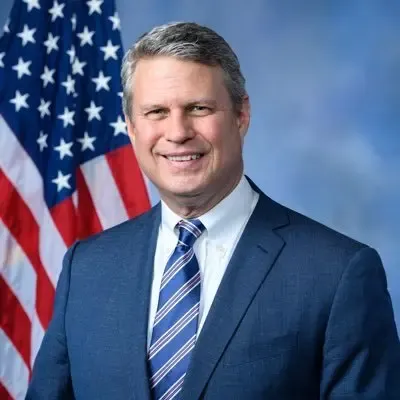
The bill was introduced by Republican Congressman James Gallagher of California, joined by fellow Republican Bill Huizenga, Democrat Mike Thompson, and Indian-American Democrat Shri Thanedar, who represents Michigan's 13th Congressional District. The cross-party composition signals broad legislative appetite for formalising US-India ties at the parliamentary level, beyond executive-branch diplomacy alone.
Huizenga, who chairs the House Foreign Affairs Subcommittee on South and Central Asia, described the relationship as central to the future of the Indo-Pacific. 'As Chairman of the South and Central Asia Subcommittee, I see the US-India relationship — rooted in a common vision of a free, open, and secure Indo-Pacific — as a defining moment of the 21st century,' he said.
How the Proposed Group Would Work
Under the legislation, the US Secretary of State, in consultation with Congress, would be required to seek negotiations with the Indian government within 180 days of enactment to conclude a written agreement. The American delegation would comprise no more than 12 members of Congress, split equally between the House of Representatives and the Senate, with appointments distributed equally between majority and minority leadership of both chambers to ensure bipartisan representation.
At least one member from each group of three lawmakers would be required to serve on the relevant foreign affairs or foreign relations committee. The chairpersonship and vice-chairpersonship would alternate between House and Senate delegations every two years, aligning with the start of each new Congress. The joint group would meet with representatives of the Lok Sabha and Rajya Sabha at least once annually.
The bill authorises $100,000 annually for the American group's operating expenses, subject to congressional appropriations, divided equally between the two chambers. An annual expenditure report to the House Foreign Affairs Committee and Senate Foreign Relations Committee would also be mandated.
What the Lawmakers Said
Gallagher framed the initiative as giving Congress a more structured voice in the relationship. 'India is one of America's most consequential partners, and our relationship will only grow more important in the decades ahead,' he said, adding that the forum would strengthen cooperation in agriculture — specifically citing California wine and walnuts — alongside technology, defence and trade.
Thompson emphasised the economic dimension: 'Strengthening our relationships with India is an opportunity to expand US market access in India and support our California agriculture economy,' he said. Thanedar noted that the legislation reflected the importance of institutionalising ties between the two democracies. 'The United States and India are natural partners that share democratic values and key economic and strategic interests,' he said.
Why This Matters for India-US Relations
The proposal arrives amid sustained congressional interest in deepening the US-India strategic partnership, which spans defence cooperation, trade, clean energy, critical technology and people-to-people exchanges. Notably, while executive-level formats such as the Quad and the iCET technology dialogue have advanced in recent years, a formal parliamentary channel has been absent — a gap this legislation seeks to fill.
Critics and analysts may note that similar interparliamentary frameworks exist between the US and key allies, including in Europe and with Japan, making the absence of one with India increasingly conspicuous given the depth of the bilateral relationship. Whether the Indian government responds within the proposed 180-day window, and how India's Parliament structures its own delegation, will be the next critical test of the initiative's momentum.
Point of View
000 is symbolic — and more for what its absence has said about the US-India relationship until now. Washington maintains formal interparliamentary groups with European allies and Japan; the lack of one with India has been a quiet anomaly as the strategic partnership deepened. The bipartisan co-sponsorship, including a sitting subcommittee chair in Huizenga, gives the bill real legislative credibility. The harder question is on India's side: parliamentary engagement requires reciprocal institutional will from New Delhi, and how India's Parliament structures its own delegation will signal how seriously this format is taken beyond Washington's signalling.
NationPress
20 Oct 2026
Frequently Asked Questions
What is the United States-India Interparliamentary Group Act?
It is a bipartisan bill introduced in the US Congress on 20 October 2025 that proposes creating a permanent formal dialogue between the US Congress and India's Parliament. The group would meet jointly with representatives of the Lok Sabha and Rajya Sabha at least once a year to discuss trade, defence, emerging technologies and other bilateral issues.
Who introduced the US-India Interparliamentary Group Act?
The bill was introduced by four US lawmakers: Republican Congressman James Gallagher of California, Republican Bill Huizenga, Democrat Mike Thompson, and Indian-American Democrat Shri Thanedar of Michigan's 13th Congressional District.
What happens if the bill becomes law?
The US Secretary of State would be required to seek negotiations with the Indian government within 180 days of enactment to reach a written agreement on establishing the group. An American delegation of up to 12 members of Congress would then be constituted, with equal representation from the House, Senate, and both political parties.
How much funding does the bill propose for the parliamentary group?
The bill authorises $100,000 annually for the American delegation's expenses, subject to congressional appropriations, divided equally between the House and Senate. The delegation would also be required to submit an annual expenditure report to the House Foreign Affairs Committee and Senate Foreign Relations Committee.
Why is this bill significant for India-US relations?
Formal interparliamentary groups exist between the US and several major allies, but no such institutionalised mechanism has existed with India despite deepening strategic ties. The bill aims to fill that gap by creating a structured, recurring legislative channel alongside existing executive-level formats like the Quad and the iCET technology dialogue.