US clashes with UNGA president over UN chief election transparency
Synopsis
The US and Russia — adversaries on almost every front — are united in blocking General Assembly President Baerbock’s push to open up the UN secretary-general election. With eight candidates in the field and a second straw poll imminent, the fight over who controls the process may matter as much as who wins it.
Key Takeaways
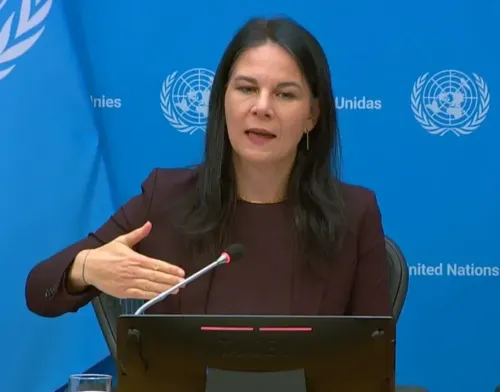
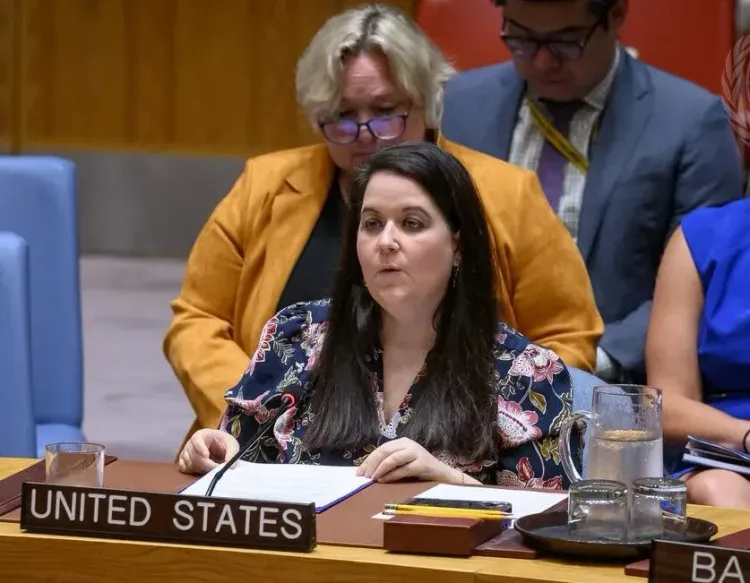
US delegate Jennifer Locetta accused UNGA President Annalena Baerbock of “overreach” that could “undermine” the UN Secretary-General election process.
Russia’s Vasily Nebenzya backed the US position on Thursday , a rare alignment between the two rivals.
The Security Council’s second straw poll is scheduled for Friday, 22 August , covering eight candidates .
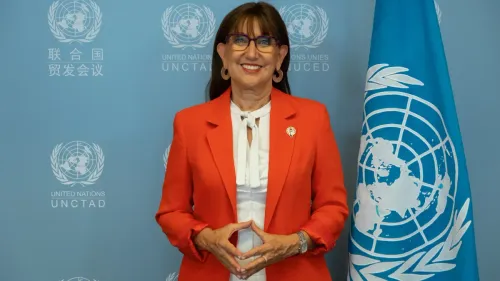
In the first straw poll, Rebecca Grynspan led with 10 positive votes ; Carolyn Rodrigues-Birkett followed with 9 .
Two new candidates — Ivonne A-Baki (Ecuador/Tonga) and Olara Otunnu (Uganda) — have entered the race since the last poll.
A candidate needs at least 9 Security Council votes and no P5 veto to be recommended to the General Assembly.
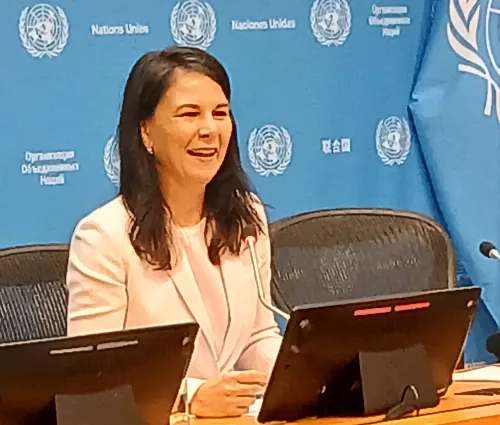
The United States and Russia are in open conflict with General Assembly President Annalena Baerbock over her push for a more open and inclusive process in selecting the next United Nations Secretary-General, with Washington accusing her of “overreach” that could “undermine” the election. The dispute has surfaced ahead of the Security Council’s second straw poll, scheduled for Friday, 22 August, to informally gauge support for the eight candidates vying to succeed Secretary-General António Guterres, whose term ends this year.
The Core Dispute
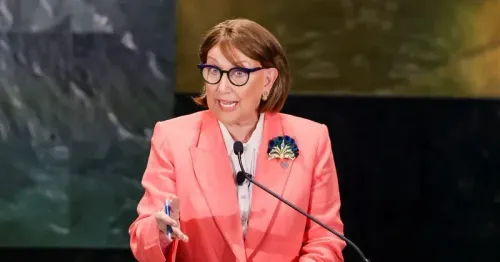
US delegate Jennifer Locetta, the Alternative Representative for Special Political Affairs, told the Security Council on Wednesday: “The United States takes exceptional issue with the President of the General Assembly’s overreach and irresponsible actions in this process, the sum of which may serve to undermine the important selection process.”
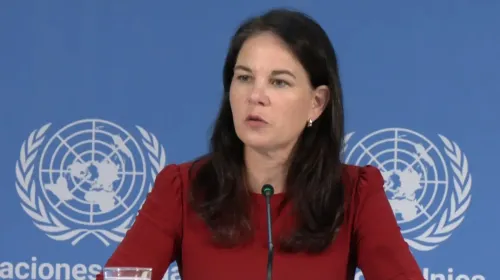
The friction stems from two letters Baerbock sent to the Council. In the first, she called for “transparency”, “fairness”, and “inclusion” — language Locetta said was “insinuating that it [the Council] acted improperly.” In the second, she urged the Council not to consider candidates who had not appeared before the General Assembly. Locetta also objected to an informal audience poll conducted after a town hall hosted by the Assembly in cooperation with Bloomberg, calling it “unfair, untransparent, and unprecedented.”
P5 Solidarity Against Reform
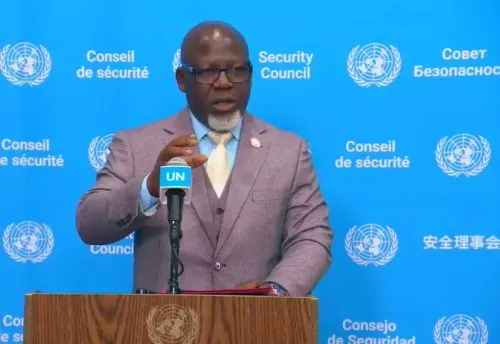
Notably, Russia — which clashes with the US on most multilateral issues — sided with Washington here. Russia’s Permanent Representative Vasily Nebenzya said on Thursday that he agreed Baerbock had overreached. The alignment of the two geopolitical rivals on this question underscores how jealously the five permanent members (P5) guard their prerogative over the secretary-general selection, a process in which they hold veto power over any candidate.
The General Assembly, representing all 193 UN member states, has historically been reduced to rubber-stamping the Council’s recommendation. Locetta framed Baerbock’s activism as a symptom of a broader problem, saying: “The PGA continues a trend of UN leadership fancying themselves as diplomatic superstars rather than Chief Administrative Officers.”
Where the Candidates Stand
In the Bloomberg town hall audience poll — which carries no official weight — Guyana Foreign Minister Carolyn Rodrigues-Birkett received 49 votes, the highest among all candidates. UNCTAD head Rebecca Grynspan came second with 14 votes, followed by Maria Fernanda Espinosa, a former Assembly president and Ecuador’s foreign minister, with 10 votes.
In the Security Council’s first straw poll last month, however, Grynspan led with 10 positive votes, one negative, and four neutral, while Rodrigues-Birkett followed with 9 positive, two negative, and four neutral votes. Whether any negative votes were cast by permanent members was not disclosed.
New Entrants Complicate the Field
Two candidates have joined the race since the first straw poll. Ivonne A-Baki, an Ecuadorian of Lebanese descent and former ambassador to the US and France, was nominated by Tonga. She enters as a rival to Espinosa, also Ecuadorian but nominated by Antigua and Barbuda. The second newcomer is Olara Otunnu of Uganda, a former UN Under-Secretary-General and Special Representative for Children and Armed Conflict, who also previously served as Council president during Uganda’s tenure as permanent representative.
The broader field includes former Senegal President Macky Sall; International Atomic Energy Agency (IAEA) Director-General Rafael Grossi of Argentina; and former Chile President and UN Human Rights High Commissioner Michelle Bachelet.
What Comes Next
Further straw polls will follow Friday’s second round, culminating in colour-coded final polls where permanent members’ votes will be identifiable by bloc but not individually attributed. A candidate must ultimately secure at least nine votes without a veto from any permanent member to be recommended to the General Assembly. The structural standoff between the Council and the Assembly over process transparency is unlikely to be resolved before a successor to Guterres is chosen.
Point of View
And Baerbock is giving voice to that frustration. But the structural math hasn’t changed — any permanent member can veto any candidate, making the selection process as opaque as the P5 collectively choose to keep it. The real question is whether this public clash accelerates pressure for a formal reform of the secretary-general selection process, or whether it simply reinforces that reform is impossible without P5 consent.
NationPress
21 Aug 2026
Frequently Asked Questions
Why is the US clashing with the UNGA president over the UN chief election?
The US has accused General Assembly President Annalena Baerbock of overreaching by demanding transparency and fairness in the Security Council’s selection of the next UN Secretary-General. Washington argues her letters to the Council and support for an informal audience poll could undermine the official selection process, which is controlled by the Council’s five permanent members.
How is the UN Secretary-General elected?
The Security Council recommends a candidate after informal straw polls among its 15 members, with the five permanent members holding veto power. The General Assembly then votes on the Council’s recommendation, historically a rubber-stamp. A candidate needs at least nine Council votes and no veto to be recommended.
Who are the leading candidates to succeed Antonio Guterres?
Based on the first straw poll, UNCTAD head Rebecca Grynspan led with 10 positive votes, followed by Guyana Foreign Minister Carolyn Rodrigues-Birkett with 9. Other candidates include former Senegal President Macky Sall, IAEA chief Rafael Grossi, former Chile President Michelle Bachelet, Maria Fernanda Espinosa, and two new entrants: Ivonne A-Baki and Olara Otunnu.
What is a Security Council straw poll in the UN chief selection?
A straw poll is an informal, non-binding vote among Security Council members used to gauge support for each candidate before a formal recommendation is made. Later rounds are colour-coded to identify permanent members’ votes by bloc, though individual attribution is kept anonymous.
Why did Russia side with the US against Baerbock’s transparency push?
Despite being at odds on most multilateral issues, Russia’s Permanent Representative Vasily Nebenzya agreed with the US that Baerbock had overreached. Both countries, as permanent members, share a vested interest in preserving the P5’s exclusive control over the secretary-general selection process.