US military drone crosses inter-Korean border zone, triggers civilian evacuation
Synopsis
A US Marine Corps drone strayed over the inter-Korean border zone during joint exercises on 30 July, triggering a civilian evacuation alert near Cheorwon. The incident exposed a gap in real-time flight-plan coordination between US and South Korean forces — and briefly revived fears of a North Korean aerial intrusion along one of the world's most volatile frontiers.
Key Takeaways
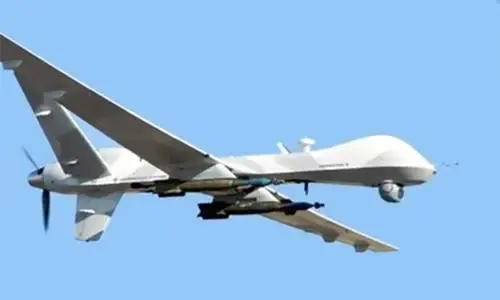
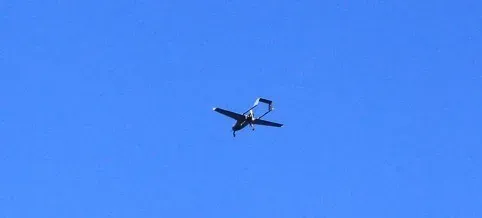
A US Marine Corps drone flew over the inter-Korean border region in northern Gyeonggi Province on 30 July during combined drills.
Residents near Cheorwon , approximately 70 km north of Seoul , were advised to evacuate as a precaution.
South Korea's Joint Chiefs of Staff and US Forces Korea (USFK) both confirmed the drone belonged to the US Marine Corps .
It remains unclear whether the drone's flight path was shared with South Korean units or whether it deviated from its planned route.
Officials declined to confirm if the drone violated the no-fly zone under the now-suspended 2018 inter-Korean military pact , which bars aircraft within 15 km of the DMZ in eastern areas.
A US Marine Corps drone flew over an inter-Korean border region in northern Gyeonggi Province on Thursday, 30 July, during combined bilateral drills with South Korea, prompting local authorities to issue a shelter alert and residents to evacuate as a precaution. Military officials from both sides confirmed the incident, which briefly raised alarm over a possible intrusion from North Korea.
How the Incident Unfolded
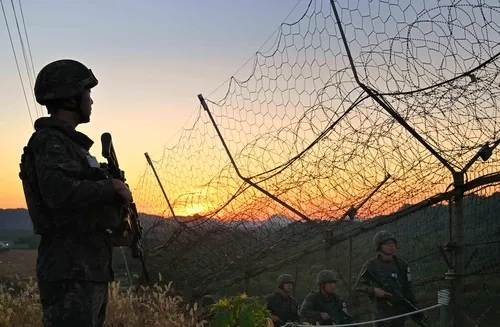
The unmanned aerial vehicle was first detected south of a general outpost near the North Korean border by South Korean surveillance assets. Because the drone's origin was not immediately apparent, an evacuation alert was issued over Cheorwon, a town approximately 70 kilometres north of Seoul, situated near the buffer zone along the inter-Korean border.
The alert advised residents to take shelter while authorities worked to identify the aircraft. The drone was subsequently confirmed to belong to the US Marine Corps stationed in South Korea.
What US and South Korean Officials Said
An official from South Korea's Joint Chiefs of Staff (JCS) told reporters: 'Upon further verification, the unmanned vehicle was identified as a US military drone participating in a training exercise.' The official added that operational measures were carried out in line with standard protocol.
The US Forces Korea (USFK) also confirmed ownership of the drone, stating it was working with South Korean authorities to assess the situation. 'This incident occurred during bilateral training between US Marines and the Republic of Korea Marine Corps' 1st Marine Division,' the USFK said in a statement. It added that US Marine Corps personnel were assessing the circumstances and coordinating with their South Korean counterparts and local authorities.
Questions Over Flight Path and Protocol
Military officials have not ruled out the possibility that the drone's planned flight path was either not shared with South Korean units in the region, or that the drone veered off its intended course. The JCS official declined to confirm whether the drone had flown over the no-fly zone established under the now-suspended 2018 inter-Korean military pact.
That agreement, concluded under former liberal President Moon Jae-in, prohibited aircraft and drones from operating within 15 km of the Demilitarised Zone (DMZ) in eastern areas and 10 km in western regions. The pact was designed to prevent unintended military clashes with Pyongyang along the heavily fortified border, but has since been suspended amid deteriorating inter-Korean relations.
Context and Broader Implications
The episode underscores the persistent risks of miscommunication during joint military exercises along one of the world's most heavily militarised frontiers. The DMZ separating the two Koreas remains a flashpoint, and any unidentified aerial object in the area carries the potential to escalate tensions rapidly — as Thursday's evacuation alert demonstrated.
Notably, the incident also raises procedural questions about coordination between US and South Korean forces during combined drills, particularly regarding real-time sharing of drone flight plans with units stationed in sensitive border zones. Both militaries are expected to review the circumstances before issuing a fuller account.
Point of View
The USFK owes a fuller accounting — not just to South Korean authorities, but to the civilians who were told to take shelter.
NationPress
13 Sept 2026
Frequently Asked Questions
What happened with the US military drone near the inter-Korean border?
A US Marine Corps drone flew over the inter-Korean border region in northern Gyeonggi Province on 30 July during combined drills with South Korea, triggering a civilian evacuation alert near Cheorwon. Both US Forces Korea and South Korea's Joint Chiefs of Staff confirmed the drone was American and was participating in a bilateral training exercise.
Why were civilians evacuated near Cheorwon?
An evacuation alert was issued for Cheorwon, about 70 kilometres north of Seoul, because South Korean surveillance assets detected an unidentified drone near the border and could not immediately determine whether it had come from North Korea. Residents were advised to take shelter as a precaution until the drone was identified.
Did the US drone violate the inter-Korean no-fly zone?
Officials have not confirmed whether the drone flew over the no-fly zone established under the 2018 inter-Korean military pact. The South Korean JCS official declined to provide further details on the matter. The pact, now suspended, prohibited drones within 15 km of the DMZ in eastern areas and 10 km in western regions.
What is the 2018 inter-Korean military pact?
The 2018 inter-Korean military pact was an agreement reached under former South Korean President Moon Jae-in to reduce the risk of accidental military clashes along the Demilitarised Zone. It established no-fly zones for aircraft and drones near the DMZ but has since been suspended amid deteriorating relations between Seoul and Pyongyang.
What are US and South Korean forces doing following the incident?
US Marine Corps personnel are assessing the circumstances surrounding the incident and coordinating with South Korean Marine Corps partners and local authorities, according to a USFK statement. The US Forces Korea said it is also working with South Korean authorities to evaluate the situation.