US-EU aircraft trade truce under strain over record Airbus loan
Synopsis
Washington's aircraft trade truce with Brussels is showing cracks — and fast. The European Investment Bank's record loan to Airbus, approved quietly over the summer, has prompted a formal US warning that the 2021 deal suspending tariffs may be at risk. With USTR still shut out of the financing details, the fate of one of the longest-running trade disputes in history now hinges on whether Brussels moves quickly to reassure Washington.
Key Takeaways
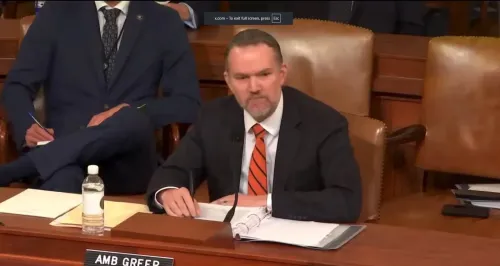
US Trade Representative Jamieson Greer on Monday warned the European Investment Bank's record loan to Airbus threatens the 2021 US-EU aircraft trade truce.
The loan benefits Airbus projects in France , Germany , and Spain , and was approved during the summer.
The USTR says Washington has yet to receive details of the financing despite repeated requests.
The 2021 agreement suspended retaliatory tariffs for five years and requires aircraft financing to be on commercial terms.
Washington has not announced new tariffs but has warned the situation must be 'resolved as soon as possible.' The EU has not yet publicly responded to the US concerns.
US Trade Representative Jamieson Greer on Monday raised fresh concerns over a record-breaking loan extended by the European Investment Bank (EIB) to aircraft manufacturer Airbus, warning that the financing has injected significant uncertainty into transatlantic aerospace trade. The move threatens to unsettle a 2021 agreement under which Washington and Brussels suspended punitive tariffs in their decades-long aircraft subsidy dispute.
What Triggered the Alarm
The EIB approved what Greer described as its largest-ever loan to Airbus during the summer, with the funds intended to benefit Airbus projects in France, Germany, and Spain. According to Greer, the timing — coming shortly after the European Union extended its suspension of related duties — raised immediate red flags in Washington. Crucially, the Office of the United States Trade Representative (USTR) says it has still not received details of the financing arrangement despite repeated requests. 'Despite ongoing requests, USTR still has no details about this loan,' Greer said in a formal statement.
Washington's Core Concern
The transatlantic aircraft agreement — brokered to reduce trade friction while establishing principles for government support of large civil aircraft (LCA) manufacturers — requires that financing for such manufacturers be provided on commercial terms. Washington has not yet formally declared that the EU has violated the agreement, nor has it announced new tariffs. However, Greer's remarks signal that the US is actively questioning whether the EIB loan is consistent with the commitments both sides made.
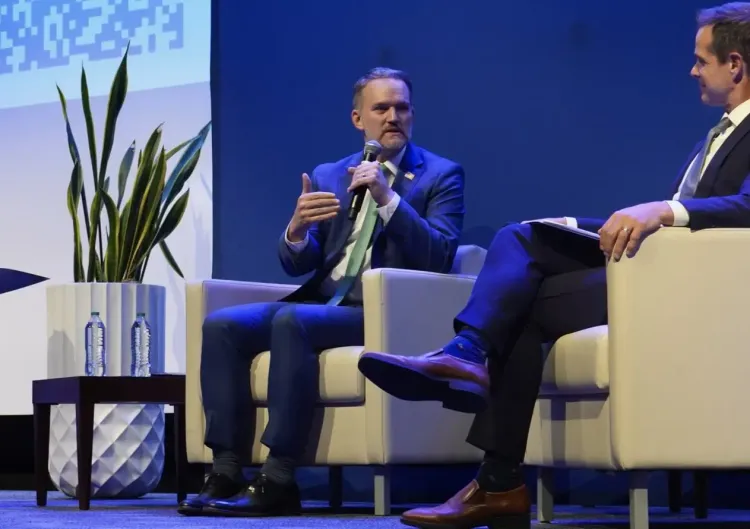
'I had sincerely hoped that trade-distorting European subsidies to Airbus were a thing of the past,' Greer said, adding that 'France, Germany, and Spain have aggressively supported Airbus, their national champion aircraft manufacturer, to gain an unfair advantage over US aerospace workers and businesses.' He called for the matter to be resolved quickly, warning: 'It is important this situation is resolved as soon as possible to ensure market-driven production in the aerospace sector and to avoid violation of the terms of our hard-won LCA deal.'
Background: A Dispute Decades in the Making
The US-EU aircraft subsidy dispute is one of the longest-running trade conflicts in modern history, centred on competing allegations of government support for Boeing and Airbus. The World Trade Organization (WTO) authorised retaliatory measures against both sides following findings of subsidy violations. After years of tit-for-tat tariffs, Washington and Brussels agreed in 2021 to suspend related duties for five years while pursuing a negotiated framework for large civil aircraft financing. The latest friction suggests that framework is proving harder to maintain than either side had hoped.
What Happens Next
Greer's statement stops short of threatening immediate tariff reimposition, but the language is pointed enough to put Brussels on notice. The EU has yet to publicly respond to the USTR's concerns. Analysts note that if Washington determines the EIB loan constitutes a treaty-inconsistent subsidy, it could seek WTO consultations or move to reimpose duties — a development that would reopen one of the most disruptive trade fights in transatlantic history. Both sides face a narrow window to resolve the disagreement before it escalates further.
Point of View
And both sides have always known it was the fault line most likely to crack. What's notable here is that Greer's language is calibrated: sharp enough to signal real displeasure, but short of a formal violation finding that would trigger automatic tariff reinstatement. That restraint may reflect broader US-EU trade sensitivities — Boeing itself is not in a position to withstand a full-blown subsidy war right now. But Brussels should not mistake tactical caution for strategic patience.
NationPress
27 Oct 2026
Frequently Asked Questions
What is the US-EU aircraft trade dispute about?
The dispute centres on decades-long competing allegations that governments provided trade-distorting subsidies to Boeing and Airbus. The WTO found violations on both sides and authorised retaliatory tariffs before Washington and Brussels agreed in 2021 to suspend duties for five years and pursue a framework for large civil aircraft financing.
Why is the EIB's Airbus loan a problem for the 2021 agreement?
The 2021 agreement requires financing for large civil aircraft manufacturers to be provided on commercial terms. The US argues the EIB's record loan to Airbus — extended by a government-backed institution — may not meet that standard, potentially violating the deal's core conditions.
Has the US imposed new tariffs on the EU over the Airbus loan?
No. As of Monday, the US has not announced new tariffs or formally declared an EU violation of the agreement. However, Trade Representative Jamieson Greer has issued a pointed warning and called for the situation to be resolved quickly to avoid a breach.
Why has the loan's timing raised concerns in Washington?
The EIB approved the loan during the summer, shortly after the EU extended its suspension of aircraft-related duties — a timing the USTR found notable. Washington also says it has still not received any details about the loan's terms despite repeated requests, adding to the concern.
What could happen if the dispute is not resolved?
If Washington determines the EIB loan constitutes a subsidy inconsistent with the 2021 deal, it could seek WTO consultations or move to reimpose punitive tariffs on EU goods. That would reopen one of the most disruptive transatlantic trade conflicts in recent history.