US-Iran nuclear talks in Switzerland stretch overnight, progress on Hormuz and Lebanon
Synopsis
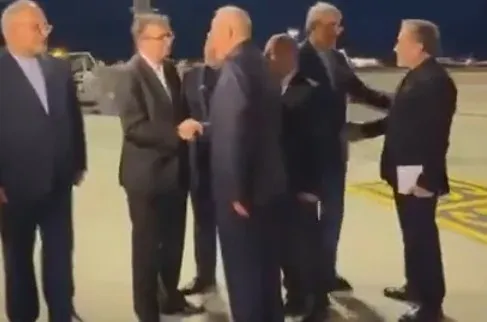
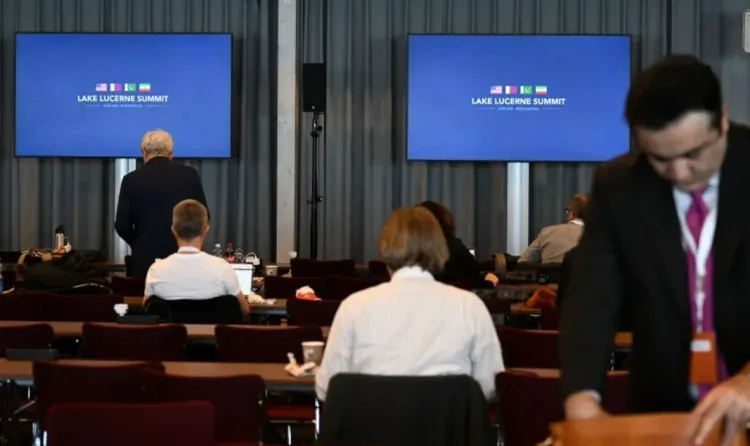
US-Iran talks at Switzerland's Burgenstock resort ran past midnight on 22 June, with Vice President JD Vance's delegation reporting early progress on three simultaneous fronts: Iran's nuclear programme, Hormuz access guarantees, and Lebanon's fragile ceasefire. It is one of the most direct high-level US-Iran engagements in years — and the overnight marathon signals both sides have more to resolve than a single day allows.
Key Takeaways
US-Iran negotiations at Burgenstock, Switzerland continued past 1:14 a.m. local time on 22 June .
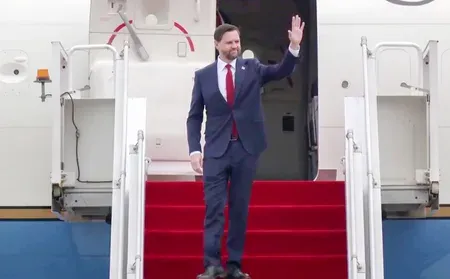
Vice President JD Vance launched the talks after arriving in Switzerland at approximately 6 a.m. the same day.
Discussions covered Iran's nuclear programme , the Strait of Hormuz , and the Lebanon ceasefire .
The US denied reports that the Iranian delegation had left the talks, calling such claims 'rampant false reporting.' Both sides described the nuclear discussions as 'robust' and plan to use the session as a basis for ongoing technical talks .
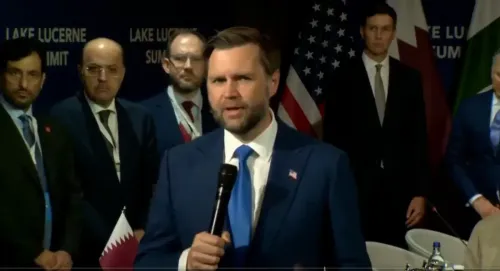
US-Iran negotiations at the Burgenstock resort in Switzerland extended deep into the night on Sunday, 22 June, with American officials confirming that discussions — launched by Vice President JD Vance — remained active past 1:14 a.m. local time and had produced early headway on Iran's nuclear programme, the Strait of Hormuz, and the fragile ceasefire in Lebanon.
Talks Continue Through the Night
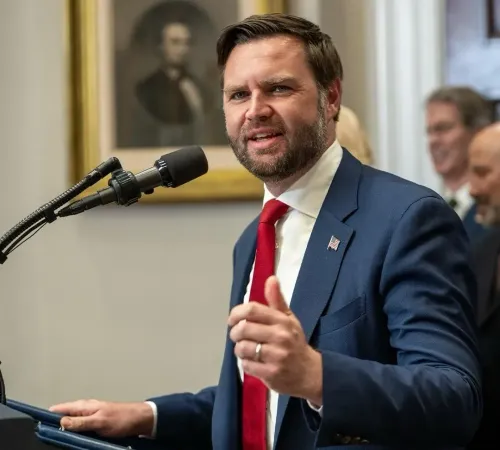
A senior US official confirmed to reporters travelling with the Vice President that negotiations were still underway well past midnight. 'We still anticipate they will continue through the night,' the official said. The update came after Vance had earlier expressed confidence in the pace of progress, telling reporters before entering the meeting: 'We've already made great progress over just the last few hours, and I expect that we'll make additional progress in the hours to come.'
A senior US diplomat engaged in the talks noted that the American delegation had been in continuous session since Vance landed in Switzerland earlier that day. 'The Vice President touched down around 6am this morning and our delegation has been engaged in constant meetings and negotiations since then,' the diplomat said.
Reports of Iranian Walkout Denied
The US side also pushed back sharply against circulating claims that the Iranian delegation had withdrawn from the table. 'Contrary to rampant false reporting, the Iranians are still here and discussions are ongoing. We anticipate continuing to work through the night,' the senior diplomat's statement read. The denial underscored the sensitivity of the talks and the degree to which information management has become part of the diplomatic process.
Hormuz and Lebanon on the Agenda
Beyond the nuclear file, negotiators worked through two other flashpoints. On the Strait of Hormuz — the critical waterway through which roughly 20% of global oil trade passes — the US said discussions focused on 'clarifying some of the confusing messaging from Iran on the Strait and building deconfliction mechanisms to ensure the Strait will remain fully open,' according to the senior diplomat.
The security situation in southern Lebanon, where renewed clashes between Israel and Hezbollah have threatened broader regional stability, also featured prominently. 'We have also worked through deconfliction mechanisms and enforcing the ceasefire in southern Lebanon,' the diplomat said. Vance acknowledged remaining friction but struck an optimistic note: 'There's still some additional wood to chop, but we're going to keep on working.'
Nuclear Deal Progress Described as 'Robust'
On the core question of Iran's nuclear programme — the issue that precipitated the current diplomatic push, following a preliminary US-Iran agreement earlier in the week — the senior diplomat described the exchanges as substantive. 'We've had robust discussions on all elements of the nuclear deal. We plan to continue working through each of these issues and using today's work as a starting point for ongoing technical talks going forward,' the statement said.
This comes amid heightened global concern over Iran's nuclear advancement, with international monitors having previously reported enrichment levels well above civilian thresholds. The Burgenstock talks represent one of the most direct high-level US-Iran engagements in years, and their outcome is being closely watched by Israel, Saudi Arabia, and European powers alike.
What Comes Next
The two sides are expected to use the overnight sessions as a foundation for follow-on technical negotiations. Whether the reported progress translates into a verifiable framework — particularly on uranium enrichment limits and Hormuz guarantees — remains to be seen. The talks at Burgenstock are shaping up as a potential inflection point in a years-long standoff, though officials on both sides have stopped short of declaring any breakthrough.
Point of View
Which is itself a departure from recent US-Iran diplomatic history. Yet the emphasis on 'deconfliction mechanisms' — rather than binding commitments — suggests the gap on core nuclear parameters remains wide. Vance's personal presence raises the diplomatic stakes but also the political risk; if talks collapse, the Vice President owns the failure. The simultaneous inclusion of Hormuz and Lebanon on the agenda is smart bundling — it gives both sides tradeable concessions — but it also multiplies the points of potential breakdown. Progress on all three fronts in a single overnight session would be extraordinary; progress on none would be a serious setback for regional stability.
NationPress
20 Sept 2026
Frequently Asked Questions
What are the US-Iran talks in Switzerland about?
The talks, held at the Burgenstock resort in Switzerland on 22 June, cover three main issues: Iran's nuclear programme, guarantees to keep the Strait of Hormuz open, and enforcing the ceasefire in southern Lebanon. They follow a preliminary US-Iran agreement reached earlier in the week.
Who is leading the US delegation at the Burgenstock talks?
Vice President JD Vance is leading the US side, having arrived in Switzerland at approximately 6 a.m. on 22 June. A senior US diplomat described the delegation as having been in continuous meetings since Vance's arrival.
Did Iran walk out of the Switzerland talks?
No. The US side explicitly denied reports of an Iranian walkout, with a senior diplomat stating: 'Contrary to rampant false reporting, the Iranians are still here and discussions are ongoing.' The denial came shortly after 1 a.m. local time.
What progress was made on Iran's nuclear programme?
US officials described 'robust discussions on all elements of the nuclear deal' and said the overnight session would serve as a starting point for ongoing technical negotiations. No specific agreement or threshold was announced.
Why does the Strait of Hormuz feature in these talks?
The Strait of Hormuz is a critical global oil chokepoint, and the US said Iran had sent 'confusing messaging' about its status. Negotiators worked on deconfliction mechanisms to ensure the waterway remains fully open to international shipping.