US-Iran Buergenstock talks set for Friday; Trump defends deal as historic
Synopsis
The US and Iran are heading to Buergenstock, Switzerland on Friday to begin implementing a deal Trump is calling his most significant diplomatic achievement — one that he claims reopened the Strait of Hormuz and permanently blocks Iran from going nuclear. The real test begins now: whether an MoU signed under military pressure can survive the hard specifics of verification and civilian nuclear carve-outs.
Key Takeaways
The United States and Iran are set to meet on Friday, 20 June at Buergenstock , Switzerland to begin implementing their Memorandum of Understanding .
The Swiss Foreign Ministry confirmed the meeting and welcomed the MoU as 'an important step toward de-escalation.' US President Donald Trump described the deal as a historic breakthrough at his post- G7 press conference in France .
The agreement reportedly covers ending the current conflict, reopening the Strait of Hormuz , and permanently blocking Iran from acquiring a nuclear weapon.
Trump signalled the US could accept a limited civilian nuclear programme in Iran under certain conditions — a notable shift in Washington's posture.
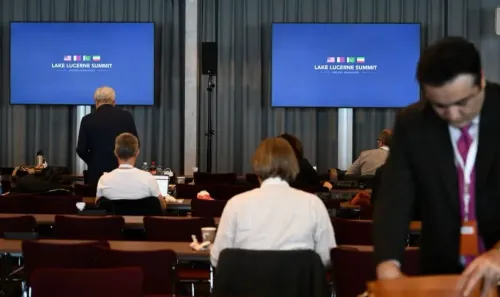
The United States and Iran are set to meet on Friday, 20 June at the Buergenstock mountain resort in Switzerland for initial negotiations on implementing their recently signed agreement, the Swiss Foreign Ministry confirmed on Thursday. The meeting follows the signing of a Memorandum of Understanding (MoU) between Washington and Tehran, which Bern has described as an important step toward de-escalation in the region.
Switzerland's Role and What We Know
The Swiss Foreign Ministry welcomed the MoU signing in a formal statement, noting that Buergenstock — the same alpine resort that hosted Ukraine peace talks in 2024 — would serve as the venue. Officials indicated that no further details on the agenda or meeting format would be disclosed at this stage, underscoring the sensitivity of the early-phase diplomacy.
Trump Defends the Agreement
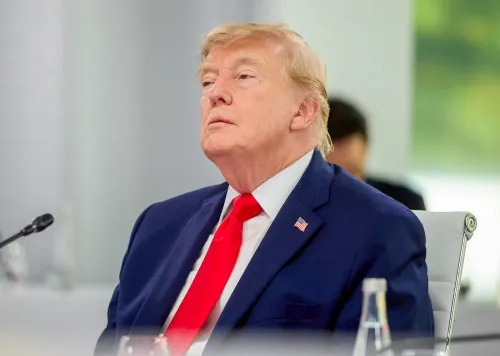
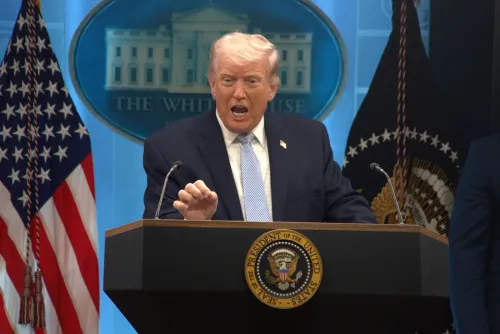
Speaking at a lengthy press conference following the G7 summit in France on Wednesday, US President Donald Trump mounted an aggressive defence of the deal, calling it a historic diplomatic breakthrough made possible by a combination of military pressure and direct engagement.
'On Sunday, we reached an agreement with Iran that achieves everything we set out to accomplish — everything and much more,' Trump said. 'Ending the current conflict, reopening the Strait of Hormuz and preventing Iran from obtaining a nuclear weapon, that's what it was all about.'
Trump argued that continued military action would have prolonged instability in the Gulf and disrupted global energy markets, framing the deal as a necessary pivot to protect both regional stability and oil supply chains.
The Nuclear Question
In one of his clearest signals yet on the next phase of negotiations, Trump indicated that the United States could accept a civilian nuclear programme in Iran under certain conditions. When asked whether Tehran could continue civilian nuclear activities if it complied with the new agreement, Trump acknowledged the issue's complexity while questioning Iran's stated rationale.
'Well, I've said to them always, I say, look, you have probably the third largest oil reserves in the world, what the hell do you need nuclear for?' Trump said. 'You need nuclear for some electricity.'
The remark signals that Washington may be prepared to negotiate a limited civilian nuclear carve-out — a significant softening compared to the maximum-pressure posture of Trump's first term, and one that is likely to draw scrutiny from regional allies including Israel and Saudi Arabia.
What the Agreement Covers
According to Trump's account, the MoU addresses three core objectives: ending the current armed conflict, reopening the Strait of Hormuz — a critical chokepoint through which roughly 20% of global oil trade passes — and permanently blocking Iran from acquiring a nuclear weapon. The Friday meeting at Buergenstock is framed as an implementation session rather than a fresh round of negotiations, suggesting the broad contours of the deal are already in place.
What Comes Next
The Friday talks are expected to focus on implementation timelines and verification mechanisms, though neither side has confirmed specifics. The broader diplomatic community will be watching whether the MoU translates into durable compliance, particularly on the nuclear file, where past agreements — including the 2015 JCPOA — ultimately unravelled. The outcome of the Buergenstock session could determine whether this deal holds or follows a similar trajectory.
Point of View
And it was buried in an off-the-cuff remark. If Washington is genuinely prepared to accept Iranian civilian enrichment under safeguards, that is a structural concession that will reshape the regional security calculus — and one that Israel and Gulf states will not absorb quietly. The Friday Buergenstock session will reveal whether this is a genuine implementation roadmap or a photo-opportunity agreement waiting to fray.
NationPress
20 Sept 2026
Frequently Asked Questions
Where and when are the US-Iran talks taking place?
The talks are scheduled for Friday, 20 June at the Buergenstock mountain resort in Switzerland. The Swiss Foreign Ministry confirmed the meeting on Thursday, describing it as an initial session focused on implementing the recently signed Memorandum of Understanding.
What does the US-Iran Memorandum of Understanding cover?
According to US President Donald Trump, the MoU addresses three objectives: ending the current armed conflict, reopening the Strait of Hormuz, and permanently preventing Iran from acquiring a nuclear weapon. Full details of the agreement have not been publicly released.
Why is Switzerland hosting the US-Iran talks?
Switzerland has historically served as a neutral diplomatic venue and represents US interests in Iran. Buergenstock previously hosted Ukraine peace talks, making it a familiar setting for high-stakes multilateral diplomacy.
What did Trump say about Iran's civilian nuclear programme?
Trump indicated the US could accept a civilian nuclear programme in Iran under certain conditions, questioning why Tehran needed nuclear energy given its vast oil and gas reserves. He acknowledged the issue was complex, signalling this will be a key point in the next phase of negotiations.
How does this deal compare to the 2015 JCPOA?
Like the 2015 Joint Comprehensive Plan of Action (JCPOA), the new MoU aims to restrict Iran's nuclear capabilities in exchange for diplomatic engagement. However, Trump's deal also claims to address the Strait of Hormuz and an active conflict — broader in scope than the JCPOA, which focused solely on the nuclear file. The JCPOA ultimately collapsed after Trump's first-term withdrawal in 2018.