Shein Hong Kong IPO: US lawmaker urges JPMorgan, Goldman, Morgan Stanley to quit
Synopsis
A senior US Republican lawmaker has demanded that JPMorgan, Goldman Sachs, and Morgan Stanley walk away from Shein's planned Hong Kong IPO, calling the banks tools of the CCP and accusing them of enabling forced labour. It is the sharpest congressional volley yet at Wall Street over its role in Chinese capital markets — and it arrives just weeks before the listing is reportedly due.
Key Takeaways
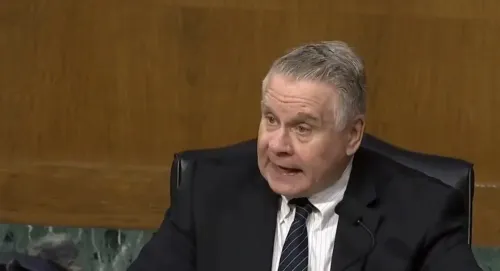
Congressman John Moolenaar , chairman of the US House Select Committee on China , on 26 August demanded that JPMorgan , Goldman Sachs , and Morgan Stanley withdraw from Shein's planned Hong Kong Stock Exchange IPO.
Moolenaar alleged the banks were being 'used as a tool by the CCP' to channel foreign capital into China's economy.
Shein had previously failed to list in New York and London over forced labour concerns, according to reports.
The committee's statement did not specify the banks' exact roles, the fundraising target, or the precise listing date.
The US government has accused China of genocide against Uyghurs in Xinjiang ; Beijing denies the allegations.
No response from Shein or the three banks was included in the committee's statement.
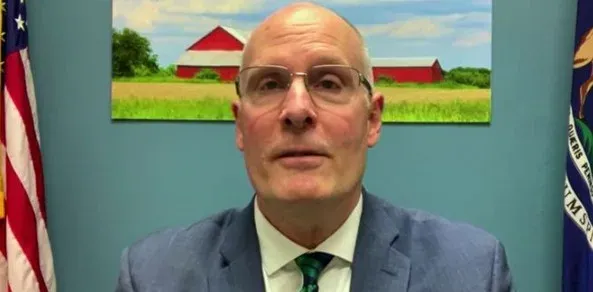
Republican Congressman John Moolenaar, chairman of the US House Select Committee on China, has called on JPMorgan, Goldman Sachs, and Morgan Stanley to withdraw their support for Shein's planned initial public offering on the Hong Kong Stock Exchange, citing allegations that the Chinese-founded fast-fashion giant's supply chain is linked to forced labour. The demand, issued on 26 August, marks the latest congressional push against Wall Street's involvement with Chinese-affiliated companies.
What Moolenaar Alleged
In a formal statement, Moolenaar accused the three American banks of enabling what he described as a Chinese Communist Party (CCP)-backed scheme to draw foreign capital into China's economy. 'For major U.S. banks to bankroll Shein's IPO shows these institutions have no regard for human rights or the victims of forced labor who will be forced to pick cotton for Shein's clothes,' he said.
He went further, characterising the banks as instruments of the CCP. 'These American banks are being used as a tool by the CCP to bolster their declining economy and capital markets with outside money, enabling a CCP Ponzi scheme on the rest of the world,' Moolenaar said. He also called it 'unconscionable' for the banks' leadership to claim commitment to US national security while underwriting a company he described as tied to forced labour and genocide.
Shein's IPO History and Supply Chain Scrutiny
Shein, which grew into one of the world's largest online fashion retailers by offering a vast catalogue of low-cost, rapidly changing clothing lines, has previously failed to secure listings in both New York and London, reportedly due to concerns over forced labour in its supply chain. The company's possible exposure to cotton or other materials originating in China's Xinjiang region has drawn sustained scrutiny from American lawmakers.
The US government has formally accused China of committing genocide and crimes against humanity against Uyghurs and other predominantly Muslim minorities in Xinjiang. Beijing has denied allegations of widespread forced labour and human-rights abuses in the region.
What the Committee's Statement Did Not Say
Notably, the committee's statement did not specify the exact roles being performed by JPMorgan, Goldman Sachs, or Morgan Stanley in the proposed offering. It also did not disclose how much Shein intended to raise through the listing or provide a precise date for the transaction. No response from Shein or any of the three banks was included in the statement.
Critically, the allegations against Shein were made by Moolenaar and have not been presented as findings by any court or regulatory authority.
Broader Context
An IPO allows a privately held company to sell shares to public investors through a stock exchange. Investment banks typically assist by structuring the offering, preparing documentation, gauging investor demand, and distributing shares. Shein's repeated difficulties in securing a listing in Western markets reflect the deepening intersection of US-China geopolitical tensions and global capital markets — a trend that has intensified since Washington's passage of the Uyghur Forced Labor Prevention Act.
With the Hong Kong listing reportedly expected next month, the pressure on the three banks is likely to intensify as the transaction date approaches.
Point of View
Goldman Sachs, Morgan Stanley — are the pillars of US capital markets, and their involvement in a Shein listing would signal that geopolitical risk has limits when fees are large enough. The allegations remain unverified by any court or regulator, which matters: congressional pressure is not a legal finding. But the political cost of ignoring it, especially in an election-sensitive environment, is real. The deeper question is whether US financial institutions can continue threading the needle between lucrative Chinese mandates and an increasingly hostile legislative climate in Washington — and for how long.
NationPress
10 Oct 2026
Frequently Asked Questions
Why is the US lawmaker targeting Shein's Hong Kong IPO?
Congressman John Moolenaar has accused Shein of having a supply chain linked to forced labour in China's Xinjiang region, and has urged JPMorgan, Goldman Sachs, and Morgan Stanley to withdraw from the planned Hong Kong listing. He argues the banks are enabling human rights abuses and helping the Chinese Communist Party attract foreign capital.
Which banks are involved in Shein's planned Hong Kong IPO?
According to Moolenaar's statement, JPMorgan, Goldman Sachs, and Morgan Stanley are involved in supporting Shein's planned initial public offering on the Hong Kong Stock Exchange. The committee did not specify the exact role each bank is playing.
Why did Shein fail to list in New York and London?
Shein reportedly failed to secure listings in New York and London due to concerns over forced labour in its supply chain, particularly scrutiny over possible links to cotton sourced from China's Xinjiang region.
Have the allegations against Shein been proven?
No. The allegations were made by Congressman Moolenaar and have not been presented as findings by any court or regulatory authority. Shein and the three banks named had not responded to the committee's statement at the time it was issued.
What is the US government's position on Xinjiang?
The US government has formally accused China of committing genocide and crimes against humanity against Uyghurs and other predominantly Muslim minorities in Xinjiang. Beijing has denied these allegations, calling claims of widespread forced labour and human-rights abuses false.