US Navy eyes Midwest expansion to boost submarine output for AUKUS
Synopsis
The US Navy's plan to outsource non-classified submarine work to the Midwest is not just a logistics fix — it is an admission that America's shipyard workforce is a critical bottleneck in both its own defence posture and its AUKUS commitments to Australia and Britain. With USS Colorado's rotational deployment and a US$3 billion Australian investment on the line, the Midwest gambit is now a geopolitical pressure valve.
Key Takeaways
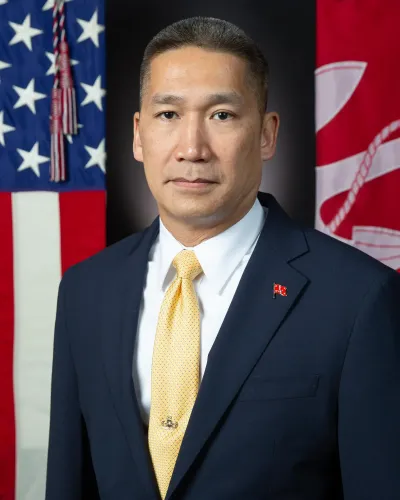
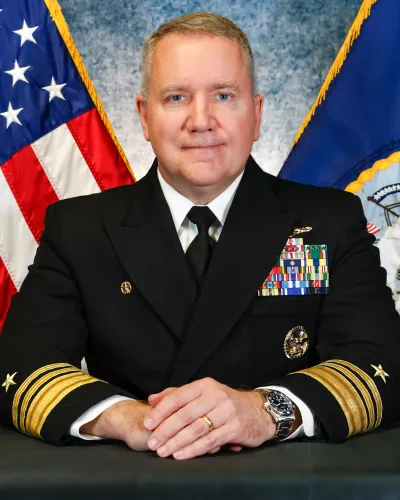
Acting Navy Secretary Hung Cao told the Senate Armed Services Committee on Tuesday that non-classified submarine work could be shifted to the American Midwest .
The move is designed to free approximately 5,000 security-cleared workers for specialised submarine construction.
The Navy is approaching capacity to build one ballistic-missile submarine and two attack submarines annually, though the target has not yet been reached.
Australia has committed US$3 billion to bolster US submarine production under the AUKUS partnership.
More than 290 Australian personnel are currently in the US training pipeline, including about 150 gaining at-sea operational experience.
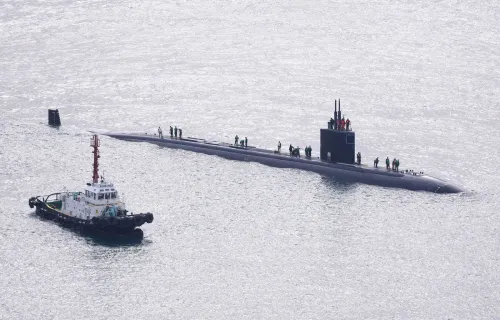
USS Colorado is set to become the first US submarine assigned to Submarine Rotational Force-West at HMAS Stirling , Western Australia , from late 2027 .
The US Navy is exploring a shift of non-classified submarine manufacturing work to the American Midwest to free up security-cleared workers for specialised construction, Acting Navy Secretary Hung Cao told the Senate Armed Services Committee on Tuesday, as lawmakers pressed him on the service's ability to meet both domestic and allied production demands.
Key Developments at the Senate Hearing
At his confirmation hearing before the committee, Cao said metal-bending and steel-cutting tasks that do not require security clearances could be relocated to Midwest facilities, potentially freeing approximately 5,000 security-cleared workers to focus exclusively on submarine assembly. He added that the Navy was approaching the workforce capacity needed to produce one ballistic-missile submarine and two attack submarines annually. 'We're almost there,' Cao said — though he stopped short of declaring that the target production rate had been achieved.
AUKUS Commitments in Focus
Senator Jack Reed, the committee's senior Democrat, raised concerns about the simultaneous demands of building Virginia-class and Columbia-class submarines while honouring commitments under AUKUS — the trilateral security partnership linking the United States, United Kingdom, and Australia. The industrial expansion is directly tied to that pact, through which Australia plans to acquire conventionally armed, nuclear-powered submarines with American and British assistance. Australia has committed US$3 billion to strengthen US submarine production and sustainment capacity.
Workforce Incentives and Recruitment
In a separate exchange with Senator Deb Fischer, Cao outlined potential recruitment incentives to bolster the shipyard workforce, including student-loan relief linked to shipyard employment and flexible work arrangements. He described these as options being explored rather than finalised policy decisions.
Industrial Infrastructure Taking Shape
The Propulsor Centre of Excellence, being established by Bird-Johnson Propeller Company, is set to manufacture submarine propulsor rotors and other components for the Virginia-class programme. The facility is backed by combined Australian and US investment. Separately, the Australian Submarine Agency reported that more than 290 Australian personnel are currently in the US training pipeline, with roughly 150 gaining operational experience at sea.
Rotational Force and What Comes Next
A key milestone under AUKUS is due in late 2027, when USS Colorado is slated to become the first American submarine assigned to Submarine Rotational Force-West — an arrangement announced by the three countries' defence ministers last month. The force is projected to include rotations of up to four US attack submarines and one British attack submarine at HMAS Stirling in Western Australia. The ministers described the arrangement as a means of building Australia's operational and maintenance capacity for its future submarine fleet while expanding regional support infrastructure. This rotational presence is separate from Australia's planned acquisition of its own submarines. The hearing underscores how deeply US domestic industrial capacity has become entangled with allied defence timelines — a pressure that will only intensify as 2027 approaches.
Point of View
And no amount of diplomatic commitment can substitute for welders and cleared machinists. Australia's US$3 billion investment is partly a bet that money can accelerate a workforce problem that typically takes years to solve. The confirmation hearing's soft language — 'we're almost there,' 'options being explored' — suggests the production targets are aspirational rather than locked. That ambiguity should concern Canberra, which has staked a generational defence realignment on a production line that has not yet demonstrated it can meet the agreed tempo.
NationPress
18 Nov 2026
Frequently Asked Questions
Why is the US Navy moving submarine manufacturing work to the Midwest?
The US Navy is considering relocating non-classified tasks such as metal-bending and steel-cutting to Midwest facilities to free up approximately 5,000 security-cleared workers for the more specialised submarine construction required at existing shipyards. Acting Navy Secretary Hung Cao outlined the plan at a Senate confirmation hearing on Tuesday.
What is AUKUS and how does it relate to US submarine production?
AUKUS is a trilateral security partnership between the United States, United Kingdom, and Australia under which Australia plans to acquire conventionally armed, nuclear-powered submarines with American and British assistance. The expansion of US submarine industrial capacity is directly tied to meeting both domestic production goals and AUKUS delivery commitments.
How much has Australia invested in US submarine production?
Australia has committed US$3 billion to strengthen US submarine production and sustainment capacity as part of the AUKUS agreement. Combined Australian and US investment is also backing the Propulsor Centre of Excellence, being established by Bird-Johnson Propeller Company to produce components for the Virginia-class programme.
When will AUKUS submarine rotations begin at HMAS Stirling?
The first rotational deployment is scheduled to begin in late 2027, when USS Colorado becomes the first American submarine assigned to Submarine Rotational Force-West at HMAS Stirling in Western Australia. The force is projected to include up to four US attack submarines and one British attack submarine on rotation.
How many Australian personnel are already training in the US for the submarine programme?
More than 290 Australian personnel are currently in the US training pipeline, with approximately 150 gaining operational experience at sea, according to the Australian Submarine Agency. This training is part of the broader AUKUS effort to build Australia's capacity to operate and maintain its future submarine fleet.