Rubio warns China over Iran sanctions, eyes UN push on Hormuz crisis
Synopsis
Rubio's White House briefing on 6 May was a rare double-barrelled warning: China risks secondary sanctions if it keeps helping Iran dodge US penalties, and Beijing's own export economy suffers from Hormuz instability. The message — that aiding Tehran is economically self-defeating for China — marks a sharper US rhetorical pivot ahead of a Trump-Xi meeting.
Key Takeaways
US Secretary of State Marco Rubio warned on 6 May that countries helping Iran evade sanctions face secondary penalties and loss of access to the US financial system .
The Trump administration is preparing a renewed UN Security Council resolution seeking condemnation of Iran's attacks on commercial shipping in the Strait of Hormuz .
Rubio argued it is in China's own economic interest to pressure Tehran, given the strait's centrality to global trade flows.
Chinese banks were flagged as potential targets of enforcement, though no specific measures were announced; Treasury officials are reportedly reviewing options.
The briefing came after Iran's foreign minister visited Beijing , and ahead of an expected Trump-Xi meeting where Taiwan is also expected to feature.
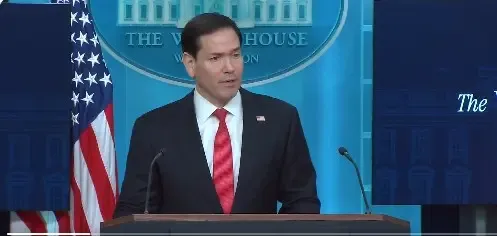
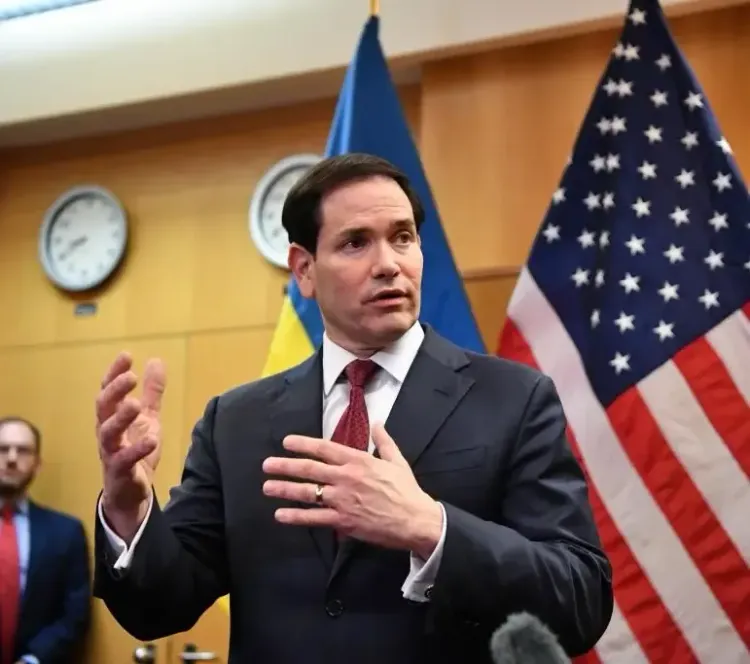
US Secretary of State Marco Rubio on 6 May sharply escalated pressure on China and Russia over the Strait of Hormuz crisis, warning that any country helping Iran evade sanctions risks facing secondary economic penalties and losing access to the US financial system. Speaking at a White House briefing, Rubio also announced that the Trump administration was preparing a renewed push at the United Nations to secure international condemnation of Tehran's actions in the Gulf.
The UN Gambit
Rubio confirmed the administration would return to the UN Security Council, acknowledging that a previous attempt had faced resistance from China and Russia. "We're going to the UN," he said. "We're going to give it another chance to be a forum in which we're not even asking people to commit troops to the region."
The secretary of state said revised language had been prepared to try to navigate a potential veto, though he was candid about the uncertainty. "We've made some slight adjustments to the language," Rubio said. "I don't know if it'll avoid a veto or not."
The US is seeking a resolution calling on Iran to halt attacks on commercial shipping, clear mines from international waters, and allow humanitarian relief through the strait. "All we're asking them to do is to condemn it, to call on Iran to stop blowing ships, to remove these mines, and to allow humanitarian relief to come through," Rubio said.
China's Economic Exposure in the Crosshairs
Rubio made an unusually direct economic argument aimed at Beijing, contending that instability in the Strait of Hormuz — through which a significant share of global energy and trade flows — ultimately damages China's own export-driven economy. "China is an export-driven economy," he said. "Well, you can't buy from them if you can't ship it there, and you can't buy from them if your economy is being destroyed by what Iran is doing."
He added: "It is in China's interest that Iran stop closing the straits. It's harming China as well." The remarks come shortly after Iran's foreign minister visited Beijing, a meeting Rubio referenced pointedly. "I hope the Chinese tell him what he needs to be told — that what you were doing in the straits is causing you to be globally isolated," he said.
Secondary Sanctions Warning
Rubio issued a broad warning to foreign financial institutions and companies assisting Tehran in bypassing US sanctions, signalling that enforcement was being actively reviewed by Treasury officials. "If you ignore our sanctions, you're going to face secondary sanctions," he said. "We're serious about our sanctions. A cost needs to be imposed on Iran for what they are doing."
When asked specifically whether Chinese banks could face penalties, Rubio declined to announce concrete measures but did not rule them out, indicating that options were on the table.
Iran's Attacks on Commercial Shipping
Rubio repeatedly condemned Iran's targeting of commercial vessels in the Strait of Hormuz, framing it as an unlawful attempt to control one of the world's most critical shipping corridors. "These guys are bombing commercial vessels," he said. "They're not bombing naval vessels; they're bombing commercial tankers."
The secretary of state described the crisis as a direct test of the United Nations' credibility. "What is the purpose of the UN?" he asked. "The UN was supposed to be a place where you could peacefully resolve global conflict."
Taiwan and the Broader US-China Picture
The briefing also touched on the wider US-China relationship ahead of an anticipated meeting between President Donald Trump and Chinese President Xi Jinping. Rubio indicated that Taiwan would likely feature in those discussions, while signalling that both sides share an interest in regional stability. "I think both countries understand that it is neither one of our interests to see anything destabilising happen in that part of the world," he said.
With the UN Security Council vote pending and secondary sanctions enforcement under active review, the coming weeks will test whether Washington's dual-track pressure — diplomatic and economic — can shift Beijing's calculus on Iran.
Point of View
And secondary sanctions threats have a patchy enforcement record. The real signal here is the Treasury review of Chinese bank exposure: if Washington moves from rhetoric to actual designations, the calculus changes sharply. The revised UN language is a long shot given Beijing and Moscow's veto record, but it sets the stage for Washington to claim multilateral exhaustion before escalating unilaterally.
NationPress
9 May 2026
Frequently Asked Questions
What did Marco Rubio warn China about regarding Iran?
Rubio warned that any country, including China, helping Iran evade US sanctions risks facing secondary sanctions and losing access to the US financial system. He made the warning at a White House briefing on 6 May, citing Iran's attacks on commercial shipping in the Strait of Hormuz.
What is the Strait of Hormuz crisis?
The Strait of Hormuz crisis refers to Iran's alleged attacks on commercial tankers and the mining of international waters in the strait, a critical global shipping corridor. The US is seeking international condemnation of these actions through the UN Security Council.
Is the US taking the Iran shipping issue to the United Nations?
Yes. The Trump administration confirmed it is preparing a revised UN Security Council resolution calling on Iran to halt attacks on commercial vessels, remove mines, and allow humanitarian relief through the strait. A previous attempt reportedly faced resistance from China and Russia.
Could Chinese banks face US sanctions over Iran?
Rubio indicated that Treasury officials are actively reviewing enforcement options against foreign financial institutions helping Tehran bypass sanctions, and did not rule out action against Chinese banks. No specific measures were announced at the briefing.
How does the Hormuz crisis connect to upcoming US-China talks?
The briefing came ahead of an anticipated meeting between President Donald Trump and Chinese President Xi Jinping, where Taiwan and broader bilateral tensions are also expected to feature. Rubio framed the Hormuz issue as one where US and Chinese economic interests are aligned against Iranian disruption.