US, Russia gutted killer-AI safeguards at UN weapons talks: Report
Synopsis
Behind closed doors in Geneva, with cameras off and observers expelled, the US and Russia spent 15 hours stripping a UN autonomous-weapons draft of its most consequential safeguards — including the requirement for humans to review AI-selected targets before a strike. With a potential legally binding treaty on the table and AI already being used to identify thousands of targets in active conflicts, what was deleted in Geneva may prove as consequential as any battlefield decision.
Key Takeaways
The United States and Russia removed key safeguards from a UN lethal autonomous weapons framework during closed-door Geneva talks, according to The Washington Post .
Deleted provisions included requirements for weapons to be 'predictable' and 'reliable' , ethical-use clauses, and a mandate for human review of AI-selected targets before attacks.
References to explainability and traceability — mechanisms for assigning accountability — were also removed.
Human Rights Watch warned the weakened rules risk greater civilian harm and reduced accountability in automated warfare.
Governments are set to meet again in Geneva in November to decide if talks should move toward a legally binding treaty .
The US military reportedly used an Anthropic AI to identify nearly 1,000 targets in the first 24 hours of its conflict with Iran .
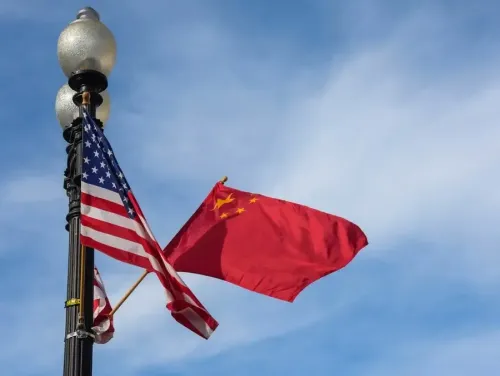
The United States and Russia forced the removal of critical safety provisions from a proposed United Nations framework on lethal autonomous weapons — including a requirement for human review of AI-selected military targets — according to a report by The Washington Post published on 27 September 2026. The deletions occurred during closed-door negotiations in Geneva under the Convention on Certain Conventional Weapons (CCW), the UN's most advanced effort yet to establish binding international rules for weapons capable of identifying, selecting, and engaging targets with limited or no human intervention.
What Was Removed from the Draft
According to the report, which cited three people familiar with the closed-door discussions and documents reviewed by the newspaper, US and Russian diplomats spent nearly 15 hours revising the document on the final day of talks. The two delegations removed language requiring autonomous weapons to operate in a 'predictable' and 'reliable' manner, and deleted provisions mandating ethical considerations in the deployment of such systems.
A further provision — one that would have required human review of AI-identified military targets before any attack — was also struck from the text. Separately, references to the design and development of autonomous weapons were removed, along with terms related to explainability and traceability: safeguards intended to clarify how an AI system reaches a targeting decision and to assign accountability when errors occur.
The legal framework was also reportedly narrowed from international law broadly to international humanitarian law specifically — a distinction critics argue creates a narrower accountability window.
Closed Doors, Unequal Numbers
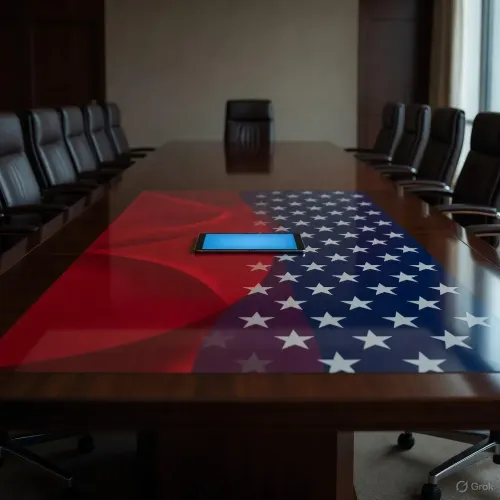
The negotiations took place after UN cameras were switched off and civil society observers were asked to leave the room, the Post reported. The US and Russian delegations each brought roughly 10 legal experts — nearly twice the number fielded by many other participating countries — giving the two powers a structural advantage in shaping the final language.
The US State Department, Russian Foreign Ministry, and the United Nations did not respond to requests for comment from the newspaper.
Human Rights Watch Raises the Alarm
Human Rights Watch separately confirmed that Russia and the United States had weakened provisions that were broadly supported by other governments. Verity Coyle of Human Rights Watch warned that rules permitting machines to make life-and-death decisions without effective human oversight would likely result in greater civilian harm, reduced accountability, and the accelerated expansion of automated warfare.
Notably, the revised document still contains language stating that human control and judgement are required for compliance with international law, and it retains restrictions on systems that cannot operate within the rules of armed conflict. Critics argue, however, that without the deleted specificity, those clauses are too vague to be enforceable.
The Stakes: A Legally Binding Treaty
The Geneva process currently produces non-binding recommendations. However, the draft document is widely regarded as a potential foundation for the world's first legally binding treaty regulating lethal autonomous weapons. Decisions under the CCW are reached by consensus, a structure that gives major military powers disproportionate influence and allows individual states to block stronger provisions backed by a majority of nations.
Governments are expected to reconvene in Geneva in November to decide whether three years of deliberations should advance to formal treaty negotiations. This comes amid rising urgency: the Post previously reported that the US military used an Anthropic chatbot to help identify nearly 1,000 targets in the first 24 hours of its conflict with Iran, and AI-assisted targeting systems have featured in multiple recent conflicts.
The Pentagon is also separately revising its 2023 directive on autonomous weapons — a policy requiring 'appropriate levels of human judgement' over the use of force. President Donald Trump ordered an update of that directive in June, but a revised version had not been released as of late September, according to reports. The next Geneva meeting in November may prove decisive for whether autonomous weapons remain a regulatory grey zone or become subject to hard international law.
Point of View
Designed for equity, has effectively become a veto instrument for the two countries with the most to lose from binding constraints. What makes this especially urgent is the operational context: AI is no longer hypothetical in warfare — it is already selecting targets in live conflicts. A November meeting that fails to reverse these deletions will not merely delay a treaty; it will normalise the absence of one.
NationPress
27 Sept 2026
Frequently Asked Questions
What safeguards did the US and Russia remove from the UN autonomous weapons framework?
The US and Russia deleted provisions requiring autonomous weapons to be 'predictable' and 'reliable', mandating ethical considerations in their use, and requiring human review of AI-identified targets before an attack. They also removed references to explainability and traceability — mechanisms for understanding how an AI targeting decision was reached and for assigning accountability.
Where and when did these negotiations take place?
The talks were held in Geneva earlier in September 2026 under the Convention on Certain Conventional Weapons (CCW). The final day of revisions involved US and Russian diplomats working for nearly 15 hours behind closed doors, after UN cameras were turned off and civil society observers were asked to leave.
Why does the Geneva autonomous weapons process matter?
The Geneva process under the CCW is the UN's most advanced attempt to regulate lethal autonomous weapons internationally. Although current recommendations are non-binding, the draft document could form the basis for the world's first legally binding treaty on weapons that select and engage targets with limited or no human control.
What did Human Rights Watch say about the weakened framework?
Human Rights Watch confirmed that Russia and the United States had weakened provisions broadly supported by other governments. Verity Coyle of Human Rights Watch warned that allowing machines to make life-and-death decisions without effective human oversight would likely lead to greater civilian harm, reduced accountability, and the accelerated spread of automated warfare.
What happens next in the negotiations?
Governments are expected to reconvene in Geneva in November 2026 to decide whether three years of deliberations should advance to formal negotiations on a new international legal instrument. The outcome of that meeting will determine whether lethal autonomous weapons become subject to binding international law or remain largely unregulated.