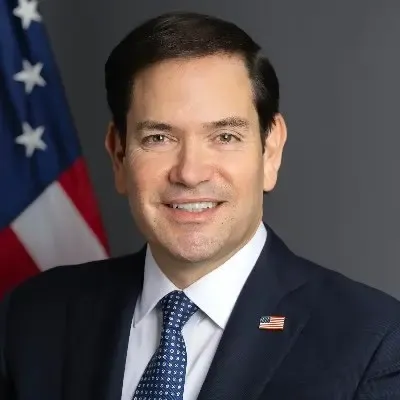
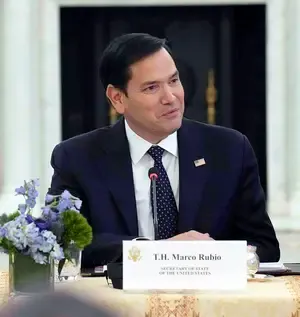
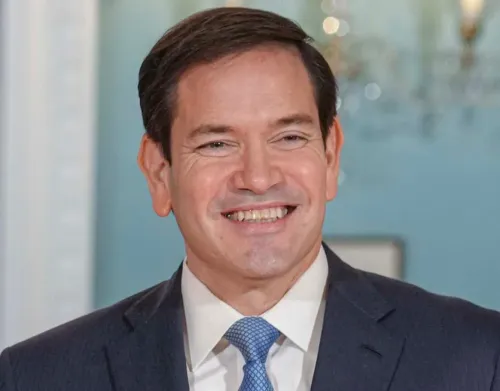
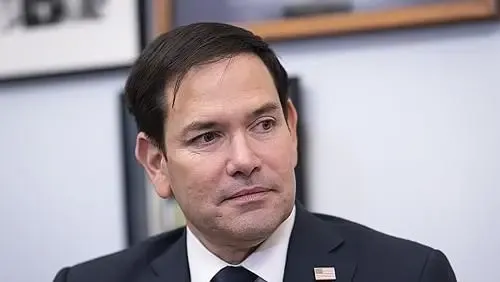
Are We United Under One Civilization? US Secretary of State Marco Rubio Speaks at Munich
Synopsis
In a pivotal address at the Munich Security Conference, US Secretary of State Marco Rubio called for a renewed transatlantic alliance focused on key issues like reindustrialization and border security. He warned against the delusions of the post-Cold War era and emphasized the need for collaboration. This speech highlights the ongoing challenges and opportunities facing Western civilization.
Key Takeaways
Renewed transatlantic mission emphasizing seriousness and reciprocity.
Focus on reindustrialization and emerging technologies.
National security tied to defending a way of life.
Mass migration poses significant challenges.
Importance of collaboration with European allies.
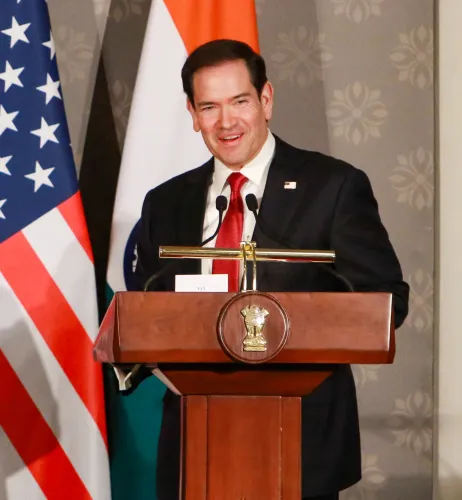
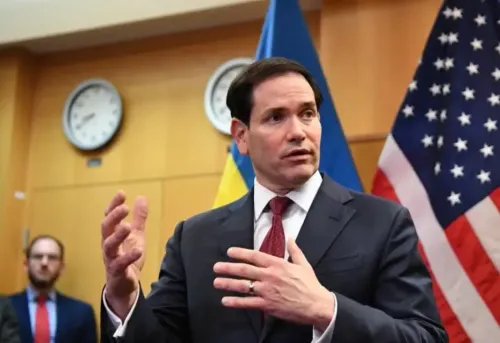
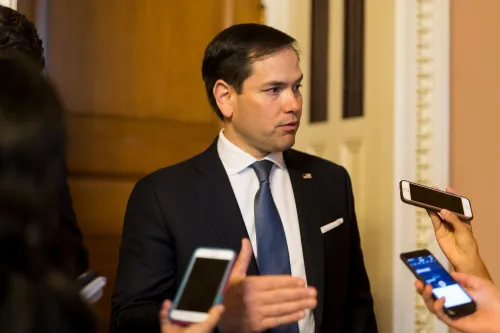
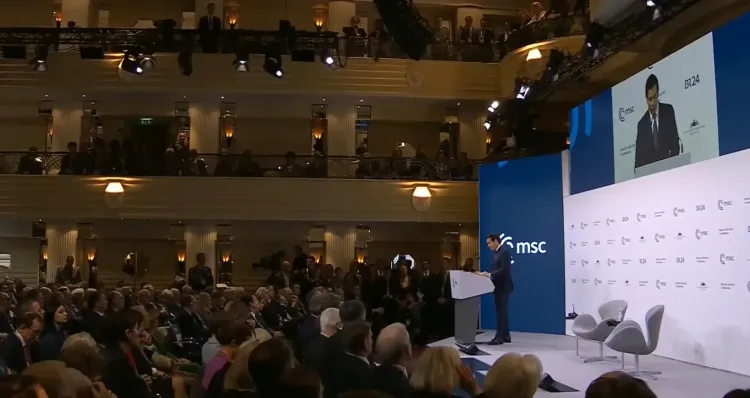
Washington, Feb 14 (NationPress) During his inaugural address at the Munich Security Conference on Saturday, US Secretary of State Marco Rubio emphasized the necessity for a revitalized transatlantic mission — one founded on “seriousness and reciprocity” and concentrated on reindustrialization, border security, and pioneering technologies like “cutting-edge artificial intelligence.”
“We assemble here today as participants of a historic coalition, one that has transformed and safeguarded the globe,” Rubio stated in Munich, referencing the conference's Cold War roots and the “divide between communism and liberty” that once traversed Germany.
Rubio contended that the post-Cold War era engendered “a perilous illusion” — including the notion of “the end of history,” the belief that “trade and commerce alone would now supersede nationhood,” and that a “rules-based global order” would “replace the national interest.” He deemed that “a misguided idea” that has “cost us significantly,” citing deindustrialization and fragile supply chains across the West.
“We have made these blunders collectively, and now, collectively, we owe it to our populace to confront these realities and to advance, to rebuild,” Rubio stated.
He characterized the Trump administration’s strategy as one of national revitalization, informing European partners that while Washington is “prepared, if necessary, to do this alone,” it “hopes to do this together with you, our allies in Europe.” Rubio articulated the US-Europe alliance as civilizational, asserting, “We are part of one civilization – Western civilization.”
He remarked that national security is “not merely a series of technical questions,” but begins with “what exactly are we defending,” adding: “Armies fight for a people; armies fight for a nation. Armies fight for a way of life.”
Rubio described “mass migration” as “a crisis that is transforming and destabilizing societies across the West,” and contended, “We must also gain control of our national borders.” He emphasized that managing who and how many people enter our countries is not an expression of xenophobia.
Rubio advocated for a broader agenda beyond defense expenditure — encompassing “commercial space exploration and cutting-edge artificial intelligence,” “industrial automation,” “a Western supply chain for critical minerals,” and “a unified effort to compete for market share in the economies of the Global South.”
In a brief Q&A session, Rubio expressed uncertainty about prospects for concluding the war in Ukraine. “We are unsure if the Russians are genuinely committed to ending the conflict; they claim they are,” he remarked, adding that the most challenging questions remain unanswered and “work remains to be done.”
He noted, “The United States has implemented further sanctions on Russia’s oil,” and mentioned that in discussions with India, they have secured their commitment to cease purchasing additional Russian oil.
Regarding China, in anticipation of a summit expected “in about two months’ time” between President Trump and President Xi Jinping, Rubio stated that it would be “geopolitical malpractice to not engage in discussions with China,” but cautioned that “any agreements must not compromise our national interests.”
The Munich Security Conference is an annual assembly of global leaders, diplomats, and defense officials that has consistently served as a pivotal platform for transatlantic security discussions, covering topics such as NATO burden-sharing and significant global conflicts.
Point of View
I believe that the insights shared by Secretary Rubio at the Munich Security Conference shed light on the pressing need for a unified approach to global challenges. His emphasis on collaboration and national interests resonates with the ongoing discourse surrounding transatlantic relations. It's vital for our nation to engage with allies while safeguarding our interests in a rapidly changing world.
NationPress
3 Oct 2026
Frequently Asked Questions
What did Marco Rubio emphasize in his address?
Marco Rubio emphasized the need for a renewed transatlantic mission focused on seriousness, reciprocity, reindustrialization, and border control.
What issues did Rubio address regarding national security?
He highlighted that national security is about defending a nation and a way of life, not just technical questions.
What challenges did he mention about the post-Cold War era?
Rubio described the post-Cold War period as producing a dangerous delusion about the end of history and the replacement of nationhood by trade.
What stance did Rubio take on mass migration?
He referred to mass migration as a crisis and stressed the need for control over national borders.
What is the Munich Security Conference known for?
The Munich Security Conference is recognized as a key forum for transatlantic security discussions, including NATO and global conflicts.