Nvidia chips in Russian drones: US Senator Warren demands Jensen Huang testify before Congress

Synopsis
US Senator Elizabeth Warren has put Nvidia CEO Jensen Huang on notice: testify before Congress or face political consequences. The trigger — reports that Nvidia AI computers may be inside Russian drones that killed three civilians in Ukraine on 6 July — has reignited a fierce debate over whether America's semiconductor giants are doing enough to stop their technology from fuelling adversarial militaries.
Key Takeaways
US Senator Elizabeth Warren called for congressional action on 25 August over reports that Nvidia AI chips may be powering Russian drones in Ukraine.
Drones allegedly using Nvidia technology reportedly killed three civilians in Ukraine on 6 July , according to the Democratic staff of the Senate Banking Committee .
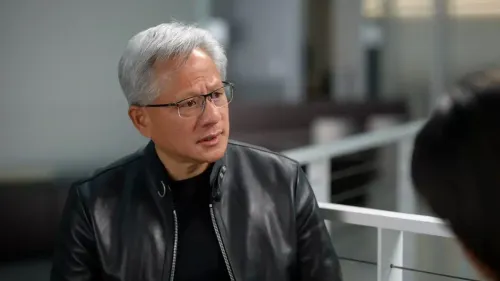
Warren demanded Nvidia CEO Jensen Huang testify before Congress on how the company monitors the destination and use of its products.
Nvidia did not respond to the allegations within the committee statement; the specific chip models and supply route were not identified.
Warren called for bipartisan legislation to strengthen controls preventing advanced US technology from reaching foreign adversaries.
The senator had previously, in July , sought AI-military contract details from the Defence Department and eight tech companies including Nvidia.
US Senator Elizabeth Warren has called for immediate congressional action after reports emerged that artificial intelligence computers manufactured by Nvidia may be powering Russian drones deployed in the war against Ukraine. The Massachusetts Democrat, who serves as the ranking member on the Senate Banking, Housing and Urban Affairs Committee, said the allegations raise serious questions about whether the American chipmaker is doing enough to keep its advanced technology out of adversarial hands.
What the Allegations Claim
According to a statement released by the Democratic staff of the Senate Banking, Housing and Urban Affairs Committee, Russian drones allegedly powered by Nvidia AI computers killed three civilians in Ukraine on 6 July. Senator Warren did not identify the specific Nvidia systems allegedly found in the drones, nor did she detail how the chips may have reached Russia. The committee statement similarly offered no sourcing for the underlying reports on which the allegation was based.
Notably, Nvidia did not respond to the allegations within the committee statement, and the company's position on the matter was not included.
Warren's Demand: Huang Must Testify
Warren called on Nvidia chief executive Jensen Huang to appear before Congress and explain how the company monitors the destination and end-use of its products. In pointed remarks, she said: 'If Jensen Huang has time to attend a $1 million-a-head dinner at Mar-a-Lago and fly across the world to meet with President Xi Jinping, he can find time to testify in front of Congress about reports that NVIDIA technology is powering Russia's war machine.'
She further stated: 'These allegations raise serious questions about whether NVIDIA is taking necessary steps to ensure its technology does not end up in the hands of adversaries.'
The Broader Export Control Concern
The allegations add to growing congressional anxiety over the possible diversion of advanced American technology to Russia through intermediaries or third countries, despite existing restrictions on direct exports. Advanced AI processors and computing systems have well-documented military applications — including autonomous navigation, image recognition, target identification, and rapid processing of data collected by unmanned aerial systems.
This comes amid a pattern of concern on Capitol Hill about technology leakage: multiple investigations have found that sanctioned nations have obtained US-origin chips through circuitous supply chains involving entities in the UAE, Turkey, and other intermediary markets.
Warren's Track Record on AI and Military Use
Senator Warren has been among the most persistent voices in the US Senate pressing both the government and major technology firms on the military use of artificial intelligence. In July, she sought detailed information from the Defence Department and eight technology companies — including Nvidia — about contracts to deploy AI on classified military networks. She said at the time that the government had provided little clarity on safeguards governing such systems, including protections against civilian harm, unlawful surveillance, and the misuse of autonomous weapons.
What Congress Is Being Asked to Do
Warren explicitly called for bipartisan legislative action, saying: 'Congress needs to act now to pass bipartisan bills that will make sure our most advanced technologies are not being used to compromise our national security.' The push for stronger export controls is likely to intersect with ongoing debates over the CHIPS and Science Act implementation and broader US semiconductor policy toward China and Russia.
Whether Congress acts — and whether Jensen Huang agrees to testify — will be closely watched by the semiconductor industry and US national security officials alike.
Point of View
But the evidentiary gap in the committee statement is conspicuous — no chip model, no supply chain detail, no sourcing for the underlying reports. That weakness could allow Nvidia to deflect rather than answer. The deeper structural problem is one Congress has not solved: US export controls are only as strong as third-country enforcement, and Russia has repeatedly sourced sanctioned technology through intermediary jurisdictions. Putting Jensen Huang in a hearing room may generate headlines; closing the grey-market supply chain requires something far more unglamorous — coordinated multilateral enforcement that the US has struggled to sustain.
NationPress
25 Aug 2026
Frequently Asked Questions
What are the allegations against Nvidia regarding Russian drones?
Reports, cited by the Democratic staff of the US Senate Banking Committee, allege that AI computers made by Nvidia may be powering Russian drones deployed in Ukraine. Drones reportedly linked to Nvidia technology killed three civilians in Ukraine on 6 July, though the specific chip models and how they reached Russia were not identified in the committee statement.
What is Senator Elizabeth Warren demanding from Nvidia?
Senator Warren is demanding that Nvidia CEO Jensen Huang testify before Congress to explain how the company monitors where its products end up and how they are used. She also called for bipartisan legislation to strengthen US export controls on advanced technology.
Has Nvidia responded to the allegations?
Nvidia's response to the allegations was not included in the Senate Banking Committee statement. The company's official position on the matter had not been made public at the time of the committee's release.
How could Nvidia chips reach Russia despite export restrictions?
Direct exports of advanced US technology to Russia are restricted, but congressional concern centres on diversion through intermediaries or third countries. Advanced AI processors have reportedly reached sanctioned nations via supply chains routed through other jurisdictions, a gap that Warren and others argue requires stronger legislative action.
What is Warren's broader record on AI and military technology?
Senator Warren has been a consistent voice on Capitol Hill pressing for oversight of AI in military applications. In July, she sought information from the Defence Department and eight technology companies, including Nvidia, about AI contracts on classified military networks, citing insufficient government disclosure on safeguards against civilian harm and autonomous weapons misuse.