US adopts 'managed trade' stance on China, deficit halved: Greer
Synopsis
The US has formally abandoned hope of reforming China's economic model and instead embraced a 'managed trade' framework — complete with a new bilateral board ring-fencing $30 billion each in non-sensitive goods. The headline number: a US goods trade deficit with China cut from $300 billion to $140 billion annualised. Washington is calling it a win; the real test is whether the rebalancing holds.
Key Takeaways
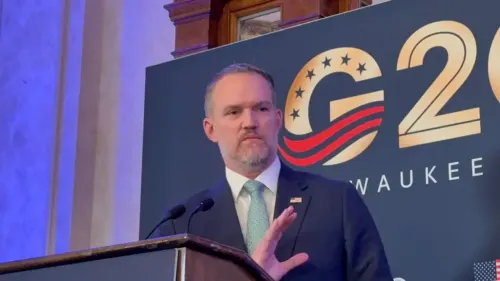
US Trade Representative Jamieson Greer announced a formal shift to a 'managed trade relationship' with China on 2 October 2026 .
The US goods trade deficit with China has reportedly fallen from $300 billion to an annualised $140 billion — a reduction of more than 50 per cent .
The new US-China Board of Trade , launched after a Trump-Xi meeting, has each side selecting around $30 billion in non-sensitive goods for more stable bilateral trade.
The board covers roughly 30 per cent of US exports to China and about 10 per cent of Chinese exports to the US.
Greer confirmed there is no timeline for tariff reductions; any future trade actions will follow US legal procedures.
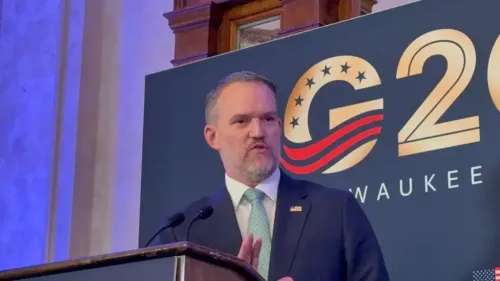
Remarks were made at the G20 Trade Ministers' Meeting in Milwaukee , where the US holds the 2026 presidency.
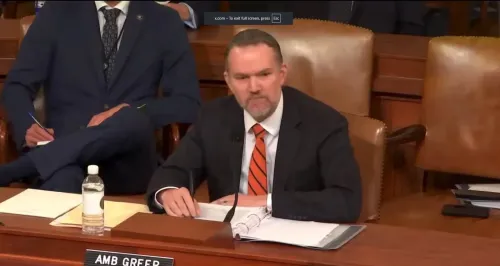
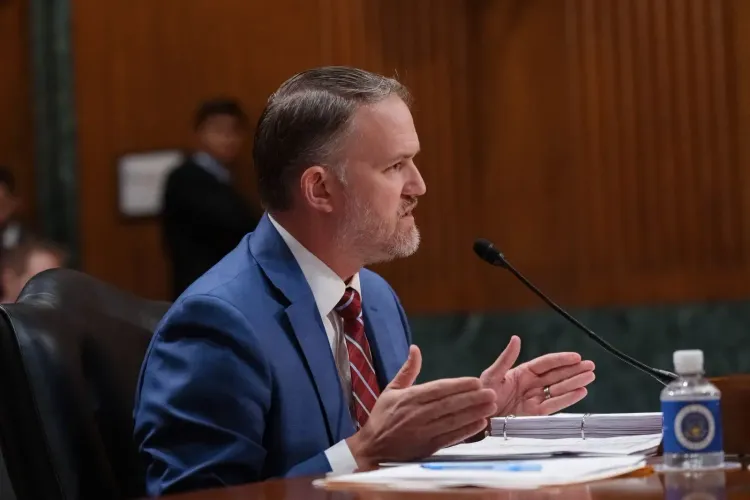
US Trade Representative Jamieson Greer said on 2 October 2026 that the United States has moved to a 'managed trade relationship' with China, abandoning expectations of structural reform to Beijing's state-led economic model. Speaking after the G20 Trade Ministers' Meeting in Milwaukee, Greer outlined a new bilateral mechanism designed to ring-fence a portion of trade from future geopolitical and commercial tensions.
Why Washington Changed Course
Greer was direct about the rationale behind the shift. Decades of US engagement with China had demonstrated that Beijing's economic system is inseparable from its political structure — making market-based reform, while welcomed in principle, an unreliable planning assumption.
'Our view over the past decades of American experience with the Chinese is their economic system, which is not a market-based system. It's closely tied to their political system, which makes it very difficult to change,' Greer told reporters.
President Donald Trump, he said, had therefore opted for a more transactional approach. 'The president, very appropriately, has decided to have a managed trade relationship with China, and we have seen that become very effective,' Greer said.
Trade Deficit Narrows by More Than Half
Greer pointed to the US goods trade deficit with China as a concrete marker of progress. The deficit stood at $300 billion at the start of Trump's second administration; it is now on track to reach $140 billion on an annualised basis — a reduction of more than 50 per cent, according to Greer.
The figure, if sustained, would represent the most significant rebalancing of the bilateral trade account in years, though critics are likely to scrutinise whether the shift reflects genuine structural change or redirected trade flows through third countries.
The US-China Board of Trade
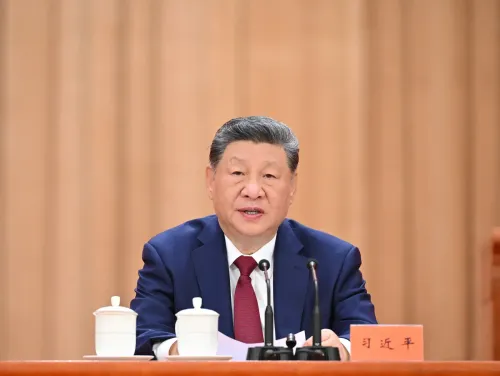
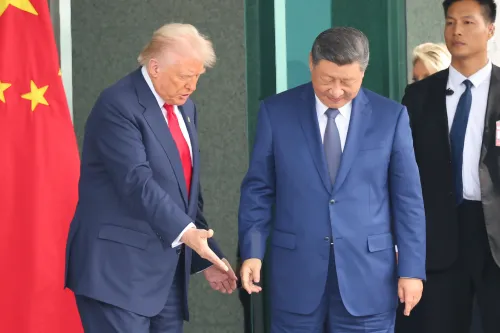
Central to the new framework is the US-China Board of Trade, a mechanism inaugurated following a recent meeting between Trump and Chinese President Xi Jinping. On the US side, the body involves the Office of the US Trade Representative and the Treasury Department.
Both sides have each selected approximately $30 billion worth of goods — described as non-sensitive and suitable for relatively freer exchange — that will form a more stable bilateral trading base. Together, the selected goods cover roughly 30 per cent of US exports to China and about 10 per cent of Chinese exports to the United States.
'Goods that we think we can trade a little more freely, goods that we don't want to be used as leverage in any trade measures that might happen in the future,' Greer said.
Tensions Will Persist, Washington Warns
Greer was careful to frame the mechanism as a stabilising floor rather than a resolution. He acknowledged that trade friction between the two countries would continue, particularly in sectors involving national security concerns or practices Washington considers unfair.
'There's going to be protection, as long as there are unfair trading practices in China,' he said, adding that the Board of Trade was intended to provide a foundation for the relationship without eliminating broader safeguards.
When asked whether the mechanism would lead to tariff reductions on a set timeline, Greer was unequivocal: 'No.' He noted that any future tariff or trade actions would proceed through established US legal procedures, with Board of Trade recommendations potentially feeding into that process.
G20 Backdrop and What Comes Next
Greer's remarks came as trade ministers from the world's largest economies gathered in Milwaukee to discuss structural excess capacity, forced labour, food-related trade coercion, and potential reform of the global trading architecture. The United States holds the G20 presidency in 2026.
The Trump administration has increasingly tied trade policy to domestic manufacturing revival, supply-chain resilience, and broader economic security — a framing that suggests the 'managed trade' approach to China is unlikely to soften significantly regardless of near-term diplomatic signals. How Beijing responds to the formalisation of this framework, and whether the Board of Trade expands its goods coverage, will be closely watched in the months ahead.
Point of View
And probably never will. What this framework does is lock in a transactional equilibrium rather than pursue transformation — pragmatic, but it also signals that the rules-based trading order the US championed for half a century is being replaced, at least bilaterally, by managed bilateralism. The $140 billion deficit figure deserves scrutiny: a portion of the reduction may reflect trade diversion through Vietnam, Mexico, and other third-country corridors rather than genuine demand shifts. And the Board of Trade's ring-fenced $30 billion per side is modest against total bilateral goods trade that runs into the hundreds of billions — the mechanism stabilises the margins, not the core.
NationPress
2 Oct 2026
Frequently Asked Questions
What is the US 'managed trade relationship' with China?
It is a policy approach announced by US Trade Representative Jamieson Greer in which Washington manages and balances bilateral trade with China rather than seeking fundamental changes to Beijing's state-led economic model. The approach was formalised after President Trump concluded that China's economic system, being closely tied to its political structure, is unlikely to shift toward market-based norms.
What is the US-China Board of Trade?
The US-China Board of Trade is a bilateral mechanism inaugurated after a meeting between President Trump and Chinese President Xi Jinping. It involves the Office of the US Trade Representative and the Treasury Department on the US side, and has each country designating roughly $30 billion in non-sensitive goods for more stable, lower-friction trade that would not be used as leverage in future trade disputes.
By how much has the US-China trade deficit fallen?
According to Greer, the US goods trade deficit with China stood at $300 billion at the start of Trump's second administration and is now on track for an annualised $140 billion — a reduction of more than 50 per cent. However, independent analysts are likely to examine how much of that reflects genuine rebalancing versus trade diversion through third countries.
Will US tariffs on Chinese goods be reduced under the new framework?
Greer said there is no set timeline for tariff reductions. Any future tariff or trade actions will need to go through established US legal procedures, with the Board of Trade's recommendations potentially factored into that process. He confirmed that trade friction and protective measures will continue in sectors linked to unfair trading practices or national security.
What was the broader context of Greer's remarks?
Greer spoke after the G20 Trade Ministers' Meeting in Milwaukee, where the US holds the 2026 G20 presidency. Ministers were discussing structural excess capacity, forced labour in supply chains, food-related trade coercion, and reform of the global trading system — issues that frame the wider geopolitical context in which the US-China managed trade framework is taking shape.