US walks out on France at UNSC amid row over UN human rights chief Volker Turk
Synopsis
The US walked out on France at the Security Council — an almost unprecedented move between allies — after Paris publicly mocked Washington for voting with Russia and North Korea against UN human rights chief Volker Turk, who was re-elected by 144 countries despite a joint US-Russia effort to block him. The episode lays bare how far Trump's America has drifted from the multilateral consensus its allies still defend.
Key Takeaways
The US staged a walkout at the UNSC on 28 July when France's Permanent Representative Jerome Bonnafont began speaking, in an almost unprecedented rupture between allies.
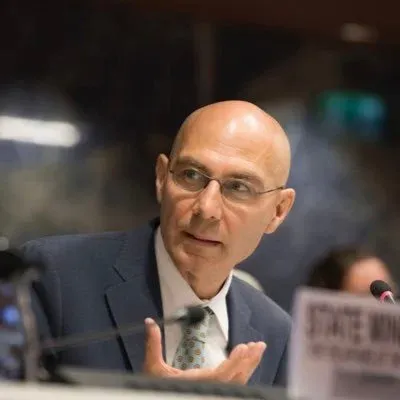
Volker Turk was re-elected as UN High Commissioner for Human Rights on 25 July by 144 votes to 10 , with 13 abstentions; his second term starts in October .
Both the US and Russia voted against Turk and failed in two procedural bids to delay or block the vote.
India abstained on both procedural motions but voted for Turk's re-election despite his past criticism of New Delhi.
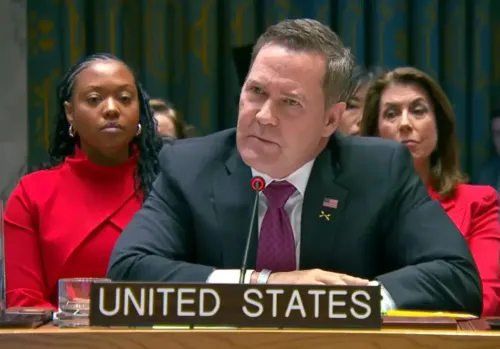
France's Geneva mission triggered the walkout by posting on X that the US now 'stands alongside North Korea, Nicaragua, Mali and Russia, isolated.' US Permanent Representative Mike Waltz and diplomat Dan Negrea both publicly rebuked France in unusually sharp terms.
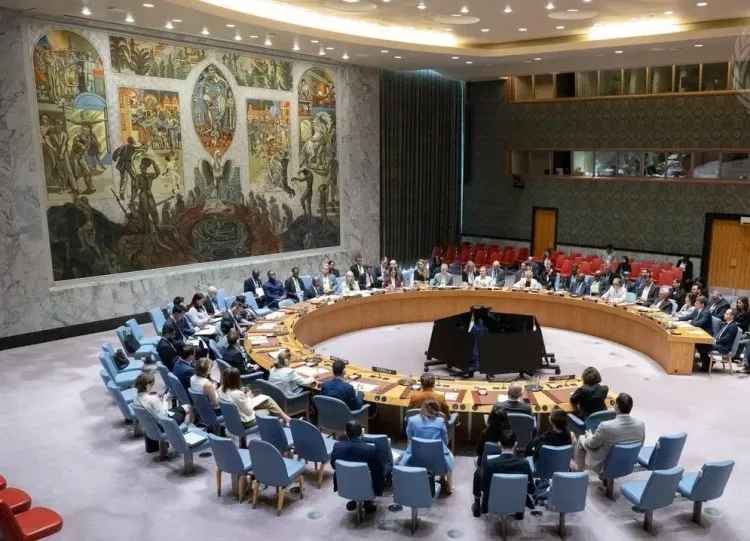
The United States staged a dramatic walkout at the United Nations Security Council (UNSC) on Monday, 28 July, when France's Permanent Representative Jerome Bonnafont rose to speak during a discussion on Ukraine — a rare and arguably unprecedented rupture between two Western allies, rooted in a bitter dispute over the re-election of Volker Turk as UN High Commissioner for Human Rights.
What Triggered the Walkout
The immediate flashpoint was a post on X by France's UN mission in Geneva on Saturday, 26 July, which needled Washington for voting alongside Russia, North Korea, Nicaragua, and Mali against Turk's re-election. 'The US used to be a beacon of human rights. Not anymore. Today, it stands alongside North Korea, Nicaragua, Mali and Russia, isolated. And the world no longer listens to it,' the French mission wrote.
Senior US diplomat Dan Negrea walked out as Bonnafont began speaking and later declared at the Council that the US would not be 'listening to their politicised drivel until they renounce their condescending and disrespectful rhetoric and behave in a manner commensurate with their seat on this Council.' He accused France of planning to 'feign moral outrage and pretend to lecture the rest of us about every topic' — including human rights issues unrelated to the Council's mandate.
The General Assembly Vote That Started It All
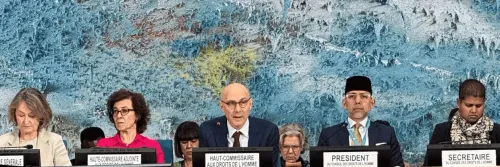
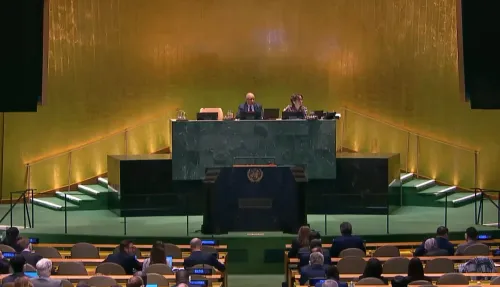
The underlying dispute traces to a General Assembly vote on Friday, 25 July, in which Turk was re-elected to a second term as High Commissioner — a post he has held since 2022 — by a commanding margin of 144 countries in favour, 10 against, and 13 abstentions. His new term begins in October.
Both the US and Russia attempted procedural manoeuvres to block or delay the vote. US diplomat Jeffrey Bartos moved to postpone the poll, arguing countries had insufficient notice; the motion failed with only 27 votes in favour, 63 against, and 47 abstentions. Russia then sought to defer the election to next year, pending the appointment of a new Secretary-General; that motion was defeated 71 to 19, with 52 abstentions. India abstained on both procedural motions but ultimately voted for Turk's re-election — notable given that Turk has at times criticised New Delhi's human rights record.
The US-France Exchange on X
US Permanent Representative Mike Waltz responded sharply on X to France's post, writing: 'France voted for someone who has been lecturing free, sovereign democracies like the United States, the UK, and Israel, while cozying up to the world's worst oppressors.' He added: 'It is disappointing — though not surprising — that this is how France deflects on its shameful vote to coddle some of the worst human rights abusers.'
After Turk's re-election was confirmed, Bartos posted on X that Turk had led the UN's human rights office 'to its deathbed,' adding: 'Today's vote kicked the bucket.'
Who Is Volker Turk and Why Does He Divide Opinion
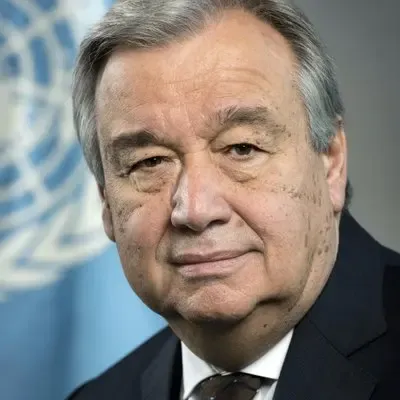
Volker Turk spent decades in the UN human rights office and the UN Secretariat before being elected High Commissioner in 2022. He has drawn criticism from both Washington and Moscow for applying scrutiny broadly — including to major powers and their allies. Russia's Deputy Permanent Representative Dmitry Chumakov accused Turk and his office of displaying 'political bias' and advancing 'Western geopolitical interests under the pretext of promoting and protecting human rights.' The US, meanwhile, alleged he was disproportionately targeting 'free democracies including the United States, UK, France, Australia, Italy, and more than any other country, Israel,' in Bartos's words.
What This Signals for Western Cohesion
Analysts note that a US walkout against a treaty ally at the Security Council is, at minimum, highly unusual and may be without precedent in the Council's modern history. The episode underscores the deepening rift between President Donald Trump's administration and traditional European partners on multilateral institutions, rules-based norms, and human rights diplomacy. With Turk's second term set to begin in October, the tension between Washington and the broader UN human rights architecture is unlikely to ease in the near term.
Point of View
Handing critics a rhetorical gift that Paris wasted no time exploiting. Meanwhile, India's decision to back Turk despite his criticism of New Delhi reflects a calibrated multilateralism — one that prioritises institutional legitimacy over bilateral optics. The deeper question is whether the US posture hardens into a sustained boycott of UN human rights mechanisms, which would leave a vacuum that China and Russia are well-positioned to fill.
NationPress
28 Jul 2026
Frequently Asked Questions
Why did the US walk out on France at the UN Security Council?
The US walked out on 28 July when France's Permanent Representative began speaking during a UNSC discussion on Ukraine. Senior US diplomat Dan Negrea said the walkout was a direct response to France's 'condescending and disrespectful rhetoric' — specifically a post on X by France's Geneva mission that mocked the US for voting alongside Russia and North Korea against the re-election of UN human rights chief Volker Turk.
Who is Volker Turk and why was his re-election controversial?
Volker Turk is the UN High Commissioner for Human Rights, first elected to the role in 2022 after a long career in the UN system. His re-election was contested because he has criticised major powers including the US, Russia, and their allies on human rights grounds. Both Washington and Moscow accused him of political bias and voted against his second term, which begins in October.
How did the General Assembly vote on Turk's re-election go?
The General Assembly voted on 25 July to re-elect Turk by 144 votes in favour, 10 against, and 13 abstentions. The US and Russia both failed in procedural bids to postpone or cancel the vote before it was held.
How did India vote on Volker Turk's re-election?
India abstained on both US and Russian procedural motions to delay the vote but ultimately voted in favour of Turk's re-election — a notable position given that Turk has at times criticised India's human rights record.
What did France post on X that angered the US?
France's UN mission in Geneva posted on X on 26 July that 'The US used to be a beacon of human rights. Not anymore. Today, it stands alongside North Korea, Nicaragua, Mali and Russia, isolated. And the world no longer listens to it.' US Permanent Representative Mike Waltz and diplomat Dan Negrea both publicly rebuked France in response.