Vance: Trump will not let Iran conflict become a 'forever war'
Synopsis
VP Vance has drawn a hard line: no forever war in Iran, not even two years. With Trump’s Iran strike already executed and a historic three-way Trump-Xi-Putin summit days away in Shenzhen, the administration is simultaneously fighting and negotiating — and the world is watching to see if that contradiction holds.
Key Takeaways
Vance stated on Monday that President Trump will not allow the Iran conflict to become a ‘forever war.’ Vance explicitly ruled out a 10-, 15-, or even two-year US military commitment in Iran.
Trump struck Iran’s nuclear programme , which Vance described as a threat to the United States .
A landmark summit between Trump , Xi Jinping , and Vladimir Putin is set for Shenzhen on 19 November .
China’s Foreign Ministry confirmed the meeting will cover ‘global peace and strategic stability.’ China’s Middle East envoy Zhai Jun visited Iran , Oman , and Saudi Arabia to ease regional tensions.
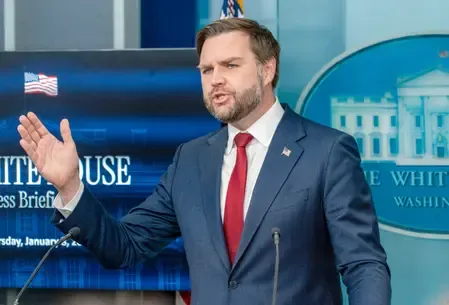
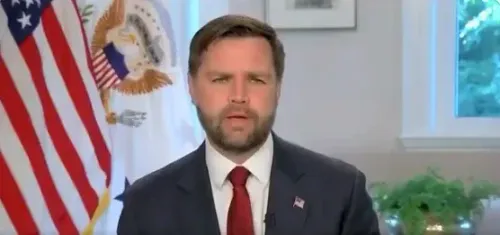
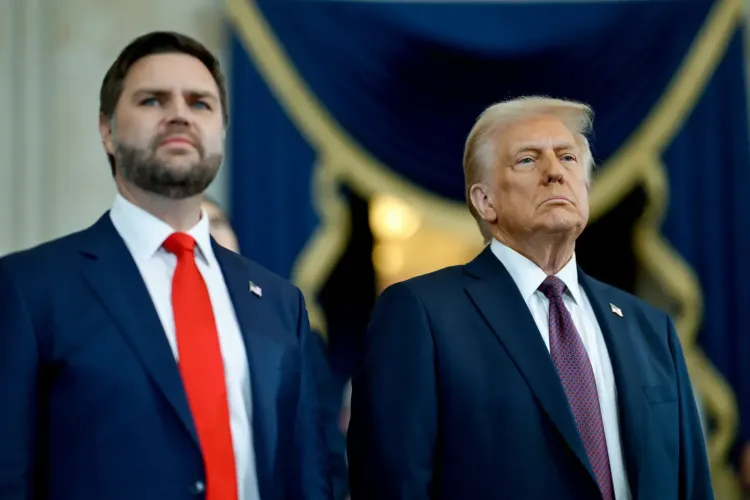
US Vice President J.D. Vance has said that President Donald Trump will not allow the ongoing conflict with Iran to become a “forever war,” explicitly ruling out even a two-year American military commitment while defending Trump’s decision to strike Iran’s nuclear programme. The remarks, made in an interview with Fox News host Laura Ingraham on Monday, signal the administration’s intent to draw a clear temporal boundary around its military engagement.
What Vance Said
“He is not going to let this become a forever war,” Vance said during the interview. “We told the American people we would do no more forever wars.”
Vance went further, explicitly rejecting an extended timeline: “We are not going to allow this to become a 10- or 15-year commitment, or frankly even a two-year commitment.” He did not, however, specify a withdrawal date or define what a successful conclusion would look like in operational terms.
Defending the Strike on Iran’s Nuclear Programme
Vance defended Trump’s stated objective of destroying Iran’s nuclear programme, framing it as a direct threat to United States national security. He also criticised neoconservatives and others who reportedly advocated for indefinite American involvement in the region, expressing confidence that Trump would bring the conflict to a close.
Notably, the Vice President’s remarks come at a time of acute geopolitical flux, with the administration simultaneously managing a military engagement and high-stakes diplomatic signalling toward China and Russia.
The Shenzhen Summit: Trump, Xi and Putin to Meet
The interview came ahead of a landmark three-way summit involving Trump, Chinese President Xi Jinping, and Russian President Vladimir Putin in Shenzhen on Thursday, 19 November. China’s Foreign Ministry confirmed on Monday that Xi would host the meeting, with spokesperson Mao Ning describing it as the first face-to-face meeting between the three heads of state.
Mao said the leaders would discuss “global peace and strategic stability,” though she declined to confirm whether Iran or nuclear arms control would feature on the formal agenda, saying further details would be released as arrangements developed.
China’s Parallel Diplomatic Push
Separately, China said its special envoy for the Middle East, Zhai Jun, had visited Iran, Oman, and Saudi Arabia in an effort to ease regional tensions. The diplomatic outreach underscores Beijing’s growing role as a mediating power in the region, a posture it has cultivated since brokering the Iran-Saudi Arabia normalisation talks in 2023.
This comes amid a broader international effort to prevent the Iran conflict from escalating into a wider regional war, with multiple back-channel contacts reportedly underway. The Shenzhen summit, if it delivers even a framework on Iran, could mark a significant shift in the conflict’s trajectory.
Point of View
Which is a structurally different position. Ruling out two years is easy to say and hard to enforce when the conditions for exit remain undefined. The Shenzhen summit is the more consequential variable: if Trump, Xi, and Putin forge even a loose framework on Iran, it could hand the US a face-saving off-ramp. If not, Vance’s timeline pledge faces an early credibility test. Mainstream coverage is fixating on the ‘forever war’ soundbite; the more important question is what ‘success’ against Iran’s nuclear programme actually means in verifiable terms — and who gets to say when it has been achieved.
NationPress
17 Nov 2026
Frequently Asked Questions
What did VP Vance say about the Iran conflict?
VP J.D. Vance said President Trump will not allow the conflict with Iran to become a ‘forever war,’ explicitly ruling out a 10-, 15-, or even two-year US military commitment. He made the remarks in a Fox News interview with Laura Ingraham on Monday.
Why did Trump attack Iran’s nuclear programme?
According to Vance, Trump ordered the strike on Iran’s nuclear programme because it was considered a direct threat to the United States. The Vice President defended the decision while simultaneously pledging to avoid a prolonged military engagement.
What is the Shenzhen summit and when does it take place?
The Shenzhen summit is a three-way meeting between US President Trump, Chinese President Xi Jinping, and Russian President Vladimir Putin, confirmed for 19 November in Shenzhen, China. It is described by China’s Foreign Ministry as the first face-to-face meeting between the three heads of state, with global peace and strategic stability on the agenda.
Will Iran or nuclear arms control be discussed at the Shenzhen summit?
China’s Foreign Ministry spokesperson Mao Ning declined to confirm specific agenda items when asked about Iran or nuclear arms control, saying further details would be released as arrangements developed.
What is China doing to ease tensions in the Middle East?
China said its special envoy for the Middle East, Zhai Jun, visited Iran, Oman, and Saudi Arabia to hold talks aimed at reducing regional tensions. The move reflects Beijing’s increasingly active diplomatic role in the region since it brokered the Iran-Saudi Arabia normalisation in 2023.