White House Backs Rep. Evans' American Dream Op-Ed

Synopsis
The White House on 8 July 2026 shared Republican Representative Gabe Evans' op-ed contending that the American Dream depends on policies that reward hard work. The move signals executive alignment with a merit-first economic philosophy as Congress debates tax, overtime, and welfare work-requirement reforms.
Key Takeaways
The White House amplified Rep.
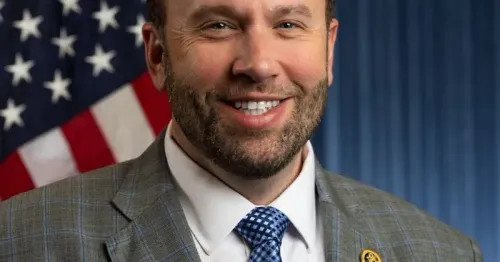
Gabe Evans' op-ed on 8 July 2026 , backing his argument that the American Dream requires rewarding hard work.
Evans is a Republican U.S.
Representative whose piece was published in the Rocky Mountain Voice .
The endorsement aligns with the 1996 Personal Responsibility and Work Opportunity Reconciliation Act 's philosophy of tying federal assistance to labour participation.
Congressional debates on tax brackets , overtime rules , and work requirements in federal benefit programmes are the key legislative arenas to watch.
The White House's signal may increase executive pressure for merit-based economic legislation through the rest of 2026 .
The White House on Wednesday, 8 July 2026 amplified a piece by Republican U.S. Representative Gabe Evans, sharing his argument that the American Dream remains contingent on policies that reward hard work and individual effort.
Context
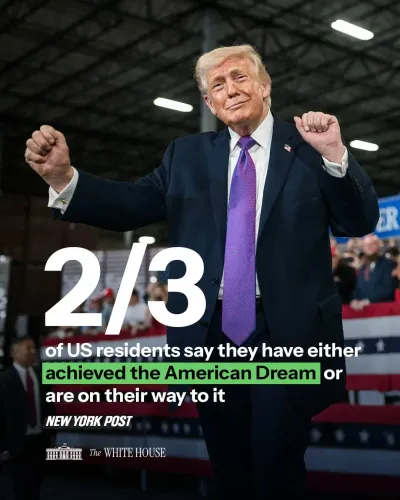
The White House reposted Representative Gabe Evans' opinion piece titled 'The American Dream still depends on rewarding hard work', published in the Rocky Mountain Voice. The amplification signals executive-branch alignment with Evans' core thesis: that economic mobility is best secured through policies that directly incentivise labour and personal responsibility.
Evans is a Republican member of the U.S. House of Representatives. His piece frames economic opportunity as inseparable from the principle of earned success, positioning individual effort — not redistribution — as the engine of upward mobility.
Policy Backdrop
The White House's endorsement fits within a long-standing Republican policy tradition that links economic dignity to work. The landmark 1996 Personal Responsibility and Work Opportunity Reconciliation Act established work requirements for welfare recipients, embedding the idea that federal assistance should be tied to active participation in the labour force.
That philosophical lineage continues to shape contemporary debates over tax policy, overtime compensation rules, and eligibility conditions for federal benefit programmes. By sharing Evans' piece, the White House reinforces this framework at a moment when Congress is actively deliberating on several of these fronts.
Stakeholders and Impact
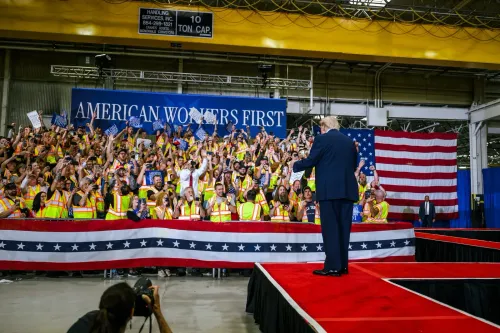
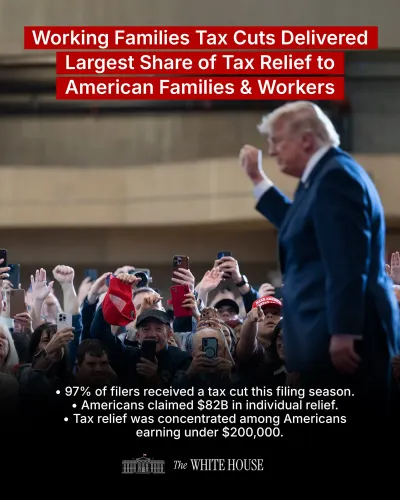
American workers — particularly those in wage-dependent, hourly, and blue-collar roles — are the stated beneficiaries of the policy vision Evans articulates. Advocates of this approach argue that rewarding labour through lower tax burdens and streamlined work incentives strengthens economic participation and reduces dependency on government transfers.
Critics of this framing, however, contend that structural barriers — including healthcare costs, childcare access, and wage stagnation — limit the degree to which individual effort alone can guarantee upward mobility. The White House's endorsement does not address these counterarguments directly.
What's Next
Congressional debates on tax brackets, overtime rules, and work requirements embedded in federal assistance programmes are expected to intensify through the remainder of 2026. The White House's public alignment with Evans' position suggests the executive branch may use its platform to build pressure for legislative action consistent with this philosophy.
Whether Evans' arguments translate into specific legislative proposals — and whether they attract bipartisan support — will determine the practical reach of the 'reward hard work' doctrine beyond the messaging cycle.
Point of View
Not a passive retweet — it frames the administration's economic identity around earned success rather than structural intervention. This fits a broader Republican strategy of contrasting 'work-first' economics against equity-focused or entitlement-expansion proposals ahead of a contested legislative calendar. For Indian observers, the parallel to debates over welfare conditionality and labour formalisation is instructive: the tension between rewarding effort and addressing structural disadvantage is a universal fault line in economic policymaking. The real test will come when rhetoric meets the specifics of tax and welfare legislation on the House floor.
NationPress
8 Jul 2026
Frequently Asked Questions
What did the White House post about Gabe Evans?
The White House shared Rep. Gabe Evans' opinion piece arguing that the American Dream depends on policies that reward hard work, signalling executive support for his merit-based economic philosophy.
What is the American Dream policy debate in the US in 2026?
In 2026, the debate centres on whether economic opportunity is best delivered through work incentives, lower taxes, and welfare work requirements, or through structural investments that address barriers beyond individual effort.
What are work requirements in US welfare programmes?
Work requirements are conditions attached to federal assistance programmes that require recipients to be employed or actively seeking work. They were formally introduced at scale by the 1996 Personal Responsibility and Work Opportunity Reconciliation Act.
Why does the White House amplifying a congressman's op-ed matter?
When the White House shares a legislator's opinion piece, it signals executive-branch alignment with that position, which can influence the legislative agenda, build public pressure, and shape the administration's policy messaging.