White House Backs the Blue, Hits Democrats on Sanctuary Policies
Synopsis
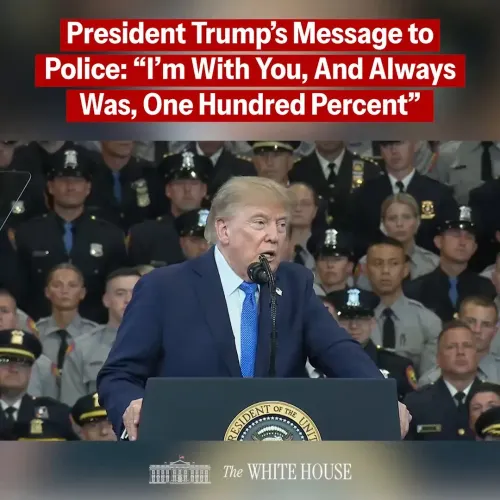
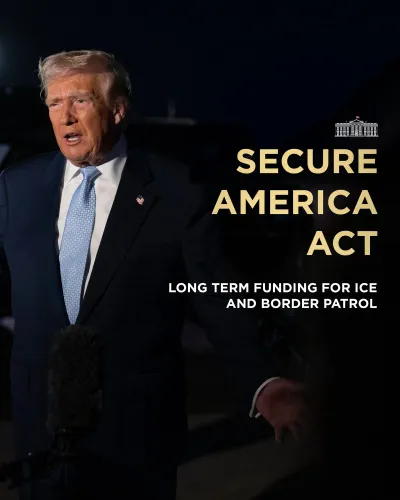
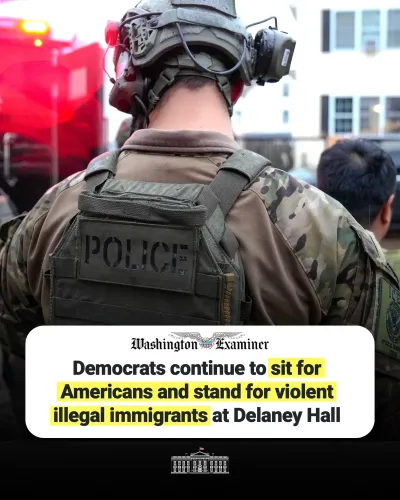
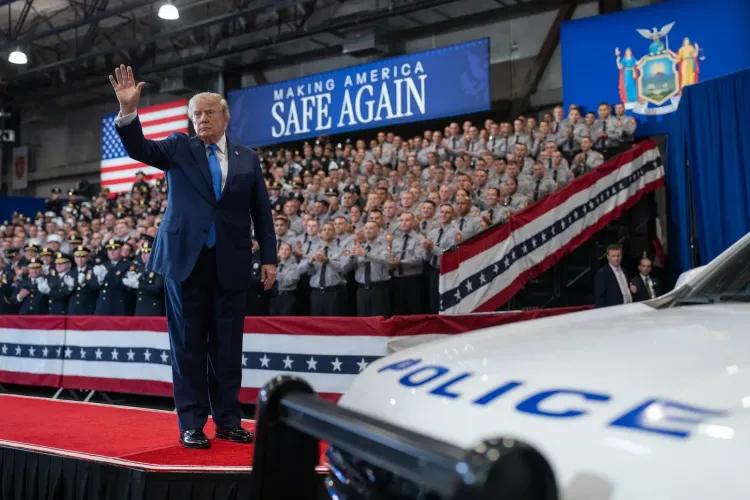
The White House on August 15, 2026 attacked Democrats over 'defund the police' and sanctuary policies, declaring 'WE BACK THE BLUE. ENFORCE THE LAW. RESTORE SAFETY.' — reinforcing the Trump Administration's core domestic-security identity in a blunt, flag-waving social-media post.
Key Takeaways
The White House posted a sharp partisan message on August 15, 2026 backing law enforcement and opposing sanctuary policies.
The post directly accused 'Far Left Democrats' of pushing to defund law enforcement and shielding criminals.
Sanctuary policies limit local government cooperation with federal immigration detainer requests — a long-running flashpoint in U.S. politics.
The 'defund the police' debate traces back to 2020 and the aftermath of George Floyd's death, and remains a live partisan fault line.
The Trump Administration has consistently used police funding and immigration cooperation as political identity markers since taking office.
The battle lines over American policing just got redrawn — loudly. The White House fired a pointed broadside on Saturday, August 15, 2026, squarely targeting what it called 'Far Left Democrats' who 'push to defund law enforcement and protect criminals through sanctuary policies.'
The post — blunt, flag-emoji-capped, all-caps in its closing salvo — distilled the Trump Administration's domestic security posture into three commands: 'WE BACK THE BLUE. ENFORCE THE LAW. RESTORE SAFETY.' It is the kind of message designed to travel fast and land hard in an American political environment where policing and immigration remain the sharpest of fault lines.
The 'Defund' Debate That Will Not Die
The phrase 'defund the police' entered the national vocabulary in 2020, in the aftermath of the death of George Floyd, when several Democratic-led cities debated or enacted cuts to police budgets. The political backlash was swift and durable. Republican strategists seized on the slogan as evidence of a party soft on crime; many Democrats spent the years that followed trying to distance themselves from it. The White House post signals that the Trump Administration has no intention of letting that wound close.Sanctuary Policies: Federal Power vs. Local Control
At the heart of the immigration dimension is the question of sanctuary jurisdictions — cities and states that limit cooperation between local officials and federal immigration enforcement on detainer requests. The Trump Administration has consistently framed these policies as a public-safety threat, arguing that shielding undocumented individuals from federal detainers allows dangerous criminals to remain on American streets. Sanctuary advocates counter that local control over policing is a constitutional right and that broad immigration sweeps erode community trust in law enforcement. Federal funding leverage — conditioning police grants on immigration cooperation — has been a recurring tool in this fight, and court challenges have followed at every turn. The White House's language on August 15 suggests that front is far from settled.A Partisan Rhythm That Defines an Era
This is not a new argument — it is a well-worn groove in U.S. domestic politics that has deepened with every election cycle since the mid-2010s. Republican administrations have made law-enforcement support and federal preemption over sanctuary rules a signature theme. The White House post fits that pattern precisely, using Independence Day-adjacent imagery — the American flag emoji — to wrap a partisan message in a patriotic frame. The audience is not undecided voters; it is a base that responds to exactly this register. For observers in India and beyond, the post is a window into how the world's most powerful executive branch communicates domestic political identity in the social-media age: compressed, combative, and calibrated for maximum emotional resonance.Point of View
The administration links two separate policy debates — local policing budgets and federal immigration enforcement — into a single, emotionally unified threat narrative. The move keeps the base energised while forcing Democrats to relitigate a slogan many of them rejected. For the Trump Administration, the real audience for this message may be the 2026 midterm electorate rather than any specific legislative agenda.
NationPress
15 Aug 2026
Frequently Asked Questions
What does 'Back the Blue' mean in US politics?
'Back the Blue' is a phrase expressing support for police officers and law enforcement agencies, frequently used by Republican politicians and the Trump Administration to contrast with Democratic calls for police budget cuts.
What are sanctuary policies in the United States?
Sanctuary policies are local or state measures that limit cooperation between city or state officials and federal immigration authorities, particularly on detaining undocumented immigrants at federal request.
What was the 'defund the police' movement?
The 'defund the police' movement emerged in 2020 following the death of George Floyd , calling for reductions in police budgets and reallocation of funds to social services; it was championed by some progressive Democrats but rejected by many in the party's mainstream.
Why does the Trump Administration oppose sanctuary cities?
The Trump Administration argues that sanctuary policies prevent federal immigration enforcement, allow dangerous individuals to remain in communities, and undermine national law — a position it has backed with threats to withhold federal funding from non-cooperating jurisdictions.
What is the White House's current stance on police funding?
The White House under the Trump Administration supports robust federal funding for law enforcement and has pushed to condition grants on local cooperation with federal immigration detainer requests.