White House Touts Trump's 6GW Plants, Nuclear Push, Alaska LNG
Synopsis
The White House has declared a new era of American energy dominance, citing a 6-gigawatt power facility, eight new large-scale nuclear plants, and the Alaska LNG project as landmark achievements under President Trump.
Key Takeaways
The White House posted on October 2, 2026 claiming three major energy milestones under President Trump .
A 6-gigawatt power generation facility is cited as a flagship achievement of the Trump energy agenda.
Eight new large-scale nuclear power plants represent an unprecedented commitment to nuclear expansion in the United States .
The long-stalled Alaska LNG project is presented as now moving forward, targeting export markets in Asia and Europe .
The administration frames these moves under the label 'American energy dominance,' with implications for global LNG pricing and US-India energy ties.
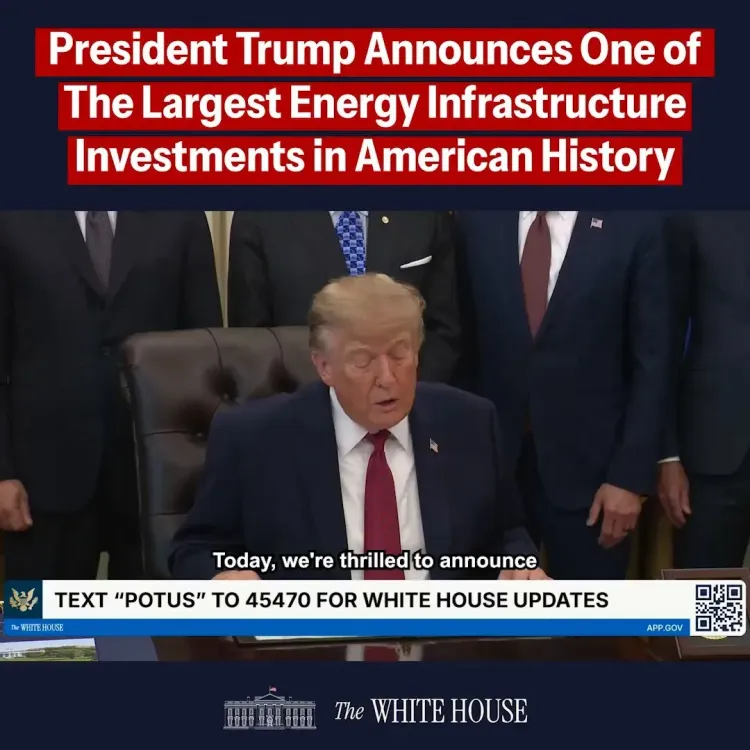
A 6-gigawatt power generation facility, eight new large-scale nuclear power plants, and the Alaska LNG project — the White House is framing these three milestones as proof that President Donald Trump has fundamentally reordered American energy policy, posting the claim in the early hours of Thursday, October 2, 2026.
Three projects, one declaration of dominance
The White House post is blunt and sequenced like a scorecard: first the 6 GW generation facility, then eight nuclear plants, then the long-contested Alaska LNG pipeline — each named as a deliverable of what the administration is calling 'American energy dominance.' The phrase 'Dealmaker-in-Chief' is deployed alongside President Trump's name, a deliberate callback to his pre-presidential brand and a signal that the White House wants these wins read as personal executive achievements, not bureaucratic outputs.
The Alaska LNG project is perhaps the most politically loaded of the three. Long stalled by financing gaps, environmental litigation, and shifting gas markets, the project — which would pipe natural gas from the North Slope of Alaska to a liquefaction terminal for export to Asian markets — has been a flashpoint in US energy debates for over a decade. Its inclusion here signals the administration is claiming the logjam broken.
Nuclear's comeback as a Trump policy signature
Eight new large-scale nuclear plants is a striking number. The United States has not brought a new reactor to commercial operation at scale in decades — Georgia's Vogtle Unit 3 came online only after years of delays and massive cost overruns. Committing to eight plants in one policy push would represent a structural shift in American energy infrastructure planning, staking out nuclear not as a niche supplement but as a cornerstone of the grid's future.
The framing of a 'new era' ties these energy moves to a broader Trump administration argument: that domestic fossil fuel and nuclear expansion, rather than accelerated renewables transition, is the path to lower consumer prices and geopolitical leverage. With global energy markets still navigating post-conflict volatility, Washington's ability to export LNG at scale carries weight far beyond domestic politics — it speaks directly to energy-dependent allies in Europe and Asia.
Why India is watching this closely
India, one of the world's largest and fastest-growing energy consumers, has a direct stake in US LNG export capacity. Increased American LNG supply on global markets applies downward pressure on spot prices — a meaningful input for India's import bill. Simultaneously, the US push into new nuclear construction reignites conversations around civil nuclear cooperation, an area where India and the United States have an existing framework but uneven follow-through. Eight new American reactors also means eight new reference points for reactor design, financing models, and regulatory approvals that Indian planners will study closely.
Energy dominance, when it is this loud and this specific, is never only a domestic story. It is a message to markets, to allies, and to rivals — all at once.
Point of View
Particularly toward Asian buyers including India, Japan, and South Korea. For New Delhi, this matters on two registers: cheaper LNG on global markets eases India's import burden, while a revived US nuclear build-out could accelerate the long-pending civil nuclear cooperation agenda between the two countries. The 'Dealmaker-in-Chief' branding also tells us something — the administration is running an electoral-ready highlight reel, packaging infrastructure as personal achievement ahead of whatever political moment this precedes.
NationPress
1 Oct 2026
Frequently Asked Questions
What is the Alaska LNG project and why is it significant?
The Alaska LNG project is a proposed pipeline and liquefaction terminal that would transport natural gas from Alaska's North Slope for export, primarily to Asian markets. It has been under discussion for over a decade and its advancement would significantly boost US LNG export capacity.
How many nuclear power plants is the Trump administration building?
The White House has announced eight new large-scale nuclear power plants as part of its energy dominance agenda — a significant expansion given that the US has not commissioned new reactors at scale in decades.
What is the 6 gigawatt power facility mentioned by the White House?
The White House cited a 6-gigawatt power generation facility as one of three major energy milestones under President Trump, though further details about the specific facility's location and technology were not provided in the announcement.
How does US energy expansion affect India?
Increased US LNG exports can moderate global spot prices, reducing India's energy import costs. A US nuclear construction boom also has implications for India-US civil nuclear cooperation, potentially accelerating reactor technology partnerships under existing bilateral frameworks.
What does 'American energy dominance' mean in Trump's policy agenda?
'American energy dominance' is a term the Trump administration uses to describe a strategy of maximising domestic fossil fuel and nuclear production to lower consumer prices at home and increase geopolitical leverage through energy exports abroad.