White House Honors 13 US Troops Killed in 2021 Kabul Airport Bombing
Synopsis
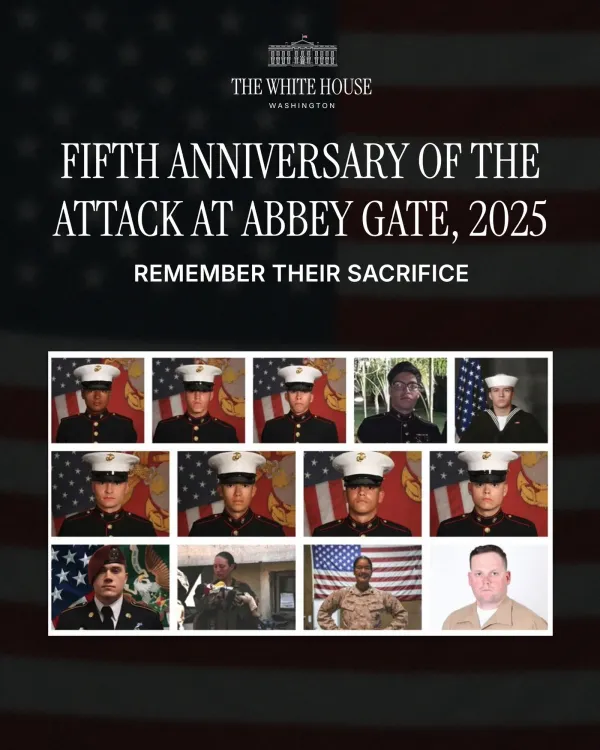
On the fifth anniversary of the Abbey Gate suicide bombing that killed 13 US service members at Kabul airport during the 2021 Afghanistan evacuation, the White House issued a solemn tribute honoring the fallen and condemning the attack as an act of Jihadi terrorism.
Key Takeaways
The Abbey Gate suicide bombing on August 26, 2021 killed 13 US service members at Kabul airport during the final American evacuation from Afghanistan.
The attack was the single deadliest day for US forces in Afghanistan in more than a decade.
The bombing occurred days before the August 31, 2021 withdrawal deadline set under the 2020 Doha Agreement with the Taliban.
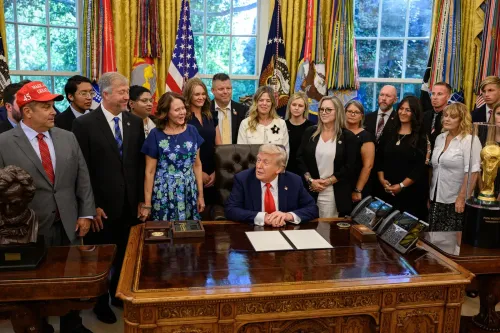
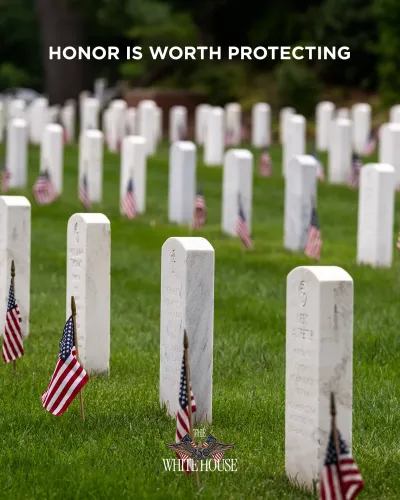
The White House marked the fifth anniversary on August 26, 2026 with an official tribute calling the troops 'brave warriors.' The commemoration is part of recurring official remembrances honouring the human cost of the 2021 US withdrawal from Afghanistan.
The fallen troops' families, recognised as Gold Star families , remain central to the national memory of America's longest war.
Five years after a suicide bomber tore through a crowd at Abbey Gate, Kabul airport, on August 26, 2021, the United States paused to remember the 13 American service members whose lives were cut short in the final, desperate hours of the longest war in American history. The White House marked the solemn anniversary with a tribute to the fallen, calling each one a 'brave warrior' and the attack an act of 'evil Jihadi terrorism.'
The Last Casualties of America's Longest War
The Abbey Gate bombing struck at the height of the chaotic US evacuation from Afghanistan, as thousands of civilians and allied nationals surged toward the airport perimeter hoping to board flights out of a country that had fallen to the Taliban in a matter of days. A suicide bomber detonated an explosive device in the dense crowd, killing the 13 US troops — among them Marines, a Navy corpsman, and an Army soldier — and wounding dozens more. It was the single deadliest day for American forces in Afghanistan in more than a decade. The attack came just days before the August 31, 2021 deadline set under the Doha Agreement, the February 2020 deal between the United States and the Taliban that set the terms for America's exit after two decades of military operations. The withdrawal, overseen by the Biden administration, drew intense scrutiny as the Taliban swept across Afghan provinces at a speed that caught Western governments off guard, triggering the frantic airlift.A Nation's Grief, Carried by Military Families
For the families of the fallen — now formally recognised as Gold Star families — each anniversary reopens a wound that never fully closes. The White House tribute on August 26, 2026 is part of a pattern of official commemorations that successive administrations have maintained, underscoring that the human cost of the Afghanistan war did not end with the last aircraft leaving Kabul. The names of the 13 heroes, as the White House called them, remain a reference point in every debate about the terms of the exit and the counterterrorism posture the United States left behind. The broader Afghanistan veterans community — hundreds of thousands of Americans who served across two decades — watches these commemorations as a measure of whether the nation retains the moral memory of what was asked of those who served. For them, Abbey Gate is not a footnote; it is the punctuation mark at the end of a generation-long sentence. Five years on, the question the anniversary keeps forcing back into public view is not just one of grief — it is one of accountability, legacy, and what the United States owes those who answered the call on its behalf.Point of View
Ensuring that the decisions leading to those 13 deaths remain part of the public record. Each annual commemoration implicitly sustains pressure on both parties to account for the strategic and intelligence failures that preceded the bombing. For an Indian audience, the post is a reminder that the Taliban's return to power — which the bombing bookended — continues to shape regional security dynamics in South Asia. The long arc from the Doha Agreement to Abbey Gate to today's Afghanistan is a case study in how the end of a war can be as consequential as its conduct.
NationPress
26 Aug 2026
Frequently Asked Questions
What was the Abbey Gate bombing in Kabul?
The Abbey Gate bombing was a suicide attack on August 26, 2021 , at the Abbey Gate entrance of Kabul's Hamid Karzai International Airport , carried out during the final US evacuation from Afghanistan. It killed 13 American service members and wounded dozens of others, making it the deadliest day for US forces in Afghanistan in over a decade.
How many US soldiers died in the Kabul airport attack in 2021?
13 US service members were killed in the Abbey Gate suicide bombing on August 26, 2021 . They included Marines, a Navy corpsman, and an Army soldier who were part of the security contingent managing the mass evacuation at Kabul airport.
Why did the US withdraw from Afghanistan in 2021?
The US withdrawal was carried out under the terms of the Doha Agreement , signed in February 2020 between the United States and the Taliban, which set a deadline for the complete exit of American forces after two decades of military operations in Afghanistan.
What is a Gold Star family in the US military?
A Gold Star family is the official designation in the United States for the immediate family members of a military service member who died in active duty. The families of the 13 troops killed at Abbey Gate hold this status.
Why is the White House commemorating the Kabul bombing in 2026?
August 26, 2026 marks the fifth anniversary of the Abbey Gate bombing. The White House issued a tribute as part of recurring official commemorations that successive administrations have maintained to honour the last American casualties of the Afghanistan war.