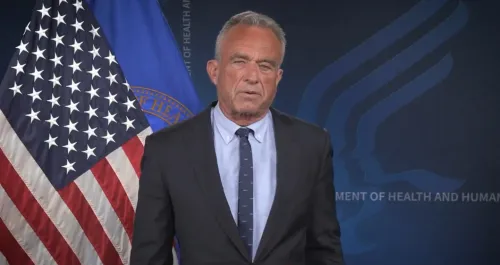
White House Promotes RFK Jr. Op-Ed on US Health Reform

Synopsis
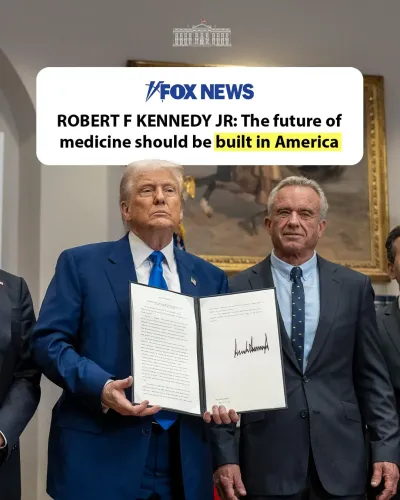
The White House on 23 June 2026 amplified an op-ed by HHS Secretary Robert F. Kennedy Jr. on the future of American medicine, reinforcing the Trump administration's 'Make America Healthy Again' push to overhaul federal health policy and agency priorities.
Key Takeaways
The White House officially promoted an op-ed by HHS Secretary Robert F.
Kennedy Jr. on 23 June 2026 .
Kennedy was nominated to lead HHS by President Trump in December 2024 under the 'Make America Healthy Again' banner.
HHS oversees the FDA , CDC , and NIH — the three most powerful federal health regulatory bodies.
The op-ed focuses on Kennedy's vision for rebuilding American medicine and reforming existing health practices.
Pharmaceutical companies, public health agencies, and medical groups are closely monitoring the policy direction under Kennedy's leadership.
Further regulatory and funding decisions at key health agencies are expected to follow in the coming months.
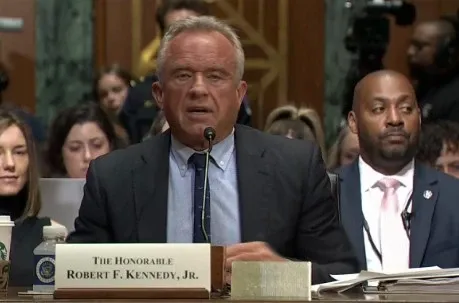
The White House, the official communications account of the Executive Office of the President of the United States, on Tuesday, 23 June 2026, shared a link to an opinion piece authored by Robert F. Kennedy Jr., the Secretary of Health and Human Services, pointing followers to his vision for the future of medicine in America.
Context
The post, directed at the White House's own account with a downward arrow emoji, amplified an op-ed published under Kennedy's byline outlining his perspective on rebuilding American medicine. The White House shared the link without additional commentary, signalling institutional endorsement of the views expressed in the piece.
Kennedy was nominated by President Donald Trump in December 2024 to lead the Department of Health and Human Services (HHS) as part of what the administration framed as a 'Make America Healthy Again' initiative focused on chronic disease and healthcare system reform.
Policy Backdrop
The Department of Health and Human Services oversees some of the most consequential federal health agencies in the United States, including the Food and Drug Administration (FDA), the Centers for Disease Control and Prevention (CDC), and the National Institutes of Health (NIH).
Since taking charge, Kennedy has been associated with efforts to reorient federal health priorities toward prevention, scrutiny of existing medical and pharmaceutical practices, and what supporters describe as greater transparency in public health policy. The White House has consistently used its official channels to amplify these positions.
Stakeholders and Impact
The promotion of Kennedy's health reform views through the official White House account carries significant weight for a broad range of stakeholders. Public health agencies, pharmaceutical companies, medical professionals, and patient advocacy groups are all closely watching the direction HHS takes under his leadership.
Kennedy's appointment was controversial from the outset, given his long history of questioning vaccine safety and mainstream medical consensus. His op-ed, amplified by the White House, signals that the administration intends to continue pressing its health reform agenda through both policy action and public persuasion.
What's Next
Observers will be watching for concrete regulatory or policy announcements from HHS in the coming months that translate the vision outlined in Kennedy's op-ed into administrative action. Congressional committees overseeing health policy are also expected to scrutinise any significant shifts in agency leadership priorities or funding allocations at the FDA, CDC, and NIH.
The use of the White House's official platform to promote a cabinet secretary's opinion writing underscores the administration's strategy of keeping health system reform at the centre of its public messaging heading deeper into 2026.
Point of View
Not merely a personal crusade by a controversial appointee. By lending institutional weight to Kennedy's vision, the administration is attempting to normalise a significant departure from post-war public health orthodoxy. For India and other nations that align portions of their own health regulatory frameworks with US agency guidance, shifts at the FDA and CDC carry downstream implications. The pattern of using executive communications channels to build public consensus around reform — before formal policy is announced — is a well-established playbook, and this post fits squarely within it.
NationPress
23 Jun 2026
Frequently Asked Questions
Who is Robert F. Kennedy Jr. and what is his role in the US government?
Robert F. Kennedy Jr. is the US Secretary of Health and Human Services, nominated by President Trump in December 2024. He is an environmental attorney known for his criticism of vaccines and focus on chronic disease prevention.
What is the 'Make America Healthy Again' initiative?
'Make America Healthy Again' is a policy framing used by the Trump administration to justify its health reform agenda, centred on addressing chronic disease, increasing regulatory scrutiny of pharmaceuticals, and restructuring federal health agencies.
What agencies does the US Department of Health and Human Services control?
HHS oversees several major federal agencies including the Food and Drug Administration (FDA), the Centers for Disease Control and Prevention (CDC), and the National Institutes of Health (NIH).
Why is RFK Jr.'s appointment as HHS Secretary controversial?
Kennedy has a long history of questioning vaccine safety and challenging mainstream medical consensus, positions that put him at odds with the scientific community and public health establishment.
What could RFK Jr.'s health reforms mean for global health policy?
Since many countries, including India, reference FDA and CDC guidance in their own regulatory frameworks, significant shifts in US health agency priorities under Kennedy could have downstream effects on global pharmaceutical approvals and public health standards.