White House Unveils Next Frontier of Quantum Innovation

Synopsis
The White House on June 23, 2026, announced a new quantum innovation initiative under President Trump, building on the 2018 National Quantum Initiative Act. The move reinforces U.S. efforts to maintain technological leadership in quantum science amid intensifying global competition, with implications for allied nations including India.
Key Takeaways
The White House shared a fact sheet on June 23, 2026 titled 'Ushering in the Next Frontier of Quantum Innovation,' attributed to President Donald J.
President Trump originally signed the National Quantum Initiative Act in December 2018 , establishing the federal quantum research framework.
Key agencies involved in U.S. quantum research include NIST , NSF , and the Department of Energy .
U.S. quantum policy is explicitly framed around maintaining leadership over China , which has made quantum technology a national priority.
India and the U.S. have identified quantum technology as a key pillar of bilateral cooperation under the iCET framework.
Congressional appropriations for quantum research centres and potential new export controls on quantum hardware are the immediate policy items to watch.
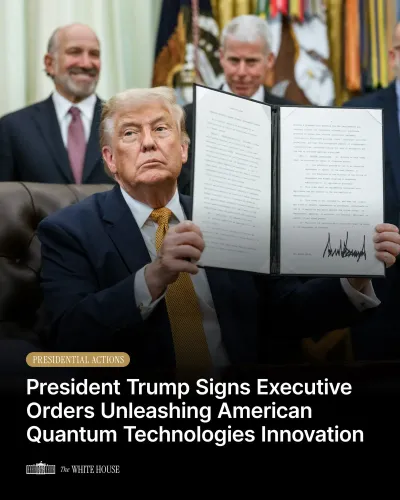
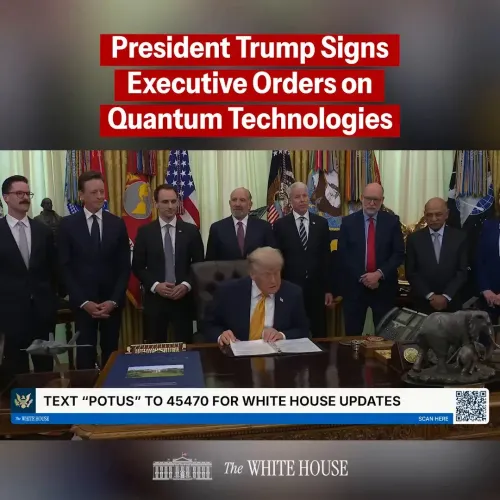
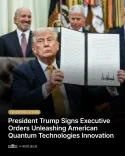
The White House on Tuesday, June 23, 2026, announced a new push on quantum innovation, sharing a fact sheet outlining steps the Trump administration is taking to advance the United States' position in quantum information science and technology.
The post, shared from the official White House account on X, was captioned 'Ushering in the Next Frontier of Quantum Innovation' and linked to a White House fact sheet attributed to President Donald J. Trump. The announcement signals a continued federal commitment to maintaining American leadership in one of the most consequential emerging technology sectors.
Context
The United States has been building its quantum policy architecture since December 2018, when President Trump signed the National Quantum Initiative Act into law. That legislation established a coordinated federal programme to accelerate quantum information science research and workforce development, drawing in agencies including the National Institute of Standards and Technology (NIST), the National Science Foundation (NSF), and the Department of Energy (DOE). The 2026 announcement appears to build further on that foundational framework. Quantum computing and quantum communications represent a generational leap in processing power, with applications ranging from cryptography and drug discovery to materials science and national security. Nations that establish early dominance in the field are expected to hold significant strategic and economic advantages for decades.Policy Backdrop
The National Quantum Initiative Act was the first comprehensive federal law to treat quantum information science as a national priority, creating dedicated research centres and funding pipelines across multiple agencies. Successive administrations have layered additional funding and coordination mechanisms onto this 2018 framework without fundamentally restructuring it, reflecting a rare area of bipartisan continuity in technology policy. U.S. quantum policy has been explicitly shaped by competition with China, which has made quantum technology a centrepiece of its own national science strategy. Washington has responded by tightening export controls on sensitive quantum hardware and deepening partnerships with allied nations to set international standards in the field.Stakeholders and Impact
The primary beneficiaries of expanded federal quantum investment are academic research institutions, national laboratories, and a growing ecosystem of private-sector quantum companies. Workforce development provisions within the initiative also target universities and community colleges, aiming to build a pipeline of quantum-trained engineers and scientists. For India, the announcement carries indirect but significant relevance. India launched its own National Quantum Mission in 2023 with an outlay of over Rs 6,000 crore, and the two countries have identified quantum technology as a key pillar of their bilateral technology partnership under frameworks such as the Initiative on Critical and Emerging Technology (iCET). Deeper U.S. federal investment in quantum infrastructure could open new avenues for joint research and talent exchange.What's Next
Attention will now turn to Congressional appropriations for the quantum research centres authorised under the 2018 Act, as well as any new executive actions expanding export controls on quantum hardware or deepening international cooperation. The fact sheet linked by the White House is expected to detail specific programme expansions, funding commitments, or new agency directives, though those specifics are subject to official confirmation. As the global race in quantum technology intensifies, the Trump administration's renewed emphasis on the sector underscores that quantum leadership has become a permanent fixture of U.S. national competitiveness strategy — one that future administrations are unlikely to reverse.Point of View
' the administration signals that the original National Quantum Initiative is now mature enough to move from foundational investment to applied dominance. The timing also reflects the escalating pace of U.S.-China technology competition, where quantum represents one of the few fields where Washington believes it can sustain a decisive lead. For partners like India, the announcement is an implicit invitation to deepen alignment in a sector where bilateral frameworks already exist but remain underutilised.
NationPress
23 Jun 2026
Frequently Asked Questions
What is the White House quantum innovation announcement about?
The White House on June 23, 2026, released a fact sheet outlining President Trump's steps to advance U.S. quantum information science and technology, building on the National Quantum Initiative Act signed in 2018.
What is the National Quantum Initiative Act?
The National Quantum Initiative Act is a 2018 U.S. law signed by President Trump that established a coordinated federal programme to accelerate quantum research and workforce development across agencies including NIST, NSF, and the Department of Energy.
Why is quantum technology important for the United States?
Quantum technology offers transformative capabilities in cryptography, national security, drug discovery, and materials science. The U.S. views leadership in this field as critical to its long-term strategic and economic competitiveness, particularly relative to China.
How does the U.S. quantum push affect India?
India and the U.S. have identified quantum technology as a priority under the iCET bilateral framework. Expanded U.S. federal investment could create new opportunities for joint research, talent exchange, and technology partnerships with India.
What should I watch for next on U.S. quantum policy?
Key developments to monitor include Congressional appropriations for quantum research centres, any new executive actions on quantum hardware export controls, and details from the White House fact sheet on specific new programmes or funding commitments.