White House Touts Zero Tax on Tips Under Trump's Tax Cuts
Synopsis
The White House declared on August 6, 2026, that tipped workers across the US pay zero federal tax on tip income under President Trump's 'Working Families Tax Cuts,' centering the message on Las Vegas hospitality workers. The claim goes beyond the 2017 Tax Cuts and Jobs Act, which left tips fully taxable.
Key Takeaways
The White House posted on August 6, 2026 that tipped workers owe zero federal tax on tip income under Trump's 'Working Families Tax Cuts.' The post specifically highlighted Las Vegas , a city where tips form a core part of compensation for hundreds of thousands of hospitality and casino workers.
Donald Trump's original Tax Cuts and Jobs Act of 2017 lowered income tax brackets and doubled the standard deduction but did not exempt tip income from federal taxes.
The statutory name 'Working Families Tax Cuts' and the zero-tax-on-tips claim represent a claimed policy development whose precise legislative framework has not yet been independently confirmed.
IRS and Treasury guidance on reporting requirements and state-level conformity will determine the real-world impact for workers and employers.
Nevada has no state income tax , making Las Vegas a clean test case for the federal policy's effect on take-home pay.
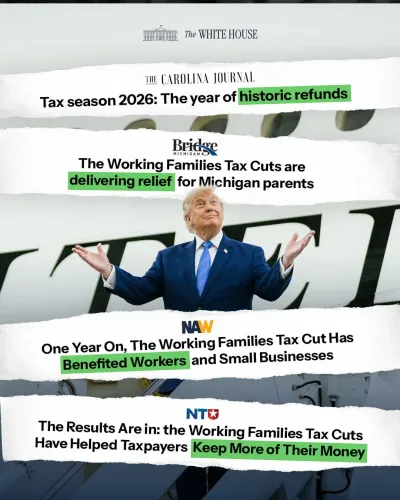
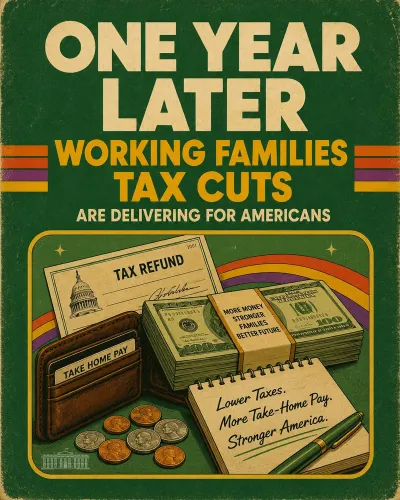
Tipped workers from the casino floors of Las Vegas to restaurants across America are being told they owe nothing in federal taxes on their tip income — a claim the White House amplified on Thursday, August 6, 2026, in a social media post framed around President Trump's so-called 'Working Families Tax Cuts.'
The Tip-Tax Claim and What It Means for Service Workers
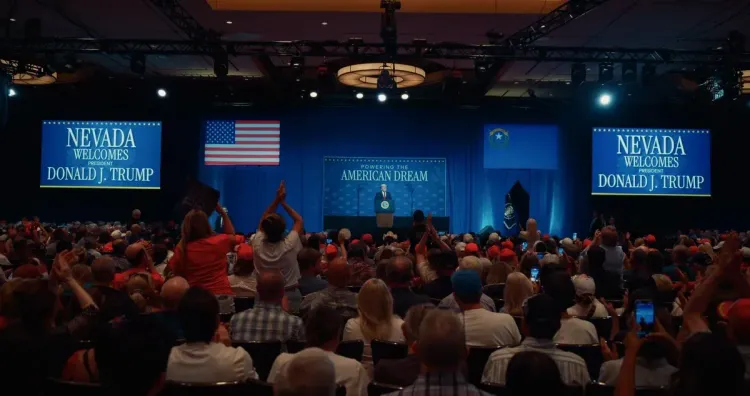
The White House post declared: 'In Las Vegas or anywhere else, you pay ZERO taxes on your tip income — all thanks to President Trump's Working Families Tax Cuts.' The message zeroes in on Las Vegas deliberately — Nevada's economy is built on hospitality, gaming, and service work, where tips often constitute the majority of a worker's take-home pay. For millions of bartenders, servers, hotel staff, and casino dealers, the promise of tax-free tips is a tangible, kitchen-table issue.
How This Departs from the 2017 Tax Cuts and Jobs Act
Donald Trump signed the Tax Cuts and Jobs Act in December 2017, which restructured federal income tax brackets, doubled the standard deduction, and trimmed marginal rates for middle-income earners. However, that law left tip income fully taxable as ordinary wages — it did not create a tip exemption. The specific statutory name 'Working Families Tax Cuts' and the assertion of zero federal tax on tips represent a claimed policy development beyond the 2017 legislation, and independent confirmation of the precise statutory framework remains pending.
Las Vegas as the Political Backdrop
The choice of Las Vegas as the post's anchor is not incidental. Nevada is a perennial swing state, and its service-sector workforce is one of the largest concentrations of tipped workers in the country. Framing a tax benefit around that city sends a clear signal about which voters the White House wants to reach. Republican administrations have periodically sought to adjust the tax treatment of labor income in service industries, and this message fits squarely within that pattern — positioning the policy as a direct extension of the 2017 law's stated goal of putting more money in workers' pockets.
What Tipped Workers and Employers Should Watch
The practical impact hinges on details that are still coming into focus: how the IRS and Treasury Department will issue guidance on reporting requirements for tip income, and whether individual states will conform their own tax codes to match any federal exemption. Workers in states with their own income taxes — including Nevada, which has no state income tax, making it a clean test case — will face different outcomes than those in high-tax states. Employers in the hospitality sector are also watching closely, given their obligations around payroll tax withholding on reported tips.
If the zero-tax-on-tips framework holds up in statute and regulation, it would mark the most significant change to the tax treatment of service-industry compensation in decades — a genuine shift in the economics of tipped work in America.
Point of View
Working-class voter the Republican coalition needs. Whether the underlying statute fully delivers what the post promises is a separate question from its messaging power: 'you pay zero' is among the most direct economic pledges a government can make to a worker. The policy, if confirmed in regulation, would represent the most consequential change to service-industry compensation taxation in a generation, and the gap between the White House's declarative confidence and the still-pending IRS and Treasury guidance is precisely where political promises either harden into law or quietly narrow.
NationPress
6 Aug 2026
Frequently Asked Questions
Do tipped workers in the US pay zero federal tax on tips now?
The White House stated on August 6, 2026, that tipped workers owe zero federal taxes on tip income under Trump's 'Working Families Tax Cuts.' The precise statutory framework is still pending IRS and Treasury guidance, so workers should await official regulatory clarification before adjusting their tax filings.
What is the Working Families Tax Cuts act?
The 'Working Families Tax Cuts' is the name the White House has used to describe the tip-income tax exemption policy. It is presented as an extension of President Trump's legislative agenda, though it is distinct from the original Tax Cuts and Jobs Act of 2017, which did not exempt tips from federal income tax.
Did the 2017 Trump tax cuts make tips tax-free?
No. The Tax Cuts and Jobs Act signed by President Trump in December 2017 lowered income tax brackets and doubled the standard deduction but left tip income fully taxable as ordinary wages. The current zero-tax-on-tips claim refers to a separate, more recent policy development.
Why is the White House focusing on Las Vegas for the tip tax policy?
Las Vegas is one of the largest concentrations of tipped workers in the United States, with its economy built around hospitality, gaming, and service industries. Nevada is also a key political battleground state, making it a strategically significant audience for a tax-relief message aimed at working-class voters.
Will Indian workers or NRIs in the US benefit from the tip tax exemption?
Any US resident or worker — including Indian-origin workers on valid US work visas — who earns tip income in a qualifying role could potentially benefit if the exemption applies to their federal tax liability. State tax obligations would vary depending on where the individual works.