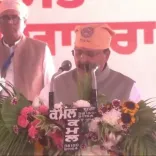
Bhupender Yadav: 108 of 130 Cities Show PM10 Improvement

Synopsis
Union Environment Minister Bhupender Yadav reveals that 108 of 130 cities under the National Clean Air Programme have improved PM10 levels, with 72 achieving over 20 per cent reductions — arguing air pollution must be treated as a year-round challenge, not just a winter emergency.
Key Takeaways
108 of 130 cities tracked under India's clean-air programme have recorded an improvement in PM10 levels , per the latest government assessment.
72 cities have achieved a PM10 reduction of more than 20 per cent — the original NCAP target range.
The National Clean Air Programme , launched in 2019 , covers non-attainment cities that chronically breach national ambient air quality standards.
Minister Yadav explicitly argued that air pollution 'cannot be addressed only as a winter emergency', calling for sustained year-round policy action.
The NCAP was initially set for 102 cities with a 2024 deadline and has since expanded to 131 cities .
Winter 2026–27 CPCB monitoring data will be the next major test of whether the gains hold under peak pollution conditions.
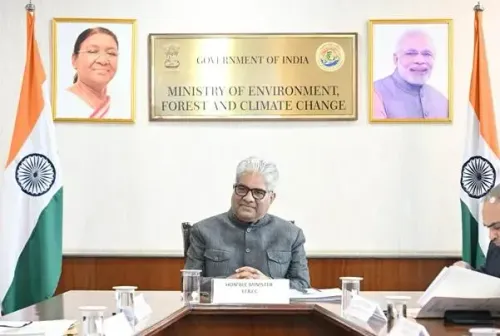
India's air-quality battle is producing measurable results on a scale the country has rarely been able to claim — and Union Environment Minister Bhupender Yadav is putting the numbers on record. In an interview published on Wednesday, 18 November 2026, the minister cited the latest government assessment showing that 108 of the 130 cities tracked under a national clean-air drive have recorded an improvement in PM10 levels, with 72 of those cities registering a reduction of more than 20 per cent.
What the PM10 numbers actually mean
PM10 — coarse particulate matter with a diameter of 10 micrometres or less — is the pollutant most directly linked to respiratory disease across India's urban corridors. A 20-per-cent-plus reduction in 72 cities simultaneously is not a marginal win; it represents a structural shift in ambient air quality for tens of millions of urban residents. Yadav's framing is deliberate: he is pushing back against the entrenched narrative that air pollution is a winter problem in northern India and nothing more.
'Air pollution cannot be addressed only as a winter emergency,' the minister said in the interview — a line that doubles as the clearest statement yet of how the Ministry of Environment, Forest and Climate Change wants the policy conversation reframed. The argument is that seasonal crisis management, however necessary, cannot substitute for year-round, city-specific action plans.
NCAP: the scheme behind the scorecard
The data the minister is citing flows from the National Clean Air Programme (NCAP), the central scheme launched in 2019 that set an ambitious target of cutting particulate-matter levels by 20–30 per cent by 2024 across an initial list of 102 non-attainment cities — urban areas that chronically breached the national ambient air quality standards. The programme has since been expanded to 131 cities, with each city required to draw up and execute its own action plan funded through central grants and monitored by state pollution control boards.
The NCAP represented a departure from one-size-fits-all pollution advisories: it demanded granular, source-specific interventions — road-dust management, industrial stack monitoring, crop-residue alternatives, vehicle-fleet upgrades — calibrated to what each city actually emits. The minister's latest figure of 108 out of 130 cities improving suggests that scorecard, however unevenly, is filling in.
Why 'only a winter emergency' is the wrong frame
The seasonal-emergency critique the minister is making has real policy teeth. Every October, North India's air-quality crisis dominates headlines — Delhi's AQI enters 'severe' territory, odd-even rules resurface, school closures follow. But the data from NCAP cities suggests the worst performers include cities far outside the Indo-Gangetic Plain, in Maharashtra, Rajasthan, and Odisha, where pollution peaks have nothing to do with stubble burning or winter inversion layers.
Anchoring India's clean-air response to a single seasonal trigger, Yadav's interview implies, leaves chronic polluters in other regions perpetually off the radar — and lets northern cities off the hook for their non-winter emissions. The year-round monitoring lens the NCAP enforces is, at least in design, the corrective.
With winter 2026–27 air-quality data from monitoring stations across NCAP cities set to roll in over the coming weeks, the minister's numbers will face their sharpest near-term test — and the gap between the 108 improving cities and the roughly 22 that have not yet moved will draw the next round of scrutiny.
Point of View
Ahead of what is typically India's most politically exposed pollution season. The 'not just a winter emergency' framing is also a quiet rebuttal to critics who argue the government mobilises only when Delhi's AQI makes headlines. Whether the gains hold under independent scrutiny will matter: NCAP's earlier 2024 deadline came and went without a formal national audit, and the credibility of the programme's expansion to 131 cities now rides on the granularity behind these numbers. If the data withstands verification, it gives the government its strongest clean-air talking point in years — and raises the bar for state pollution control boards that have yet to show movement.
NationPress
18 Nov 2026
Frequently Asked Questions
What is the National Clean Air Programme (NCAP)?
The National Clean Air Programme is a central government scheme launched in 2019 that requires designated 'non-attainment cities' — those chronically exceeding air quality standards — to prepare and execute city-specific action plans to cut PM2.5 and PM10 levels by 20–30 per cent, funded through central grants and monitored by state pollution control boards.
How many cities are covered under NCAP and have they improved?
NCAP initially covered 102 non-attainment cities and has since expanded to 131. The latest government assessment cited by Minister Yadav shows 108 of the 130 cities assessed have recorded an improvement in PM10 levels, with 72 achieving a reduction of more than 20 per cent.
What is PM10 and why does it matter for health?
PM10 refers to airborne particulate matter with a diameter of 10 micrometres or less. These particles can penetrate the respiratory tract and are associated with asthma, bronchitis, cardiovascular disease, and premature death, making their reduction a critical public-health goal in Indian cities.
Why does Bhupender Yadav say air pollution is not just a winter emergency?
Yadav argues that framing air pollution as a seasonal, north-India winter crisis overlooks chronic pollution in cities across other regions and other seasons. He advocates year-round, city-specific action under NCAP rather than reactive measures triggered only by winter smog events.
What comes next for NCAP monitoring?
The next major checkpoint will be winter 2026–27 air-quality data from CPCB monitoring stations across NCAP cities. The data will show whether PM10 gains recorded over the year hold during peak pollution season and how the roughly 22 cities yet to show improvement are progressing.