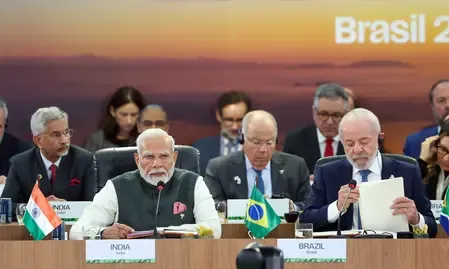
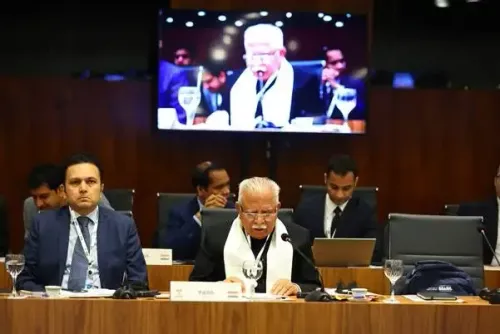
11th BRICS Energy Ministers' Meet kicks off in Gurugram under India's 2026 Chairship

Synopsis
India's turn as BRICS Chair in 2026 puts New Delhi at the centre of a high-stakes energy dialogue: 11 nations covering half the world's population and 40 per cent of global GDP are meeting in Gurugram to align on energy security and clean transition — with India's own 50x solar expansion and E85 rollout as proof of concept.
Key Takeaways
The 11th BRICS Energy Ministers' Meeting is being held in Gurugram on 26 June 2025 under India's BRICS Chairship 2026 .
All 11 BRICS member nations are represented, collectively covering nearly half the world's population and about 40% of global GDP .
India's energy track theme is 'Energy for All' , structured around security, equity, and technology innovation.
India has expanded solar capacity by more than 50 times in a decade and deployed over 60 million smart meters .
The country has achieved 20% ethanol blending and launched E85 fuel , targeting 410 GWh of energy storage by 2032 .
India is also pushing for Global South energy priorities within the BRICS framework through platforms like the International Solar Alliance and Global Biofuels Alliance .
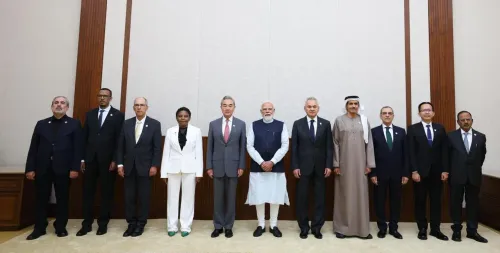
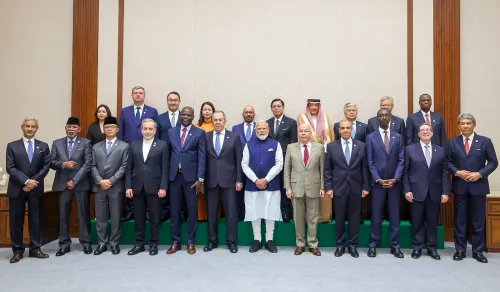
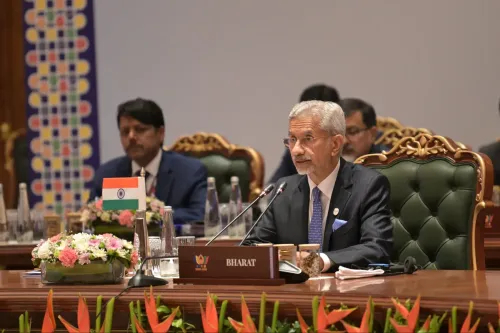
India is hosting the 11th BRICS Energy Ministers' Meeting in Gurugram on 26 June 2025, bringing together energy ministers and senior officials from all 11 BRICS member nations under India's BRICS Chairship 2026. The gathering, held on the outskirts of New Delhi, centres on advancing multilateral cooperation on energy security, sustainability, and innovation — three pillars that define India's own energy transition roadmap.
India's Chairship Theme and Energy Agenda
India's BRICS Chairship 2026 is anchored to the theme 'Building for Resilience, Innovation, Cooperation and Sustainability'. Within the energy track, the country has adopted the sub-theme 'Energy for All', reflecting a collective commitment among BRICS nations to universal energy access. India has structured the BRICS Energy Agenda around three broad priorities: energy security and sustainability; energy access and equity; and technology and innovation.
Why BRICS Energy Cooperation Matters Now
The bloc — comprising Brazil, China, Egypt, Ethiopia, India, Indonesia, Iran, Russia, Saudi Arabia, South Africa, and the United Arab Emirates — collectively accounts for nearly half of the world's population and roughly 40 per cent of global GDP. The meeting arrives at a moment when governments worldwide are navigating the competing pressures of energy affordability, climate commitments, and surging demand driven by industrial growth and digitalisation. Stronger coordination among BRICS members is seen as particularly significant given ongoing volatility in global energy supply chains.
India's Energy Progress on Display
As the world's third-largest producer and consumer of electricity, India will use the platform to showcase its energy transition milestones. Over the past decade, the country has expanded its solar power capacity by more than 50 times, deployed over 60 million smart meters, and set a target of 410 GWh of energy storage capacity by 2032. India has also achieved 20 per cent ethanol blending in petrol and recently rolled out E85 fuel — a high-ethanol blend containing 80–85 per cent ethanol — marking a significant step in its biofuels push.
Grid Modernisation and Green Corridors
Beyond renewables, India has significantly expanded its national power transmission network to support large-scale renewable integration and has accelerated the rollout of Green Energy Corridors linking high-generation zones to demand centres. These infrastructure investments are central to India's Viksit Bharat 2047 vision, which treats secure, affordable, and sustainable energy as a foundational requirement for long-term economic growth.
India's Global Clean Energy Leadership
At the multilateral level, India has championed clean energy cooperation through initiatives such as the International Solar Alliance and the Global Biofuels Alliance. As Chair, India is also expected to advocate for the priorities of the Global South, pushing for resilient supply chains and inclusive energy access frameworks within the BRICS grouping. The ministers' meeting is expected to conclude with forward-looking commitments on practical energy collaboration among member states.
Point of View
And members like Russia, Saudi Arabia, and Iran have structurally divergent interests from India's renewables push. The real test of this chairship is whether India can extract concrete cooperation agreements — on grid technology, storage, or biofuels — rather than a communiqué of shared aspirations. India's domestic numbers are genuinely impressive; whether they translate into BRICS-level momentum is the question mainstream coverage is not asking.
NationPress
25 Jun 2026
Frequently Asked Questions
What is the 11th BRICS Energy Ministers' Meeting?
It is a multilateral meeting of energy ministers and senior officials from all 11 BRICS member nations, hosted by India in Gurugram on 26 June 2025 under its BRICS Chairship 2026. The meeting focuses on energy security, sustainability, universal access, and clean energy innovation.
Which countries are part of BRICS in 2025?
BRICS currently comprises Brazil, China, Egypt, Ethiopia, India, Indonesia, Iran, Russia, Saudi Arabia, South Africa, and the United Arab Emirates — 11 members in total, accounting for nearly half the world's population and around 40 per cent of global GDP.
What is India's theme for the BRICS Energy Track?
India has adopted 'Energy for All' as its energy track theme under the broader BRICS Chairship 2026 motto of 'Building for Resilience, Innovation, Cooperation and Sustainability.' The agenda is structured around three priorities: energy security and sustainability; energy access and equity; and technology and innovation.
What are India's key energy milestones ahead of this meeting?
India has expanded solar power capacity by more than 50 times over the past decade, deployed over 60 million smart meters, achieved 20 per cent ethanol blending in petrol, and launched E85 fuel. It has also set a target of 410 GWh of energy storage capacity by 2032.
Why does this BRICS energy meeting matter for the Global South?
As BRICS Chair, India is positioning the bloc to advocate for developing-nation energy priorities — affordable access, resilient supply chains, and clean technology transfer. Initiatives like the International Solar Alliance and Global Biofuels Alliance, both championed by India, form the backbone of this push.