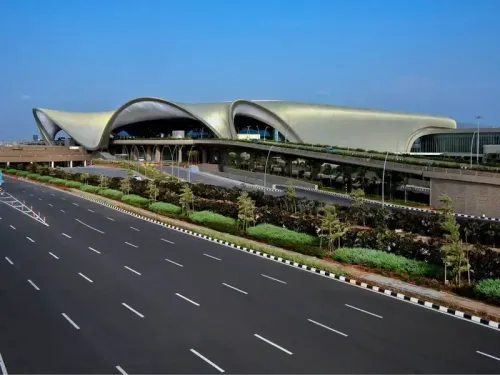
14 Mumbai flights shifting to Navi Mumbai airport from March 2027 as T1 rebuild begins
Synopsis
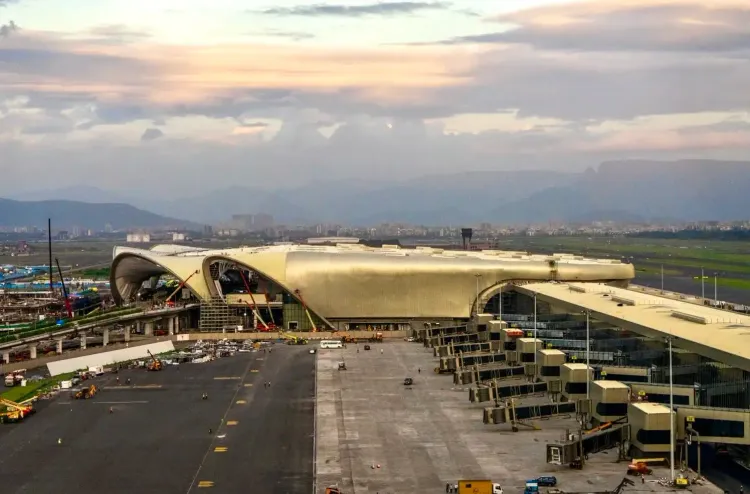
Starting 28 March 2027, passengers on 14 Gulf and Asian routes from Mumbai will find their flights gone from CSMIA — relocated to the brand-new Navi Mumbai International Airport. The trigger is a 60-year-old Terminal 1 that independent auditors say is structurally unsafe, forcing a phased demolition that will temporarily move 5 million passengers a year while 91 per cent of CSMIA traffic continues uninterrupted.
Key Takeaways
Foreign airlines have recommended shifting 14 international routes from CSMIA Mumbai to Navi Mumbai International Airport (NMIA) starting 28 March 2027 .
The move is driven by the demolition and rebuild of Terminal 1 (T1) , commissioned in 1964 and flagged as structurally unsafe by audits from Structwel and IIT Bombay .
IndiGo, Air India Group, and Akasa Air have already agreed to shift services; foreign carriers have backed the same arrangement.
The transition involves roughly 5 mppa of traffic — about 9 per cent of CSMIA's 55 mppa capacity — leaving 91 per cent of current operations unaffected.
T1 demolition begins in April 2027 ; new T1 is targeted for completion by December 2030 .
Post-redevelopment, CSMIA capacity will rise to 65 mppa ; NMIA has an initial capacity of 20 mppa .
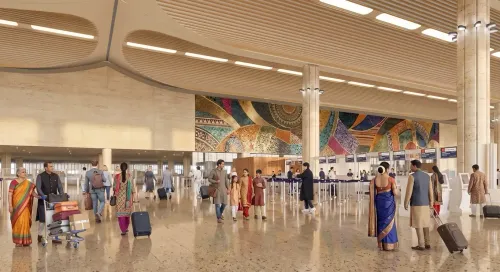
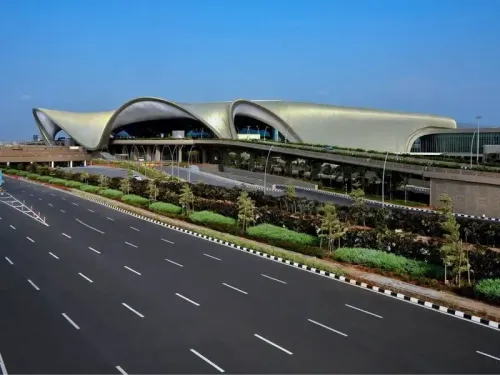
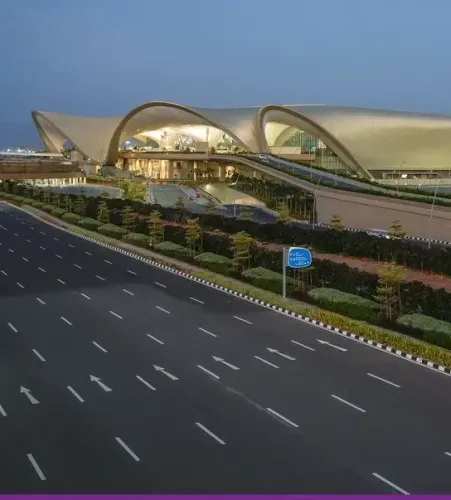
Foreign airlines operating out of Chhatrapati Shivaji Maharaj International Airport (CSMIA) in Mumbai have recommended relocating a set of international flights to the new Navi Mumbai International Airport (NMIA) during the rebuilding of Terminal 1 (T1), according to sources familiar with the development. The recommendation marks a significant operational shift that will affect 14 international destinations starting 28 March 2027.
The 14 Routes Moving to Navi Mumbai
Mumbai International Airport Ltd (MIAL) Chief Airport Officer Vishnu Mohan Jha has written to the Civil Aviation Ministry conveying that foreign carriers have recommended the shift to Adani Airport Holdings Ltd (AAHL), which operates CSMIA. From the start of the IATA Summer Schedule on 28 March 2027, CSMIA will temporarily suspend slots for flights to Bahrain, Dammam, Dhaka, Doha, Fujairah, Jakarta, Jeddah, Kathmandu, Kuwait City, Madinah, Muscat, Ras Al Khaimah, Riyadh, and Sharjah. These services will be consolidated at the NMIA, ensuring all flights on each route operate from a single airport within the Mumbai Metropolitan Region (MMR).
Indian carriers IndiGo, Air India Group, and Akasa Air have already agreed to the transition. IndiGo announced last month that it would progressively move 12 daily international departures to NMIA, expanding its international network there to 12 destinations between February and July 2027. Air India Express is set to begin four daily domestic flights from NMIA in December 2026, with planned Kuwait services — subject to regulatory approvals — and existing Oman services following in January 2027. Services to Jeddah, Riyadh, Dammam, Doha, Muscat, and Sharjah are due to shift by Northern Summer 2027. Akasa Air's Mumbai–Jeddah service will operate from NMIA from December 2026.
Why T1 Needs to Come Down
Commissioned in 1964, the ageing T1 has accumulated severe safety and structural vulnerabilities over six decades of continuous operation. Independent audits by Structwel and IIT Bombay have flagged these risks, making replacement an urgent public safety necessity, according to officials. Demolition is slated to begin in April 2027, and the new T1 is targeted for completion by December 2030. MIAL has clarified that the T1 demolition and the resulting temporary traffic reduction are already incorporated in the approved tariff order, following extensive stakeholder consultations.
Scale of Traffic Impact
CSMIA currently handles a total capacity of approximately 55 million passengers per annum (mppa). The transition involves moving roughly 5 mppa of traffic to NMIA — of which Indian carriers account for about 3 mppa. This means approximately 91 per cent of CSMIA's existing capacity will remain unaffected during the redevelopment period. Once T1 and T2 are both redeveloped, CSMIA's total capacity is projected to rise to 65 mppa, a senior official noted. The phased approach is designed to minimise passenger disruption, with consolidating Gulf routes at a single airport cited as a key reason to reduce split-airport inconvenience.
Navi Mumbai Airport: Infrastructure and Incentives
The NMIA has an initial capacity of 20 mppa, with international facilities comprising 55 check-in counters, 24 electronic gates, 26 emigration counters, and 32 immigration counters. To attract carriers, a modified variable tariff plan approved in September offers new international routes at NMIA a complete waiver on landing fees in year one and half the rack rate in year two. Long-haul routes exceeding 5,000 km receive an additional discount in year three. The NMIA is also providing cash vouchers to international passengers to offset the higher user development fee at CSMIA.
What Happens Next
With demolition scheduled for April 2027 and the foreign airline community now on board, the remaining procedural steps centre on regulatory approvals for specific routes and finalising slot allocations at NMIA. The transition will be phased to avoid operational disruptions. Industry observers note that the success of this arrangement will be closely watched as a template for managing capacity at congested metro airports during large-scale infrastructure upgrades — a challenge likely to recur as India's aviation sector continues its rapid expansion.
Point of View
But the harder story is that a major gateway airport has been running a structurally compromised terminal for years — with IIT Bombay and Structwel audits only now forcing the issue. The 91-per-cent-unaffected figure is reassuring optics, but the 5 mppa being moved represents real traveller inconvenience, particularly for Gulf-route passengers who dominate Mumbai's international traffic. The incentive architecture at NMIA — zero landing fees in year one, discounted rates thereafter — signals that AAHL knows filling a new airport is not guaranteed by geography alone. How smoothly IndiGo and Air India execute their phased moves between December 2026 and mid-2027 will set the tone for public confidence in the broader CSMIA redevelopment.
NationPress
4 Nov 2026
Frequently Asked Questions
Which flights are moving from Mumbai CSMIA to Navi Mumbai airport?
From 28 March 2027, flights on 14 international routes — to Bahrain, Dammam, Dhaka, Doha, Fujairah, Jakarta, Jeddah, Kathmandu, Kuwait City, Madinah, Muscat, Ras Al Khaimah, Riyadh, and Sharjah — will shift from CSMIA to Navi Mumbai International Airport (NMIA). The move is timed with the start of the IATA Summer Schedule and coincides with the beginning of Terminal 1 demolition work.
Why is Mumbai's Terminal 1 being demolished?
Terminal 1 at CSMIA was commissioned in 1964 and has accumulated severe safety and structural vulnerabilities over six decades. Independent audits by Structwel and IIT Bombay have identified these risks, making replacement an urgent public safety necessity, according to officials. Demolition is scheduled to begin in April 2027, with the new terminal targeted for completion by December 2030.
Which airlines have agreed to move to Navi Mumbai airport?
Indian carriers IndiGo, Air India Group (including Air India Express), and Akasa Air have confirmed they will shift services to NMIA. Foreign airlines operating from CSMIA have also recommended the arrangement, according to the MIAL Chief Airport Officer's letter to the Civil Aviation Ministry.
How many passengers will be affected by the shift to Navi Mumbai?
The transition involves approximately 5 million passengers per annum (mppa) of traffic, of which Indian carriers account for about 3 mppa. This represents roughly 9 per cent of CSMIA's total 55 mppa capacity, meaning 91 per cent of current operations at Mumbai airport will continue unaffected.
What incentives are being offered to airlines flying from Navi Mumbai airport?
Under a modified variable tariff plan approved in September, new international routes at NMIA pay no landing fee in the first year and half the rack rate in year two. Long-haul routes of more than 5,000 km receive a further discount in year three. The NMIA is also issuing cash vouchers to international passengers to offset the higher user development fee charged at CSMIA.