AAP Gujarat Crisis: 7 RS Defections Deepen Party's Collapse
Synopsis
Seven AAP Rajya Sabha MPs including Gujarat in-charge Sandeep Pathak defected to BJP, triggering predictions of the party's total collapse in Gujarat. With AAP fielding candidates for only 30 per cent of local body seats and suspended MLA Makwana warning of further high-profile exits, the party faces its most existential crisis in the state since its 2022 breakthrough.
Key Takeaways
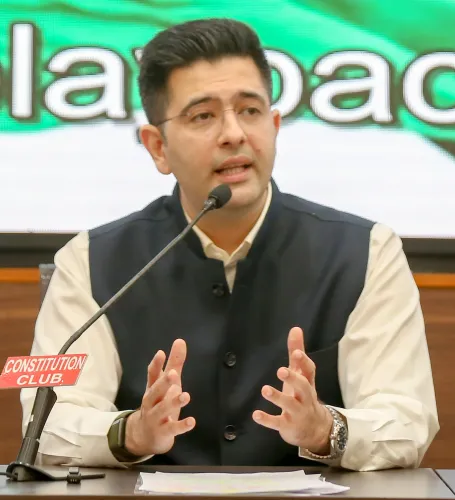
Seven AAP Rajya Sabha MPs including Sandeep Pathak and Raghav Chadha defected to the BJP on April 25, 2025 , weakening AAP's Upper House presence.
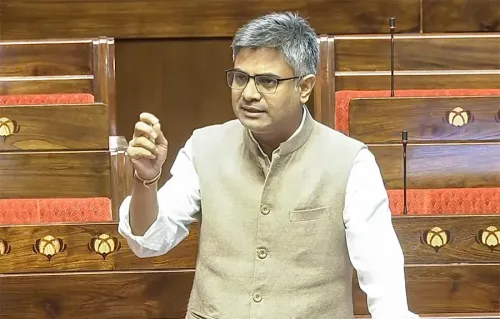
Sandeep Pathak was AAP's Gujarat state in-charge and the chief architect of the party's 2022 Assembly election strategy , making his exit particularly damaging for the state unit.
AAP fielded candidates for only approximately 3,000 of nearly 10,000 seats in the April 26 Gujarat local body elections , roughly 30 per cent coverage .
Suspended Botad MLA Umesh Makwana predicted AAP would be finished in Gujarat within the next couple of months and warned of further high-profile defections before the 2027 Assembly elections .
AAP won five seats and 14 per cent of the vote in the 2022 Gujarat Assembly elections , but subsequent resignations and suspensions have steadily eroded that foothold.
Both BJP MLA Mahesh Kaswala and Congress spokesperson Dr.
Manish Doshi dismissed AAP's claim of a three-cornered contest, with Doshi calling AAP the B-team of BJP.
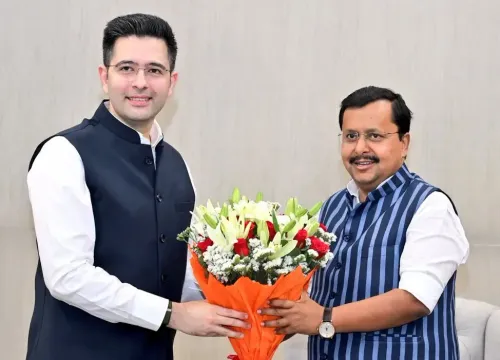
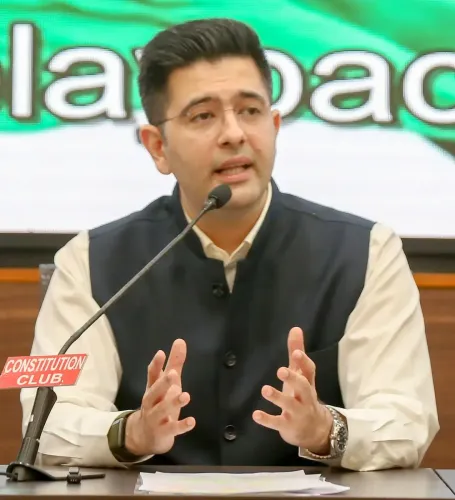
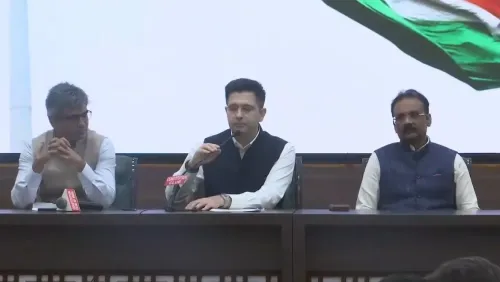
Gandhinagar, April 25: The Aam Aadmi Party (AAP) is facing a deepening organisational crisis in Gujarat after seven of its Rajya Sabha MPs including national general secretary Sandeep Pathak and prominent leader Raghav Chadha defected to the Bharatiya Janata Party (BJP) on Friday, April 25. The mass exodus has triggered sharp scrutiny of AAP's viability as a political force in Gujarat, with rivals, suspended legislators, and Congress leaders collectively predicting the party's imminent collapse just hours before the crucial April 26 local self-government elections.
Pathak's Exit: A Body Blow to Gujarat's AAP Structure
Sandeep Pathak's defection carries outsized significance for Gujarat specifically. As the party's Gujarat state in-charge, Pathak was the principal architect of AAP's organisational expansion in the state, overseeing candidate selection, grassroots mobilisation, and the party's landmark performance in the 2022 Gujarat Assembly elections, where it secured approximately 14 per cent of the popular vote and won five legislative seats.
Those five seats were won by Gopal Italia (Visavadar, later re-elected in a bypoll), Umesh Makwana (Botad), Hemant Khava (Jamjodhpur), Bhupat Bhayani (Visavadar, now with BJP), and Chaitar Vasava (Dediapada), representing AAP's first-ever legislative foothold in the state. With Pathak now gone, the party has lost both its national-level Gujarat strategist and the institutional memory of that electoral breakthrough.
Suspended MLA Makwana Predicts Total Collapse Within Months
Botad MLA Umesh Makwana, who was suspended from AAP last year for alleged anti-party activities, delivered one of the most damaging assessments of the party's future. Speaking to IANS, he stated: Following yesterday's development where seven Rajya Sabha MPs joined the BJP, AAP will be finished in Punjab as well as in Gujarat and Goa.
Makwana went further, predicting that a prominent poster boy within the Gujarat unit, widely interpreted as a reference to Gopal Italia, would defect to the BJP before the 2027 Gujarat Assembly elections, potentially taking members of the Leuva-Patidar community with him. He also alleged that BJP's men are in control within the state leadership and are systematically sidelining effective party voices.
On electoral preparedness, Makwana revealed a striking organisational gap: AAP could not even field 3,000 candidates for nearly 10,000 seats in the local body elections, with many prospective candidates withdrawing their nomination forms. This figure, roughly 30 per cent seat coverage, was independently confirmed by Congress Legislative Party leader Tushar Chaudhary, who used it to argue that AAP's decline post-elections would be immense.
BJP and Congress Dismiss AAP's Third Front Narrative
Savarkundla MLA Mahesh Kaswala of the BJP was categorical in rejecting AAP's claim of creating a three-cornered political contest in Gujarat. He told IANS that two-party politics is present in Gujarat and there is no third front that people have ever accepted. He pointed out that even with five AAP MLAs in the 182-member Gujarat Assembly, the party registers negligible political weight in day-to-day legislative affairs.
Congress spokesperson Dr. Manish Doshi used the defections to validate a long-standing Congress charge that AAP functions as the BJP's B-team. He drew a sharp contrast between AAP's founding India Against Corruption identity and what he described as the corruption allegations that engulfed its leadership, including the controversy surrounding Kejriwal's official residence dubbed the Sheesh Mahal. Doshi argued there is no difference between the Modi government and the Kejriwal government.
AAP Responds: The Party Will Fight for the People
AAP Gujarat state general secretary Sagar Rabari pushed back against the wave of criticism, pointing to the party's 2022 vote share of 14 per cent and five elected MLAs as evidence of genuine public support. He told IANS that BJP is working to save their power and that AAP will raise people's issues strongly in the coming days.
On Pathak's exit, Rabari said he believes it is Pathak's personal decision and that only Pathak can explain what pressure he was under. He maintained that every AAP leader is ideologically committed to being anti-BJP, a claim critics argue is increasingly difficult to sustain given the scale of defections.
Notably, former AAP Gujarat farmer cell president Raju Karpada had already resigned in February 2025 to join the BJP, citing a desire to work more effectively for the welfare of farmers. Additionally, Arjun Rathwa, a professor from Chhota Udepur district, exited AAP to join Congress, illustrating that the party is bleeding support across the political spectrum.
What Comes Next: Local Body Polls and the 2027 Assembly Test
The immediate test arrives on Sunday, April 26, with local self-government elections covering municipal corporations, municipalities, and panchayats across Gujarat with nearly 10,000 seats in total. AAP's performance with a candidate count of roughly 3,000 will serve as the first real post-defection electoral data point for the party in the state.
The larger stakes are the 2027 Gujarat Assembly elections. If AAP cannot demonstrate organisational resilience in local body contests and halt the exodus of its remaining leaders, the party risks entering that election cycle as a marginal force, unable to replicate even the 14 per cent vote share it achieved in 2022 under Pathak's stewardship. The coming weeks will be decisive in determining whether AAP can execute any meaningful damage control or whether Gujarat becomes another state where its political experiment quietly unravels.
Point of View
But never built the cadre loyalty or ideological depth needed to withstand pressure. The irony is devastating: a party born out of the anti-corruption movement now faces charges of being BJP's proxy, while its own leaders allege that BJP operatives have infiltrated its state unit. If Gopal Italia does eventually cross over as Makwana predicts, it will not just end AAP's Gujarat chapter but will validate every critic who argued the 2022 result was a protest vote, not a political movement.
NationPress
3 Oct 2026
Frequently Asked Questions
Why did AAP's Rajya Sabha MPs join the BJP?
Seven AAP Rajya Sabha MPs including Sandeep Pathak and Raghav Chadha joined the BJP on April 25, 2025. The defections are widely seen as a reflection of deepening internal dissent and organisational decline within AAP at the national level.
How many seats did AAP win in the 2022 Gujarat Assembly elections?
AAP won five seats in the 2022 Gujarat Assembly elections and secured approximately 14 per cent of the total vote share. The five MLAs elected were Gopal Italia, Umesh Makwana, Hemant Khava, Bhupat Bhayani, and Chaitar Vasava.
What is the significance of Sandeep Pathak's defection for Gujarat?
Sandeep Pathak served as AAP's Gujarat state in-charge and was the primary architect of the party's 2022 electoral strategy in the state. His defection removes the key organisational figure who built AAP's grassroots network in Gujarat, leaving the party without its most experienced state strategist.
What are AAP's prospects in the April 26 Gujarat local body elections?
AAP has fielded approximately 3,000 candidates for nearly 10,000 seats in the April 26 local self-government elections, covering only about 30 per cent of available seats. Rivals and even suspended AAP leaders have predicted a poor showing that could further accelerate the party's decline in the state.
Is AAP a significant political force in Gujarat?
AAP currently holds five seats in the 182-member Gujarat Legislative Assembly, making it a minor presence in a house dominated by the BJP. Despite claiming to represent a third political force, both the BJP and Congress have dismissed this narrative, arguing that Gujarat has historically been a two-party state.