Swabhimaan: Adani Foundation to Empower 1,500 Women in MP
Synopsis
Adani Foundation's Swabhimaan programme has launched a 48,000 sq ft production-cum-training hub in Shivpuri, MP, targeting 1,500 women with sewing-based employment. Inaugurated by Union Minister Jyotiraditya Scindia before 5,000 attendees, the centre is part of a national plan to connect one million Indian women to sustainable income.
Key Takeaways
Adani Foundation launched the Swabhimaan livelihood programme in Badarwas, Shivpuri, Madhya Pradesh on April 26, 2025 .
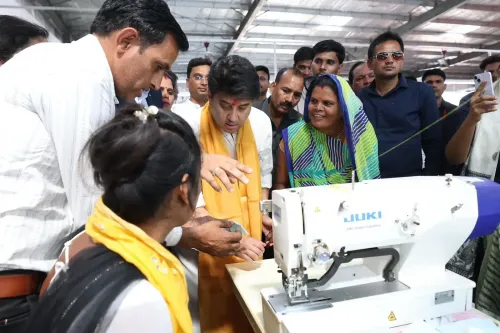
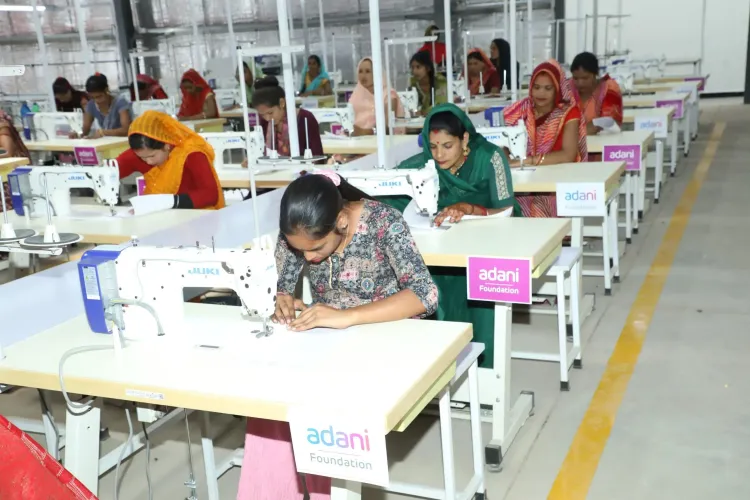
The newly inaugurated Adani Vikas Kendra spans 48,000 square feet and houses 600 modern sewing machines for training and production.
The initiative targets approximately 1,500 women in the Shivpuri district, providing structured, market-linked employment opportunities.
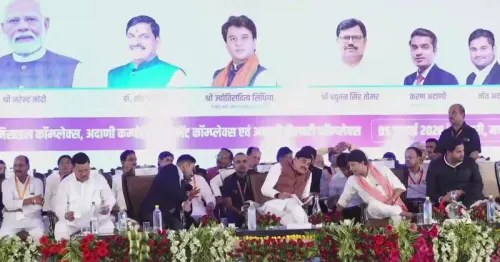
Union Minister Jyotiraditya Scindia inaugurated the centre before a gathering of over 5,000 women from nearby villages.
The Swabhimaan programme has a national goal of connecting one million women across India to sustainable income opportunities.
The launch coincides with the Adani Foundation's 30th anniversary , to be marked on August 11, 2025 .
Adani Foundation launched its flagship Swabhimaan livelihood programme in Badarwas, Shivpuri district, Madhya Pradesh, on Saturday, April 26, targeting economic upliftment for nearly 1,500 women through structured, skill-based employment. The initiative, driven by the vision of Dr Priti Adani, Chairperson of the Adani Foundation, centres on a newly inaugurated Adani Vikas Kendra — a sprawling 48,000 square-foot training and production hub equipped with 600 modern sewing machines. The launch marks a decisive step toward converting informal labour into market-linked, sustainable livelihoods for rural women.
What Is the Swabhimaan Programme
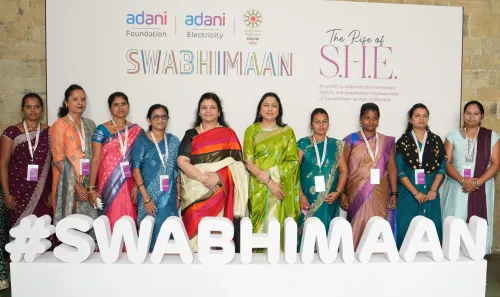
The Swabhimaan programme is the Adani Foundation's nationwide women's economic empowerment initiative, with an ambitious goal of connecting one million women across India with sustainable income opportunities. Unlike conventional skill-training schemes that end at certification, Swabhimaan integrates skill development directly with supply chain access, ensuring women earn consistently rather than simply learning a trade.
The Badarwas centre is among the flagship installations under this umbrella, designed to serve women who have historically depended on seasonal or irregular informal work — a demographic particularly vulnerable to income shocks and rural-to-urban migration.
Adani Vikas Kendra: Scale and Significance
The Adani Vikas Kendra is not merely a training centre — it functions simultaneously as a production facility, allowing women to generate income from day one of their employment. The 600 sewing machines installed at the facility position it as a garment and textile production hub that can tap into both domestic and export markets.
This dual-purpose design — training and production under one roof — is a deliberate structural choice. It eliminates the gap between skill acquisition and actual employment, a gap that has historically caused high dropout rates in women's vocational programmes across rural India.
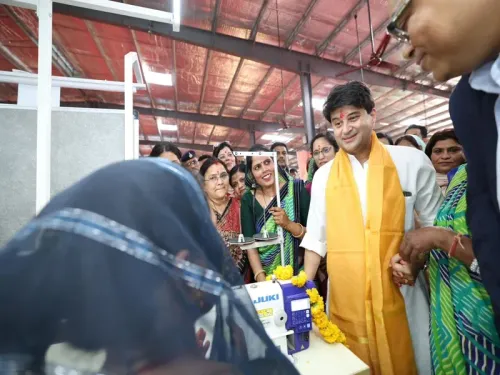
Union Minister Jyotiraditya Scindia Inaugurates the Centre
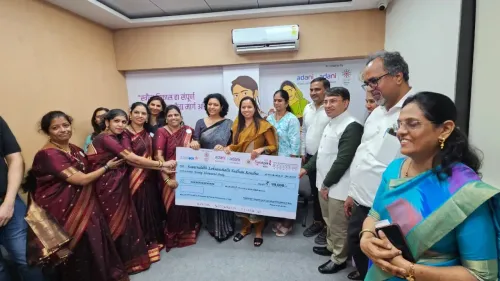
The facility was formally inaugurated by Union Minister Jyotiraditya Scindia, who represents the Guna constituency in Parliament. The event drew a gathering of over 5,000 women from surrounding villages — a turnout that itself signals the depth of demand for such opportunities in the region.
Scindia described the centre as a platform where local skills can access national and even global markets. This centre reflects the power of aspiration taking shape, he said, adding that the confidence and determination visible among participants signals a meaningful shift toward self-reliance and economic participation in the region.
Shivpuri district, which falls within the Gwalior-Chambal belt of Madhya Pradesh, has historically faced challenges including high rates of rural poverty, seasonal agricultural dependency, and significant male out-migration — making women-focused livelihood interventions particularly impactful here.
Foundation CEO Outlines the Empowerment Philosophy
According to Dr Abhishek Lakhtakia, CEO of the Adani Foundation, the Swabhimaan initiative is grounded in a core belief: financial independence is the foundation of genuine empowerment. He stated that the programme is designed to convert skills into sustained income by linking women directly to real work opportunities and established supply chains — not just to classrooms.
This philosophy aligns with broader development economics research suggesting that income-generating capacity, not merely literacy or training, is the most reliable driver of women's agency within households and communities.
Broader Socio-Economic Impact and What Comes Next
The project is projected to generate measurable socio-economic ripple effects across the Shivpuri district. By stabilising household incomes, the initiative aims to reduce dependence on seasonal agricultural labour, curb distress migration, and strengthen women's bargaining power within their families.
Critically, the initiative arrives as the Adani Foundation prepares to mark its 30th anniversary on August 11 — three decades of work in inclusive rural development across India. The Swabhimaan expansion represents one of the most visible milestones of that anniversary year.
With the one million women target still largely ahead, the Badarwas centre sets a replicable template. If the production-linked model proves commercially viable — connecting rural women artisans to national retail and export buyers — it could inform government and private sector skilling policy at scale. Observers will watch closely whether the supply chain linkages materialise into consistent orders, which will be the true test of whether Swabhimaan delivers on its transformative promise.
Point of View
Out-migration, and agrarian distress — making it a deliberate, high-visibility choice for a flagship women's empowerment rollout. The production-linked model, if it delivers consistent market orders, could challenge the dominant government approach of skill training without guaranteed employment. However, the real accountability test will come in 12-18 months: whether 1,500 women are earning stable incomes or whether the machines sit underutilised — a fate that has befallen many well-intentioned rural skilling projects before this one.
NationPress
19 Sept 2026
Frequently Asked Questions
What is the Adani Foundation's Swabhimaan programme?
The Swabhimaan programme is the Adani Foundation's initiative to connect one million women across India with sustainable, skill-based income opportunities. It combines vocational training with direct supply chain access so that women earn consistently, not just learn a skill.
Where is the new Adani Vikas Kendra located?
The Adani Vikas Kendra is located in Badarwas, Shivpuri district, Madhya Pradesh. The 48,000 square-foot facility is equipped with 600 modern sewing machines and serves as both a training and production centre.
Who inaugurated the Swabhimaan centre in Madhya Pradesh?
Union Minister Jyotiraditya Scindia, who represents the Guna constituency in Parliament, inaugurated the Adani Vikas Kendra in Badarwas. The event was attended by over 5,000 women from surrounding villages.
How many women will benefit from the Swabhimaan initiative in Shivpuri?
Approximately 1,500 women in Badarwas, Shivpuri district, are expected to benefit directly from the initiative through structured, market-linked employment. The broader Swabhimaan programme targets one million women across India.
What is Dr Priti Adani's role in the Swabhimaan programme?
Dr Priti Adani is the Chairperson of the Adani Foundation and the visionary behind the Swabhimaan programme. The Badarwas livelihood initiative was launched in line with her vision of enabling women to achieve financial independence through skill-based employment.