Adani Green eyes 50GW renewables by 2030, 10GW nuclear by 2035
Synopsis
Adani Green Energy's Sagar Adani has put a number on the group's nuclear ambition for the first time — 10 GW by 2035 — alongside a 50 GW renewables target by 2030. Speaking in London, he argued that without firm baseload power including nuclear, India's energy math simply does not work. It is the clearest signal yet that India's largest private energy developer is moving well beyond solar.
Key Takeaways
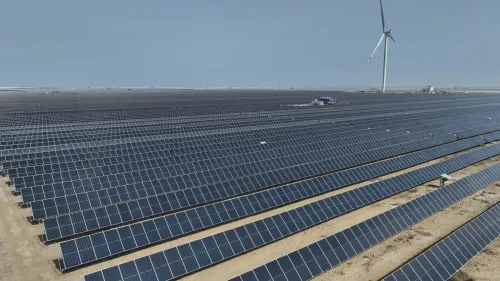
Adani Green Energy Ltd (AGEL) is targeting 50 GW of renewable energy capacity by 2030 .
AGEL has set a 10 GW nuclear portfolio target by 2035 — one of the first such explicit commitments by a private Indian energy company.
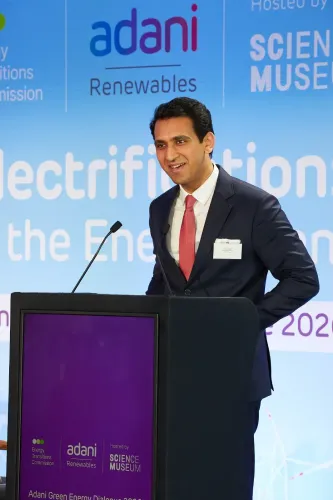
Sagar Adani announced the targets at the inaugural Adani Green Energy Dialogue at the Science Museum, London , on 27 June .
India consumed roughly 10,000 Terawatt-hours of energy across all sources in 2024 and will need to add nearly 2,000 GW of new capacity over the next two decades.
The group's strategy spans pumped hydro, utility-scale batteries, green hydrogen, transmission expansion, and nuclear baseload — alongside solar and wind.
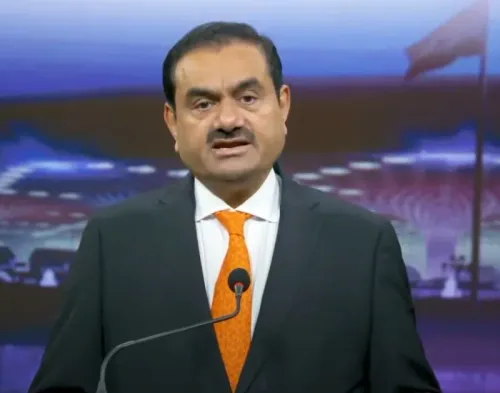
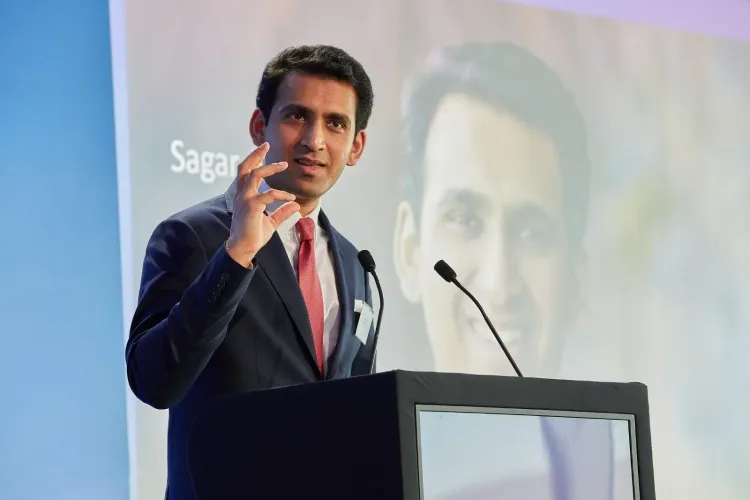
Adani Green Energy Ltd (AGEL) is targeting a 50 GW renewable energy portfolio by 2030 and a 10 GW nuclear portfolio by 2035, Sagar Adani, Executive Director of AGEL, announced on 27 June in London. The targets, among the most ambitious declared by any private energy company globally, were unveiled at the inaugural Adani Green Energy Dialogue, co-hosted with the Energy Transitions Commission (ETC) at the Science Museum, London.
Scale of the Ambition
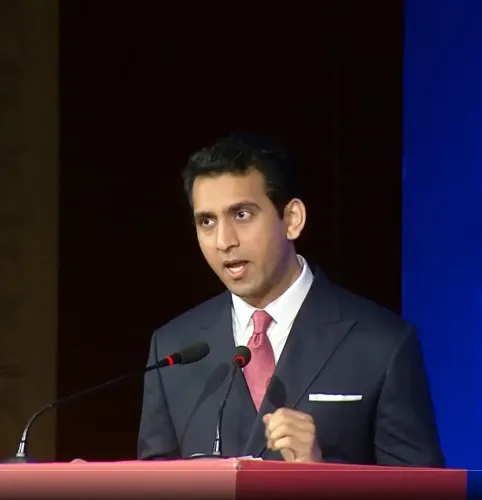
Speaking at the event, Sagar Adani outlined a multi-pronged strategy that goes well beyond solar and wind. 'We are investing in large-scale energy storage including pumped hydro and utility-scale batteries, expanding transmission networks to move power efficiently across the country and developing green hydrogen ecosystems,' he said. He added: 'We are doing it all, at a scale and speed the world has rarely seen. Because incremental change will not cut it.'
The group's roadmap encompasses firm baseload sources — hydro, efficient thermal, and nuclear — alongside variable renewables, reflecting a pragmatic rather than purely ideological approach to the energy transition.
India's Energy Challenge in Numbers
Adani contextualised the targets against India's structural energy reality. The country consumed roughly 10,000 Terawatt-hours across all sources — coal, oil, gas, nuclear, and renewables — in 2024. Looking ahead, he projected that India will need to add nearly 2,000 gigawatts of new capacity over the next two decades to meet rising demand while keeping energy affordable and increasingly clean.
'That is the scale of the opportunity. And that is India's defining challenge,' Sagar Adani said. He stressed that electrification must reduce structural dependence on imported energy, anchoring the country's energy backbone in domestically available resources.
Geopolitics and the Energy Trifecta
Sagar Adani framed the push within a broader global context, arguing that recent geopolitical shocks — which he said have given every nation pause over the past three months — have made energy security an existential priority. 'Today, all countries — developed or developing — are being forced to come to terms with what it means to futureproof their economies against relentless geopolitical shocks,' he noted.
For the developing world, where hundreds of millions of people are entering the middle class and raising their energy consumption, affordability remains non-negotiable. He described 'Energy Security, Energy Affordability, and Energy Sustainability' as 'the ultimate global trifecta' — three objectives that must be pursued simultaneously rather than in sequence.
Policy Environment and Private Investment
Adani credited India's regulatory reforms over the past decade with enabling the scale of private investment now flowing into the sector. He cited accelerated infrastructure development, expanded renewable capacity targets, strengthened transmission networks, and long-term investment frameworks as key enablers. 'There has been both clarity of intent and continuity of action. And that continuity is a critical enabler of resilience,' he said.
This comes amid India's broader push to reach 500 GW of non-fossil fuel capacity by 2030 — a national target that private players like AGEL are central to meeting. With nuclear ambitions now formally on the table alongside its renewables pipeline, AGEL's portfolio strategy signals a significant evolution in how India's largest private energy developer is positioning itself for the decades ahead.
Point of View
And any private entry would require legislative change. Sagar Adani's framing is aspirational, but it also signals lobbying intent. The 50 GW renewables target is more tractable, yet AGEL's execution record — and its ongoing financing pressures in the wake of past governance scrutiny — will determine whether these numbers move from ambition to asset. India needs private capital at scale in energy; the question is whether trust, regulation, and capital markets align fast enough.
NationPress
27 Jun 2026
Frequently Asked Questions
What are Adani Green Energy's renewable and nuclear targets?
Adani Green Energy Ltd (AGEL) is targeting 50 GW of renewable energy capacity by 2030 and a 10 GW nuclear energy portfolio by 2035. These targets were announced by Executive Director Sagar Adani at the Adani Green Energy Dialogue in London on 27 June.
Why is Adani Group investing in nuclear energy?
Sagar Adani argued that firm, scalable baseload power — including nuclear — is essential because variable renewables alone cannot meet India's energy math. He said that without baseload sources, the country cannot reliably electrify everything while keeping energy affordable and accessible.
How much new energy capacity does India need in the next two decades?
According to Sagar Adani, India will need to add nearly 2,000 gigawatts of new capacity over the next two decades. In 2024, the country consumed approximately 10,000 Terawatt-hours across all energy sources, and demand is set to rise sharply as hundreds of millions enter the middle class.
What other energy technologies is Adani Green investing in?
Beyond solar and wind, AGEL is investing in large-scale energy storage including pumped hydro and utility-scale batteries, expanding transmission networks, and developing green hydrogen ecosystems, according to Sagar Adani's remarks in London.
Where was the Adani Green Energy Dialogue held?
The inaugural Adani Green Energy Dialogue was held at the Science Museum in London, co-hosted by Adani Green Energy Limited and the Energy Transitions Commission (ETC). Sagar Adani delivered the keynote address at the event on 27 June.