Adani Ports' Pankaj Bhardwaj: Warehousing growth to shift beyond Grade A cities
Synopsis
Adani Ports is betting that India's next warehousing boom won't happen in Mumbai or Delhi-NCR — it will happen in Odisha, West Bengal, and Assam. With 15–16 ports on both coasts and fresh berths at Paradip, the company is positioning port-led logistics as the backbone of a 5–10 year eastward expansion, targeting markets that the sector has largely ignored.
Key Takeaways
Pankaj Kumar Bhardwaj of Adani Ports and SEZ said warehousing growth will increasingly move beyond Grade A cities to Tier B and C markets.
Currently, 60–70 per cent of the company's 13–14 million sq ft portfolio is in Grade A cities.
States like Odisha , West Bengal , and Assam are identified as key future growth markets.
The company operates 15–16 ports across both coasts and recently won two berths at Paradip .
Vizhinjam Port in Kerala and Dhamra Port on the east coast are focal points for port-linked warehousing.
The strategic shift is expected to play out over a 5 to 10-year horizon, aided by state logistics policies.
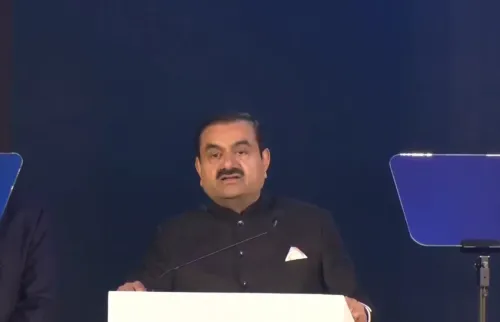
Pankaj Kumar Bhardwaj, Senior Vice President and Business Head – Warehousing and Adani Agri Logistics at Adani Ports and SEZ, said on Tuesday that India's warehousing growth is poised to move well beyond traditional consumption centres, with states like Odisha, West Bengal, and Assam emerging as significant new markets. Speaking in New Delhi, Bhardwaj outlined a strategic pivot toward Tier B and C cities as the company looks to diversify its logistics footprint across the country.
Current Portfolio and Future Roadmap
Bhardwaj noted that of the company's roughly 13–14 million square feet of warehousing capacity, nearly 60–70 per cent is currently concentrated in Grade A cities. However, he said the company's forward-looking strategy is no longer confined to these major consumption hubs. 'If we talk about our future roadmap, we are focusing not just on the consumption centers which are Grade A, but we are focusing on B and C grade cities as well,' he said.
The company already holds land parcels in several of these emerging locations, enabling it to develop ready-to-use facilities aligned with customer requirements. It also offers build-to-suit (BTS) solutions for clients seeking customised warehousing space, adding flexibility to its service model.
Port-Led and EXIM-Driven Expansion
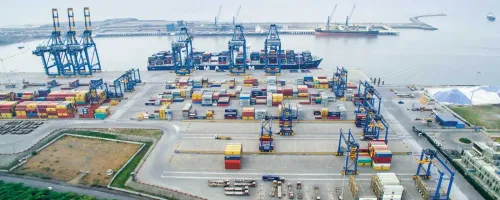
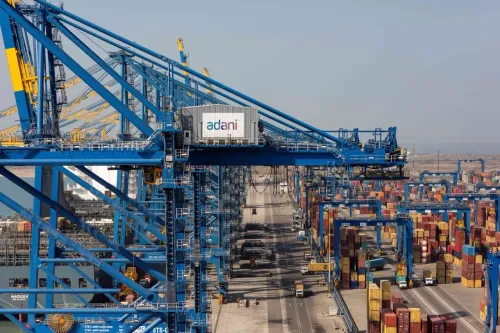
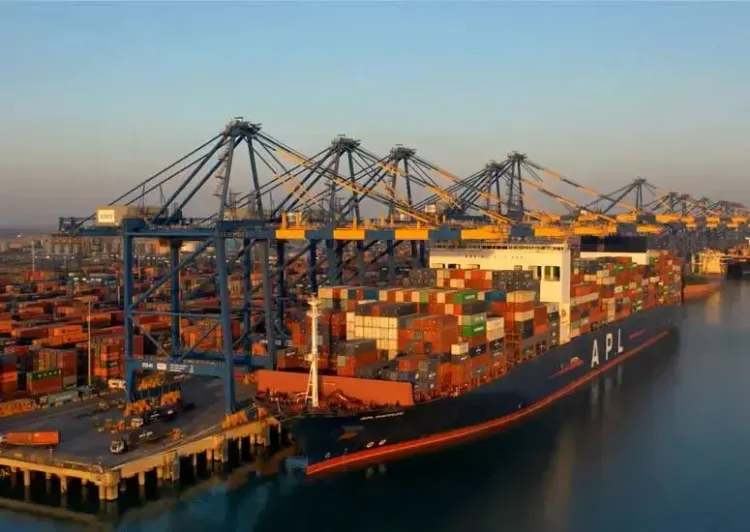
A key pillar of the expansion strategy is export-import (EXIM) and port-led development. Bhardwaj pointed to the company's network of 15–16 ports across both coasts as a structural advantage, particularly as the government intensifies its focus on boosting exports. He projected that over a 5 to 10-year horizon, this port-linked warehousing model would generate substantial volume growth.
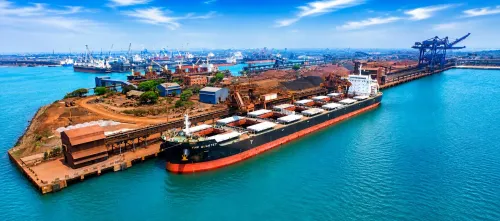
On the eastern seaboard, the company is actively developing a port at Dhamra and has recently secured two berths at Paradip. On the southern coast, Vizhinjam Port in Kerala — now functioning as a major transshipment hub — is another focal point for the group's logistics infrastructure build-out.
Eastern India: An Untapped Warehousing Frontier
Bhardwaj described the eastern side of India as relatively underdeveloped from a warehousing perspective, making it one of the most promising growth corridors. He said states such as Odisha, West Bengal, and Assam are expected to contribute meaningfully to volume growth while also helping reduce overall logistics costs across the supply chain ecosystem.
This comes amid a broader trend of state governments rolling out dedicated logistics policies to attract manufacturers, industrial developers, and third-party logistics providers. These policy frameworks, Bhardwaj argued, are creating a conducive environment for companies to scale operations in markets that were previously considered secondary.
Why This Shift Matters
India's warehousing sector has historically been skewed toward a handful of metros — primarily Mumbai, Delhi-NCR, Bengaluru, and Pune. The push into Tier B and C cities and port-adjacent zones signals a structural maturation of the market, driven by e-commerce penetration, manufacturing decentralisation, and the government's export-promotion agenda. For Adani Ports, the strategy also serves to leverage existing port infrastructure as an anchor for adjacent warehousing and logistics revenues.
As state-level logistics policies gain traction and port capacity expands along both coasts, the eastern and southern corridors are likely to define the next phase of India's warehousing growth story.
Point of View
Land parcels, ICD networks) that most pure-play warehousing companies would need years to assemble in eastern India. The real question is execution speed: state logistics policies are proliferating, but land acquisition, road connectivity, and power infrastructure in Odisha, West Bengal, and Assam remain genuine bottlenecks. If those are resolved, the eastern corridor could rebalance India's lopsided warehousing map; if not, this risks being another long-horizon promise that the market has heard before.
NationPress
29 Sept 2026
Frequently Asked Questions
What is Adani Ports' warehousing expansion strategy for India?
Adani Ports plans to expand its warehousing presence beyond Grade A cities into Tier B and C markets, with a particular focus on eastern states like Odisha, West Bengal, and Assam. The strategy leverages the company's existing port network of 15–16 facilities across both coasts over a 5–10 year horizon.
Which states are emerging as new warehousing growth markets according to Adani Ports?
Odisha, West Bengal, and Assam have been identified as key emerging warehousing markets by Adani Ports' Pankaj Kumar Bhardwaj. He noted that the eastern side of India has been relatively underdeveloped from a warehousing perspective and holds significant untapped potential.
What role do ports play in Adani Ports' warehousing strategy?
Port-led and EXIM-driven development is a central pillar of the strategy. The company is developing facilities near Dhamra and Paradip on the east coast and Vizhinjam in Kerala, using its port infrastructure as an anchor for adjacent warehousing and logistics revenues.
How large is Adani Ports' current warehousing portfolio?
The company currently manages approximately 13–14 million square feet of warehousing space, of which 60–70 per cent is concentrated in Grade A cities. The future roadmap aims to diversify this mix toward Tier B and C locations.
Why are state governments becoming important to India's warehousing sector?
State governments are increasingly rolling out dedicated logistics policies to attract manufacturers, industrial developers, and third-party logistics providers. According to Bhardwaj, these policy frameworks are creating conducive conditions for companies to scale operations in markets that were previously considered secondary.