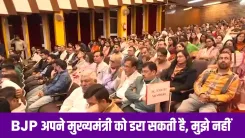
Akhilesh Yadav alleges opposition being put under house arrest
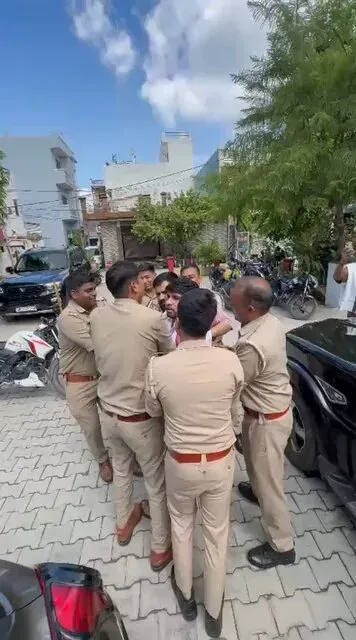
Synopsis
Samajwadi Party president Akhilesh Yadav on 23 July 2026 alleged on X that the government is placing opposition leaders under house arrest, renewing the SP's long-running charge of executive overreach by the BJP in Uttar Pradesh.
Key Takeaways
Akhilesh Yadav posted on 23 July 2026 alleging that the government is detaining or confining opposition leaders.
The Hindi phrase vipaksh nazarband — 'opposition under house arrest' — is a precise political and legal charge, not merely rhetorical.
The Samajwadi Party has repeatedly made similar allegations against the BJP government in Uttar Pradesh since 2017 .
No specific individual, location, or detention order was named in the post; corroborating details are yet to emerge.
The allegation could be raised in Parliament or before the Election Commission of India if formal complaints follow.
Opposition parties allied with the SP are expected to watch the situation for a coordinated response.
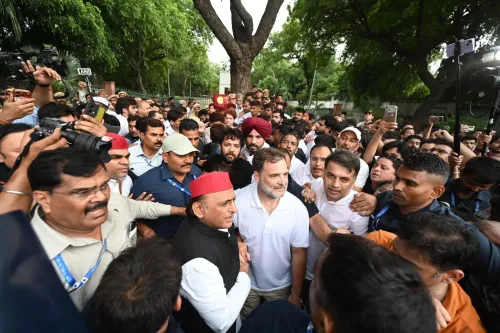
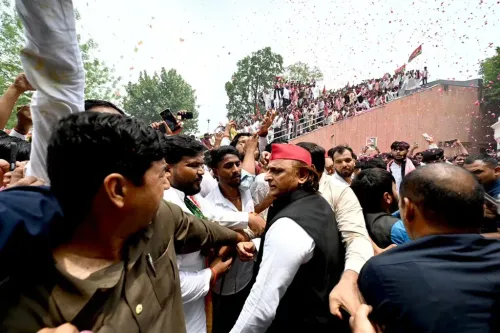
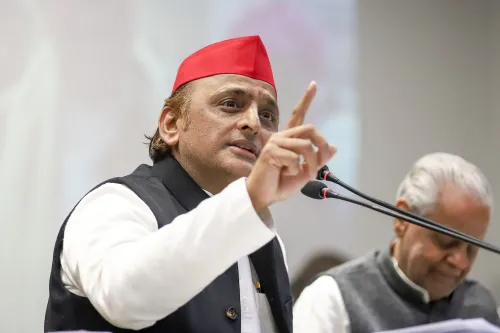
Samajwadi Party president Akhilesh Yadav on Thursday, 23 July 2026, accused the government of placing opposition leaders under detention, posting a sharp two-line broadside on X that read: 'Sarkari prabandh, vipaksh nazarband!' — loosely translated as 'Government arrangement: opposition under house arrest!'
Context
The post, brief but pointed, is a direct allegation that the ruling establishment is using administrative machinery to restrict the movement or activity of opposition politicians. Yadav did not name a specific individual, location, or order, but the phrasing — nazarband, meaning 'under surveillance' or 'confined' — carries a precise legal and political charge in the Indian context.
The Samajwadi Party has a long record of alleging that the Bharatiya Janata Party, which governs both Uttar Pradesh and the Centre, deploys preventive detention and administrative curbs to neutralise political rivals, particularly ahead of elections, rallies, or sensitive political moments.
Policy Backdrop
Preventive detention provisions under laws such as the National Security Act (NSA) and state-level public order statutes have periodically been invoked against political figures and activists across India. Opposition parties — not only the Samajwadi Party — have consistently argued that such powers are misused to suppress dissent and curtail campaign activity.
Since the BJP wrested Uttar Pradesh from the Samajwadi Party in the 2017 assembly elections and retained the state in 2022, the two parties have remained in sharp political contest. Allegations of targeted enforcement actions — spanning agency probes, Section 144 orders, and travel restrictions on opposition workers — have been a recurring feature of that rivalry.
Indian opposition parties more broadly have framed such measures as a pattern of executive overreach, arguing that the administrative apparatus is mobilised not for law-and-order purposes but to weaken political competition.
Stakeholders and Impact
At the centre of the allegation are opposition leaders and party workers in Uttar Pradesh who, Yadav implies, are being physically confined or restricted by state authorities. If the claim refers to preventive detentions, those affected lose their freedom of movement and their ability to organise, campaign, or speak publicly — with immediate consequences for political mobilisation.
The post is also directed at a broader national audience. With Akhilesh Yadav holding a Lok Sabha seat, allegations of this nature carry the potential to be raised on the floor of Parliament, drawing in the Election Commission of India and other constitutional bodies if formal complaints follow.
Other INDIA bloc parties and regional opposition outfits are likely to watch the situation closely; a coordinated response from the wider opposition could amplify the charge beyond Uttar Pradesh.
What's Next
Political observers will watch for formal complaints to the Election Commission, privilege notices in the Uttar Pradesh Legislative Assembly, or statements from allied opposition parties corroborating Yadav's claim. Any official government response — whether from the UP administration or the BJP — will be key to establishing whether specific detention orders exist or whether the post is a broader rhetorical indictment of governance style.
If specific cases of detention surface, the matter could move to the courts, where habeas corpus petitions have historically been the primary legal remedy. The post signals that the Samajwadi Party intends to keep opposition-suppression as a live political issue in the months ahead.
Point of View
Not a casual observation — the word nazarband invokes a specific legal reality that Indian audiences recognise immediately. It fits squarely into a pattern the Samajwadi Party has used since losing power in 2017: framing every administrative action as evidence of a partisan state apparatus. What makes this iteration significant is timing; a post of this nature in July 2026 suggests either a specific triggering incident that has not yet entered the public record, or a deliberate effort to prime the opposition narrative ahead of an anticipated political moment. Either way, it puts the BJP-led government on the defensive and tests whether allied opposition parties will amplify the charge into a national conversation.
NationPress
23 Jul 2026
Frequently Asked Questions
What did Akhilesh Yadav say about the opposition being arrested?
Akhilesh Yadav posted on X on 23 July 2026 alleging that the government is placing opposition leaders under house arrest, using the Hindi phrase 'Sarkari prabandh, vipaksh nazarband!' — meaning 'Government arrangement: opposition under house arrest!'
Who is Akhilesh Yadav?
Akhilesh Yadav is the National President of the Samajwadi Party, a former Chief Minister of Uttar Pradesh, and a sitting Lok Sabha MP known for his opposition to the BJP-led governments at the state and central levels.
Can the government legally detain opposition leaders in India?
Yes, under provisions such as the National Security Act and various state public order laws, authorities can invoke preventive detention, but such orders are subject to judicial review and habeas corpus petitions in the High Courts and Supreme Court.
Has the Samajwadi Party made such allegations before?
Yes. Since the BJP came to power in Uttar Pradesh in 2017 and retained it in 2022, the Samajwadi Party has repeatedly alleged that the state administration uses agency probes, Section 144 orders, and travel restrictions to target opposition workers and leaders.
What could happen next after Akhilesh Yadav's post?
Possible next steps include formal complaints to the Election Commission of India, privilege notices in the Uttar Pradesh assembly, statements from allied opposition parties, and — if specific detentions are confirmed — habeas corpus petitions in the High Court.