Akhilesh Yadav flags UP crime, demands justice from CM Yogi
Synopsis
Samajwadi Party president Akhilesh Yadav on 23 July 2026 publicly challenged Chief Minister Yogi Adityanath over crime in Uttar Pradesh, calling him 'uninformed' and demanding justice for victims in a Hindi-language post on X accompanied by an image.
Key Takeaways
Samajwadi Party president Akhilesh Yadav posted on X on 23 July 2026 highlighting crime in Uttar Pradesh .
He addressed the post to Chief Minister Yogi Adityanath , calling him 'uninformed' and urging him to take cognisance.
The post ended with a direct demand — Insaaf ho! ('Let there be justice!') — signalling advocacy for crime victims.
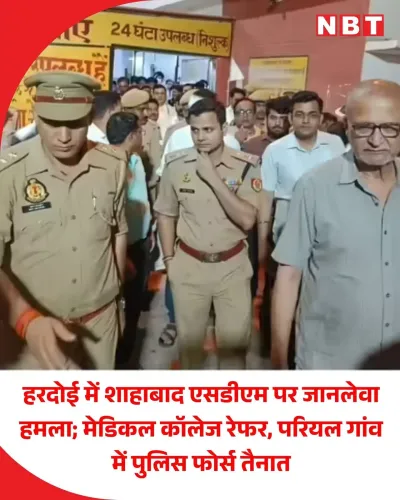
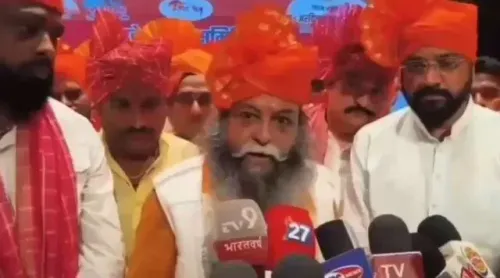
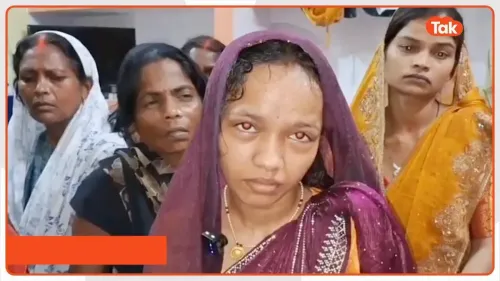
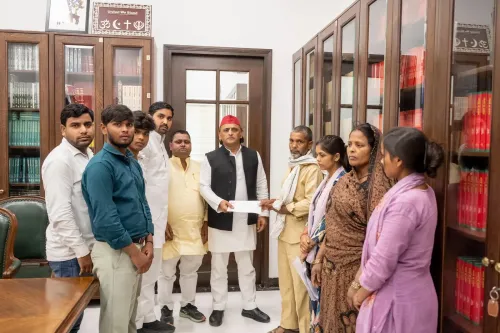
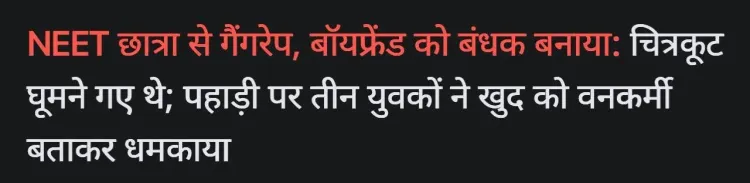
The post included an image, suggesting documentary or data-based evidence of crime incidents in the state.
The BJP has governed Uttar Pradesh since 2017 , partly on a law-and-order mandate that the Samajwadi Party has consistently contested.
The move fits a broader pattern of opposition leaders using social media to challenge ruling-party governance narratives in key states.
Samajwadi Party president Akhilesh Yadav on Thursday, 23 July 2026, took to X to highlight what he described as the reality of crime in Uttar Pradesh, directing his remarks pointedly at the state's chief minister and demanding justice for victims.
In his post, Yadav wrote — translated from Hindi — 'Uttar Pradesh mein apradh ka sach' ('The truth about crime in Uttar Pradesh'), addressing it to an 'uninformed Chief Minister' for his 'information, cognisance, and reference,' and closing with a blunt call: 'Let there be justice!' The post was accompanied by an image, the contents of which appear to document crime-related incidents in the state.
Context
Uttar Pradesh has been a persistent flashpoint in the rivalry between the Samajwadi Party and the ruling Bharatiya Janata Party on the question of law and order. Chief Minister Yogi Adityanath, who has held office since 2017, has repeatedly cited improved law-and-order as a signature achievement of his administration. Yadav's post directly contests that narrative.
The framing — addressed to an 'uninformed' chief minister — is a pointed rhetorical device, suggesting that the state's top executive is either unaware of or indifferent to crime affecting ordinary residents. The demand 'Insaaf ho!' ('Let there be justice!') signals that Yadav is speaking on behalf of victims who feel unheard.
Policy Backdrop
The BJP swept the 2017 Uttar Pradesh assembly elections partly on a promise to restore law and order after campaigning against the preceding Samajwadi Party government's record. Since then, the incumbent administration has frequently cited falling crime indices as evidence of effective governance. The Samajwadi Party, in turn, has consistently challenged those claims, arguing that ground realities diverge from official statistics.
Indian opposition parties routinely use social media to surface individual crime cases or data points that contradict the ruling party's governance narrative. Yadav's post fits squarely within this established pattern of digital political accountability, particularly in the run-up to any electoral cycle in India's most populous state.
Stakeholders and Impact
The most immediate stakeholders are Uttar Pradesh residents — particularly crime victims and their families — whose cases may be referenced in the image shared with the post. For the Samajwadi Party, amplifying law-and-order failures is central to its strategy of rebuilding political capital in a state it governed from 2012 to 2017.
For the Yogi Adityanath government, such posts from a prominent opposition leader create pressure to respond publicly, either by disputing the data or by demonstrating administrative action. Silence can itself become a political liability when the accusation is framed as a demand for justice.
What's Next
Attention will now turn to whether the Uttar Pradesh government issues a formal response to Yadav's allegations, and whether official crime statistics for the state are placed before the legislature or released publicly. Any state assembly discussion on law-and-order matters will be closely watched as a measure of how seriously the ruling party takes the opposition's challenge.
With Uttar Pradesh remaining the single largest prize in Indian electoral politics, sustained pressure on the BJP's governance record — particularly on crime — is likely to intensify as the next assembly election approaches.
Point of View
' he simultaneously questions Yogi Adityanath's competence and positions the Samajwadi Party as the voice of crime victims. The tactic is consistent with the SP's broader strategy of eroding the BJP's law-and-order brand — the very plank on which it captured Uttar Pradesh in 2017. Social media posts of this kind serve a dual purpose: they generate immediate news cycles while building a cumulative opposition dossier ahead of the next assembly election. The demand for justice, rather than a policy prescription, keeps the message emotionally resonant and difficult for the ruling party to rebut on purely statistical grounds.
NationPress
23 Jul 2026
Frequently Asked Questions
What did Akhilesh Yadav say about crime in Uttar Pradesh?
On 23 July 2026, Akhilesh Yadav posted on X highlighting 'the truth about crime in Uttar Pradesh,' addressing it to Chief Minister Yogi Adityanath for his 'information, cognisance, and reference,' and demanding justice for victims.
Why did Akhilesh Yadav call Yogi Adityanath 'uninformed'?
Yadav used the phrase 'uninformed Chief Minister' as a rhetorical device to suggest that Yogi Adityanath is either unaware of or indifferent to the crime situation on the ground in Uttar Pradesh, directly challenging the BJP's law-and-order governance narrative.
What is the BJP's law-and-order record in Uttar Pradesh?
The BJP won the 2017 Uttar Pradesh assembly election partly on a promise to restore law and order. Chief Minister Yogi Adityanath has since cited improved crime statistics as a key achievement, a claim the Samajwadi Party has consistently disputed.
How has the Samajwadi Party challenged the UP government on crime?
The Samajwadi Party, led by Akhilesh Yadav, has regularly used social media and public statements to highlight individual crime cases and data points that contradict the Yogi Adityanath government's claims of improved law and order in Uttar Pradesh.
What happens next after Akhilesh Yadav's crime post?
Political observers will watch for a formal response from the Uttar Pradesh government, the release of official crime statistics, and any legislative discussion on law-and-order matters in the state assembly.