Rajasthan joins Namo Bharat network: Alwar-Delhi RRTS corridor gets green light
Synopsis
Rajasthan is officially joining the Namo Bharat network after Rajasthan and Haryana reached a consensus on the Delhi-Gurugram-SNB-Alwar RRTS corridor. With 91 km of track and six stations planned within Rajasthan alone, and trains capable of 160 kmph, this is the most significant infrastructure push connecting the state to the National Capital Region in a generation.
Key Takeaways
Rajasthan and Haryana have reached a consensus to include Rajasthan in the Namo Bharat RRTS network.
The Delhi-Gurugram-SNB-Alwar corridor will originate at Sarai Kale Khan and span 196 kilometres with 22 stations .
Within Rajasthan , the corridor will cover 91 kilometres and include six proposed stations .
RRTS trains will operate at speeds of up to 160 kmph on dedicated elevated tracks.
Industrial hubs Bhiwadi and Neemrana in Rajasthan are among the primary economic beneficiaries.
The Delhi-Ghaziabad-Meerut corridor is already operational; the Alwar corridor is part of the first phase.
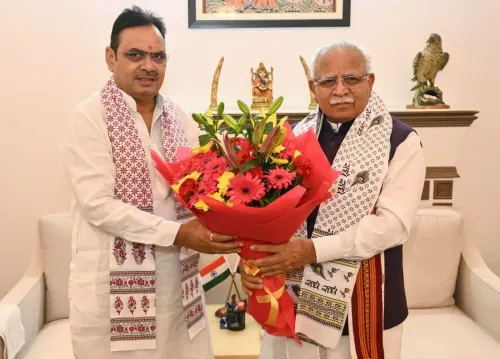
Rajasthan is set to join the Namo Bharat rapid transit network following a consensus between the governments of Rajasthan and Haryana, paving the way for high-speed Regional Rapid Transit System (RRTS) trains to run between Alwar and New Delhi. Officials from the Rajasthan Chief Minister's Office confirmed the development on Monday, 18 May, calling it a significant step toward integrating the state into the National Capital Region's modern transport grid.
The Corridor Route
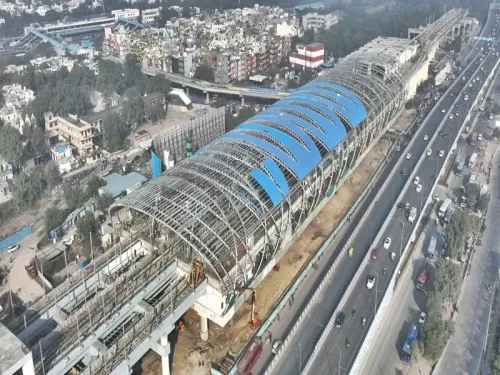
The Delhi-Gurugram-SNB-Alwar corridor will originate at Sarai Kale Khan in New Delhi and pass through Munirka, Aerocity, Gurugram, and Bawal before reaching Khairthal and Alwar via SNB. A separate branch extending from SNB will be developed up to Sotanala, passing through Neemrana and Behror.
The proposed network will span 196 kilometres in total and include 22 major stations. Within Rajasthan alone, the corridor will cover 91 kilometres and feature six proposed stations.
Key Infrastructure Features
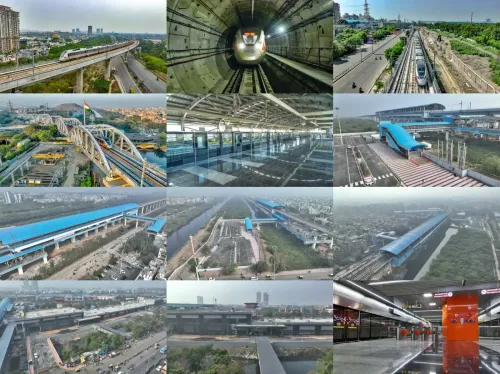
RRTS trains on this corridor will be capable of reaching speeds of up to 160 kmph — nearly three times the operational speed of conventional metro services. Trains will run on dedicated elevated corridors, ensuring uninterrupted movement free from road traffic. The network will integrate with railway stations, inter-state bus terminals, airports, and the Delhi Metro to enable seamless multimodal travel.
All three Namo Bharat corridors are being designed as interoperable networks, allowing passengers to switch between routes without friction. Sarai Kale Khan station in Delhi will serve as the primary interchange hub where all three corridors converge.
Phase One and Progress So Far
Under the Integrated Transport Plan for the National Capital Region, three corridors are being developed in the first phase: Delhi-Ghaziabad-Meerut, Delhi-Gurugram-SNB-Alwar, and Delhi-Panipat-Karnal. Of these, the Delhi-Ghaziabad-Meerut corridor has already been inaugurated, making it the first operational Namo Bharat route.
Notably, Rajasthan's inclusion marks a geographic expansion of the network beyond Uttar Pradesh and Haryana, signalling a broader NCR integration push.
Economic Impact on Rajasthan
The corridor is expected to directly benefit major industrial hubs in the NCR, including Bhiwadi and Neemrana in Rajasthan. Officials say the project will generate new investment, employment, and economic growth opportunities along the route, passing through significant industrial zones in both Haryana and Rajasthan.
With the inter-state consensus now in place, the focus shifts to project execution timelines and land acquisition — factors that have historically determined the pace of large infrastructure rollouts in the region.
Point of View
Not a sufficient one. Large NCR infrastructure projects have a long history of timelines slipping at the land acquisition and funding-share stages — and this corridor crosses two state boundaries before it even reaches Delhi. The economic case is solid: Bhiwadi and Neemrana are established industrial zones that genuinely need faster freight-adjacent people movement. But the real test will be whether the political agreement translates into a notified project timeline with locked funding. Until then, Rajasthan's entry into the Namo Bharat network is a commitment on paper, not on track.
NationPress
9 Oct 2026
Frequently Asked Questions
What is the Namo Bharat RRTS corridor connecting Alwar to Delhi?
It is a high-speed Regional Rapid Transit System corridor planned under the Integrated Transport Plan for the National Capital Region, running from Sarai Kale Khan in New Delhi to Alwar in Rajasthan via Gurugram and SNB. The full corridor spans 196 kilometres with 22 stations, of which 91 kilometres and six stations fall within Rajasthan.
How fast will Namo Bharat trains run on the Alwar-Delhi route?
Namo Bharat RRTS trains are designed to operate at speeds of up to 160 kmph, nearly three times the speed of conventional metro services. They will run on dedicated elevated corridors to avoid road traffic interference.
Which industrial areas in Rajasthan will benefit from the RRTS corridor?
The corridor is expected to directly benefit the industrial hubs of Bhiwadi and Neemrana in Rajasthan, both of which are major manufacturing and investment zones within the National Capital Region. The route through Neemrana and Behror via the SNB branch further strengthens this industrial connectivity.
Which Namo Bharat corridor is already operational?
The Delhi-Ghaziabad-Meerut corridor has already been inaugurated and is the first operational Namo Bharat route. The Delhi-Gurugram-SNB-Alwar and Delhi-Panipat-Karnal corridors are being developed as part of the same first phase.
How will the Alwar RRTS corridor connect with other transport networks?
The corridor will integrate with railway stations, inter-state bus terminals, airports, and the Delhi Metro, enabling seamless multimodal travel. All three Namo Bharat corridors will converge at Sarai Kale Khan station in Delhi, which will serve as the main interchange hub.