Amit Shah Backs e-Prosecution 2.0 to Speed Up Criminal Justice
Synopsis
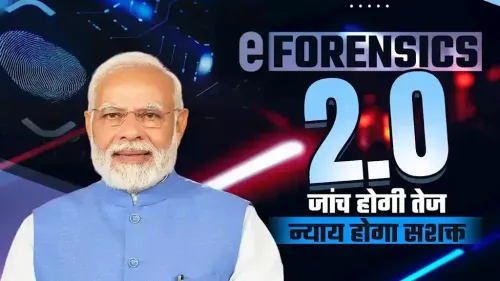
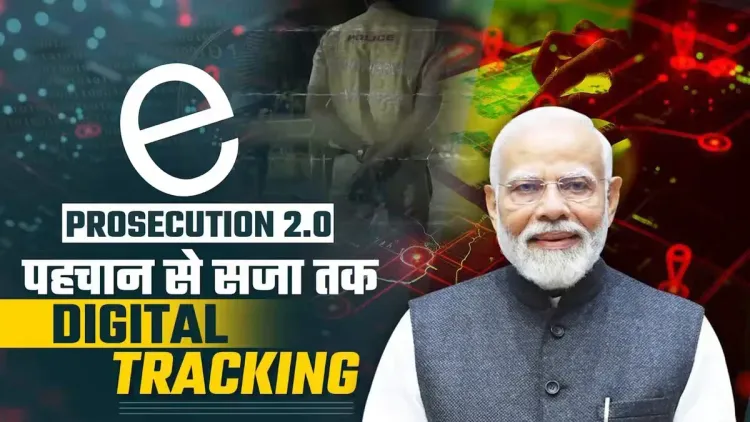
Union Home Minister Amit Shah on 22 June 2026 championed e-Prosecution app 2.0 as a digital highway linking police, prosecutors and courts, aiming to enforce the time-bound justice framework of the Bharatiya Nagarik Suraksha Sanhita and cut delays in criminal case disposal across India.
Key Takeaways
Amit Shah on 22 June 2026 described e-Prosecution app 2.0 as a digital link between investigating agencies, prosecution and the judiciary.
The app is designed to enforce case-disposal timelines mandated by the Bharatiya Nagarik Suraksha Sanhita (BNSS) , which came into force on 1 July 2024 .
Key features cited include faster criminal identification, e-evidence integration and real-time timeline monitoring .
The platform builds on earlier infrastructure including CCTNS (launched 2009 ) and the Inter-Operable Criminal Justice System .
Uniform state-level adoption by police forces , public prosecutors and judicial officers will be critical to the app's success.
Parliament's winter session may see a review of BNSS implementation timelines as an early performance benchmark.
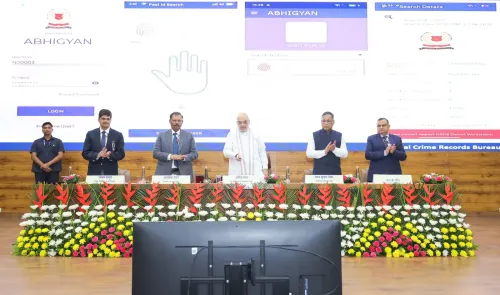
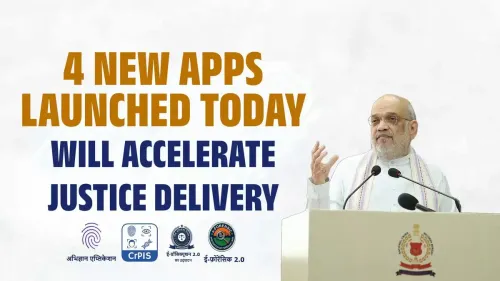
Union Home Minister Amit Shah on Monday, 22 June 2026 described the e-Prosecution app 2.0 as a transformative digital bridge connecting investigating agencies, prosecution wings and the judicial system, saying the platform would help deliver justice within the timelines mandated by the Bharatiya Nagarik Suraksha Sanhita (BNSS).
Context
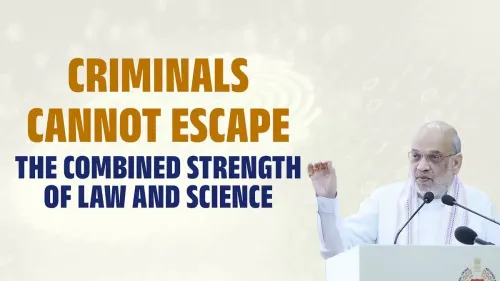
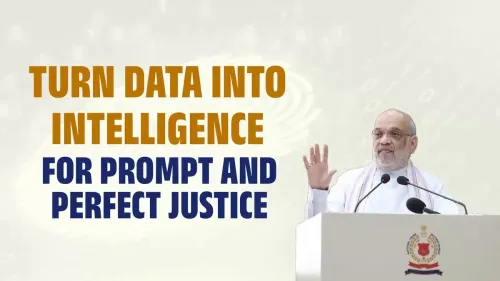
In his post, Shah called e-Prosecution 2.0 'the new information highway connecting the investigating agencies, prosecution, and judicial system.' He said the app would 'cut down the time required for identification of criminals, e-evidence integration' and enable 'monitoring of timelines to deliver prompt and perfect justice.' The remarks signal the central government's intent to operationalise the time-bound justice framework written into the BNSS.
The BNSS — along with the Bharatiya Nyaya Sanhita (BNS) and the Bharatiya Sakshya Adhiniyam (BSA) — replaced the colonial-era Indian Penal Code, Code of Criminal Procedure and Indian Evidence Act respectively. All three laws were enacted in December 2023 and came into force on 1 July 2024. The BNSS introduced fixed timelines for investigation, charge-sheet filing and trial completion — timelines that digital infrastructure such as e-Prosecution 2.0 is now expected to enforce in practice.
Policy Backdrop
The e-Prosecution platform is part of a wider ecosystem of criminal-justice digitisation that traces its roots to the Crime and Criminal Tracking Network and Systems (CCTNS), launched in 2009, which created the national crime and criminal database. Subsequent initiatives — including e-Courts and the Inter-Operable Criminal Justice System (ICJS) — built layers of connectivity between police stations, courts and prisons. e-Prosecution 2.0 is positioned as the latest and most integrated layer in this stack.
The broader push sits under the Digital India umbrella and reflects successive administrations' recognition that India's court backlog — millions of cases pending at various stages — cannot be addressed through procedural reform alone. Seamless data flow between investigation and prosecution is seen as essential to converting legislative timelines into measurable outcomes on the ground.
Stakeholders and Impact
Police forces across states stand to benefit from faster digital evidence submission, reducing delays caused by physical documentation and manual handoffs. Public prosecutors gain real-time visibility into investigation progress, allowing them to prepare cases without waiting for paper records. Judicial officers can monitor case timelines and flag overruns, creating accountability at each stage of the criminal justice chain.
The platform's emphasis on 'seamless data streaming,' as described by Shah, also addresses a long-standing challenge: the fragmentation of records between state police systems and central databases. By integrating e-evidence — digital forensics, CCTV footage, call-detail records — directly into the prosecution workflow, e-Prosecution 2.0 aims to reduce adjournments caused by missing or late-filed evidence.
What's Next
Attention will now turn to the state-wise rollout status of e-Prosecution 2.0, as criminal justice is a concurrent subject and implementation depends heavily on state police and prosecution departments adopting the platform uniformly. Any mid-term review of BNSS-mandated disposal timelines — potentially tabled in Parliament's winter session — will be an early indicator of whether the digital infrastructure is translating into measurable reductions in case pendency.
If the integration delivers on its stated promise, it could set a template for further convergence between law-enforcement databases and the judiciary, accelerating India's transition to a fully digital criminal justice ecosystem.
Point of View
Embed fixed timelines, then deploy digital infrastructure to make those timelines enforceable. The move signals that the government sees technology — not just legislation — as the primary lever to reduce India's massive court backlog. The platform's real test will be state compliance, since criminal justice is a concurrent subject and past digitisation drives have stalled at the state-centre seam. If e-Prosecution 2.0 achieves genuine interoperability, it could mark the most consequential shift in India's criminal justice administration since the CCTNS rollout.
NationPress
22 Jun 2026
Frequently Asked Questions
What is the e-Prosecution app 2.0?
The e-Prosecution app 2.0 is a government digital platform that connects police investigating agencies, public prosecutors and courts to share case data, digital evidence and track case timelines in real time, helping enforce the disposal deadlines set by the Bharatiya Nagarik Suraksha Sanhita.
What is the BNSS and why does it matter for e-Prosecution?
The Bharatiya Nagarik Suraksha Sanhita (BNSS) is India's new criminal procedure law that replaced the colonial-era Code of Criminal Procedure; it came into force on 1 July 2024 and mandates fixed timelines for investigation, charge-sheet filing and trial completion. e-Prosecution 2.0 is designed to monitor and enforce these timelines digitally.
What did Amit Shah say about e-Prosecution 2.0?
Home Minister Amit Shah called e-Prosecution 2.0 'the new information highway connecting the investigating agencies, prosecution, and judicial system,' adding that it would cut the time needed for criminal identification, e-evidence integration and timeline monitoring to deliver 'prompt and perfect justice.'
How does e-Prosecution 2.0 differ from earlier criminal justice platforms?
Earlier platforms such as CCTNS (launched 2009) and the Inter-Operable Criminal Justice System focused on database creation and connectivity; e-Prosecution 2.0 builds on these to enable seamless streaming of digital evidence and real-time case-timeline monitoring directly between police, prosecutors and judges.
Which states will use e-Prosecution 2.0?
The platform is intended for nationwide use across all state police forces, prosecution departments and courts, though criminal justice being a concurrent subject means uniform adoption depends on individual state governments implementing and integrating the system.