Amit Shah: Cabinet Clears MSP Hike for All 6 Rabi Crops
Synopsis
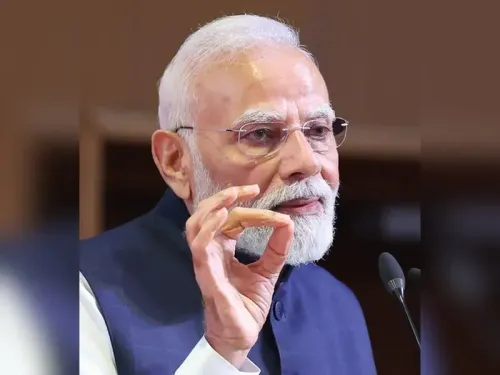
The Union Cabinet approved higher MSPs for all six major rabi crops for the 2027-28 marketing season. Home Minister Amit Shah announced the decision on 30 September 2026, calling it a reflection of the Modi government's commitment to ensuring remunerative prices for farmers.
Key Takeaways
The Union Cabinet approved MSP increases for all 6 major rabi crops for marketing season 2027-28 on 30 September 2026 .
Union Home Minister Amit Shah announced the decision, framing it as part of the Modi government's farmer-welfare commitment.
Since 2018 , government policy mandates MSP be fixed at at least 1.5 times the cost of production for major crops.
MSP revisions are based on recommendations from the Commission for Agricultural Costs and Prices (CACP) .
Exact per-quintal rates for each of the six rabi crops and procurement timelines are yet to be officially published.
The PM-KISAN direct income-transfer scheme complements MSP as part of the government's broader agricultural support framework.
Every rabi farmer in India woke up to consequential news on Wednesday, 30 September 2026 — the Union Cabinet approved higher Minimum Support Prices (MSP) for all six major rabi crops for the marketing season 2027-28, a decision Union Home Minister Amit Shah called a testament to the Modi government's unwavering commitment to farmer welfare.
What the Cabinet decided — and why it matters
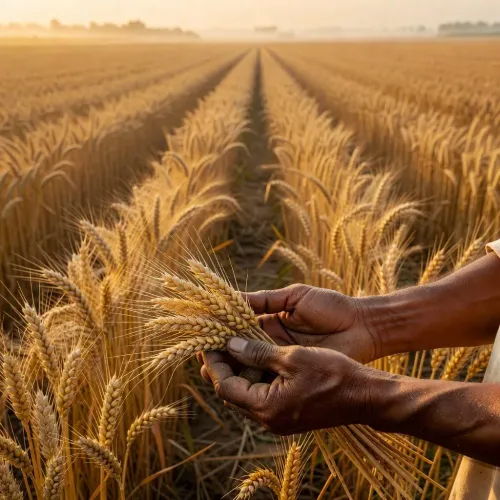
The cabinet approval guarantees farmers a legally assured floor price across all six principal rabi crops before the sowing season gets underway — the window when price signals matter most to a cultivator deciding what to plant. MSP functions as the government's promise: whatever the market does, procurement agencies step in at this floor, shielding growers from distress sales.
Shah posted in Hindi: 'मार्केटिंग सीजन 2027-28 के लिए रबी सीजन की सभी 6 प्रमुख फसलों के MSP में बढ़ोतरी को मंजूरी दी' — 'approved an increase in MSP for all 6 major rabi crops for marketing season 2027-28' — framing it as a reflection of the government's 'dedication to ensuring remunerative prices for farmers' produce and empowering the agricultural sector.'
A policy lineage stretching back to 2018
The architecture behind today's announcement was set in 2018, when the Union Cabinet locked in a policy of fixing MSP at at least 1.5 times the cost of production for major crops — a long-standing demand of farm unions crystallised into official doctrine. Each successive annual revision since then has been benchmarked against recommendations from the Commission for Agricultural Costs and Prices (CACP).
Prime Minister Narendra Modi's government has also layered direct-income support over price guarantees — the PM-KISAN scheme channels direct cash transfers to eligible farm households — making MSP revisions one plank of a broader agricultural support architecture. The rabi crop cycle, covering staples such as wheat, covers India's cooler-season harvest, which feeds directly into national food security stocks.
What farmers and markets will watch next
The announcement triggers the next set of questions on every farmer's mind: the exact per-quintal rates crop by crop, and when government procurement operations will open for the 2027-28 season. Procurement agencies operationalising those rates — particularly for wheat in major producing states — will determine how much of this cabinet decision translates into cash in farm households.
For a government that has staked significant political capital on the farmer-welfare narrative, the pace of procurement and the breadth of beneficiary coverage will be the real scorecard.
Point of View
Especially after the farm-law rollback of 2021 sharpened scrutiny over agrarian policy credibility. Approving increases ahead of the rabi sowing window — when farmer decisions are still live — is deliberate signalling designed to shore up rural confidence. The 1.5x cost-of-production benchmark, institutionalised in 2018, gives the government a defensible, technocratic anchor while retaining flexibility on actual rate quantum. Sustained scrutiny will fall on whether procurement machinery in the major wheat and oilseed states can actually operationalise these announced floors at scale.
NationPress
30 Sept 2026
Frequently Asked Questions
What is MSP and how does it help farmers?
MSP, or Minimum Support Price, is a government-guaranteed floor price for specified crops. It ensures farmers receive at least this price during procurement operations, protecting them from market price crashes and distress selling.
Which rabi crops get MSP support from the government?
The government provides MSP for six major rabi crops. The exact list typically includes wheat, barley, gram, masur (lentil), rapeseed/mustard, and safflower, though the cabinet announcement covers all six principal rabi crops for 2027-28.
What did the Union Cabinet decide on 30 September 2026?
The Union Cabinet approved an increase in the Minimum Support Price for all six major rabi crops for the marketing season 2027-28, as announced by Home Minister Amit Shah.
How is MSP calculated in India?
MSP is fixed on the basis of recommendations from the Commission for Agricultural Costs and Prices (CACP). Since 2018, government policy mandates that MSP must be at least 1.5 times the cost of production for major crops.
What is the difference between rabi and kharif MSP announcements?
Rabi crops are sown in winter and harvested in spring — wheat is the most prominent example — while kharif crops are sown in monsoon. The government announces separate MSP revisions for each season ahead of the respective sowing window.