Amit Shah fires back at 'dead economy' critics of India
Synopsis
Union Home Minister Amit Shah fired back at commentators calling India a 'dead economy', saying their thinking is what has died — not India's growth. The post, on September 25, 2026, is part of a long-running BJP pattern of publicly contesting negative economic narratives.
Key Takeaways
Amit Shah posted a sharp Hindi rebuttal on September 25, 2026 , calling critics of India's economy intellectually dead.
He used the phrase 'dead economy' directly, turning the critics' own language against them.
Shah cited India's 'vibrancy' and 'rapid development' as evidence the critics are missing the real picture.
The post fits a recurring pattern since 2014 of senior BJP leaders publicly contesting unflattering economic commentary.
No specific critic or data point was named, keeping the rebuttal deliberately broad and rhetorical.
The next quarterly GDP estimates and the Economic Survey will be the factual test for both sides of this debate.
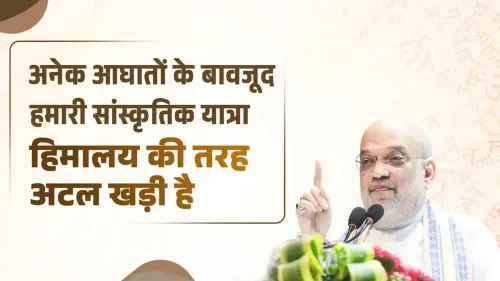
Anyone calling India a 'dead economy' has a dead mindset — that is the blunt message Union Home Minister Amit Shah sent on Friday, September 25, 2026, in a sharp Hindi-language post on X that drew a hard line between official optimism and what he framed as a failure of imagination among the government's critics.
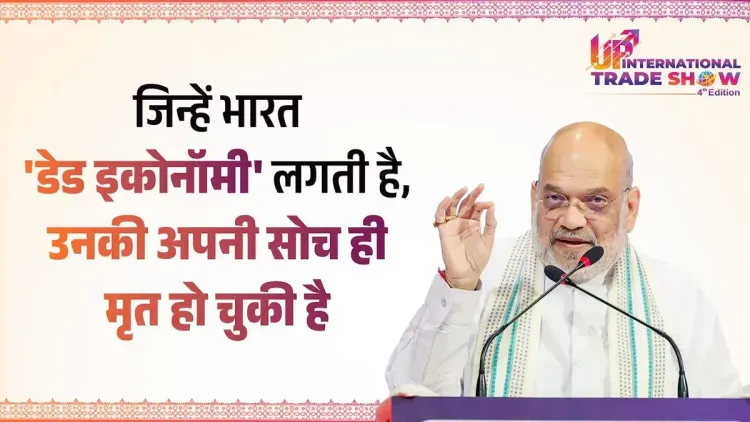
Shah's post, in full translation, reads: 'जिन्हें भारत 'डेड इकोनॉमी' लगती है, असल में उनकी अपनी सोच ही मृत हो चुकी है।' ('Those who find India a dead economy — in reality, it is their own thinking that has died.') He added that this dead thinking is precisely why such people cannot see India's vibrancy and the rapid pace of development underway.
A rebuttal aimed at critics, domestic and beyond
The post did not name a specific target, but its framing — countering the phrase 'dead economy' — is unmistakably a response to a line of commentary, whether from opposition benches or external observers, that questions India's growth momentum. Such rebuttals have become a recurring feature of BJP's political communication since 2014, when the NDA government came to power promising high-velocity economic transformation.
The pattern is well-established: when unflattering growth narratives gain circulation, senior party leaders step in publicly to contest them — not with granular data in a social media post, but with a sharp rhetorical counter-punch designed to reframe the entire conversation. Shah, as one of the party's most combative and strategically minded voices, is a natural choice for that role.
Shah's 'vibrancy' framing versus the numbers debate
The word Shah reaches for — vibrancy — is deliberately broad, invoking infrastructure rollouts, rising consumer demand, and the general energy of a large, young economy rather than any single indicator. That breadth is strategic: it is harder to rebut a mood than a number. Critics, by contrast, tend to anchor their arguments in unemployment data, consumption trends, or private investment figures. The gap between those two frames — the felt-sense of growth versus the measured pace of it — is where India's economic debate most sharply divides.
The next quarterly GDP estimates and the annual Economic Survey will be the concrete battleground where both sides test their claims. Until those numbers land, posts like Shah's set the political temperature of that debate.
Optimism in the face of criticism is easy. The harder question — and the one the data will answer — is whether India's growth story is running as fast as its storytellers say it is.
Point of View
But it also signals that the party feels the need to manage perception actively — which itself tells you something about the contested state of India's economic story heading into the next round of official data.
NationPress
25 Sept 2026
Frequently Asked Questions
What did Amit Shah say about India's economy on September 25 2026?
Amit Shah posted in Hindi that those who consider India a 'dead economy' are the ones whose own thinking has died, and that their mental limitations prevent them from seeing India's vibrancy and rapid development.
Who was Amit Shah targeting with his 'dead economy' remark?
Shah did not name a specific individual or group. The post appeared to be a broad rebuttal of domestic and international commentary critical of India's economic momentum, a recurring theme in BJP's public communication.
What is the BJP's approach to negative economic commentary?
Since 2014, ruling party leaders have routinely issued public rebuttals to narratives describing India's economy as stagnant, contrasting official growth data and infrastructure rollouts against opposition or external criticism.
When will India's next official economic growth data be released?
The next quarterly GDP estimates and the annual Economic Survey are the key upcoming indicators to watch, though their precise release dates had not been officially announced at the time of Shah's post.
What does 'vibrancy' mean in the context of Amit Shah's post?
Shah used 'vibrancy' as a broad term encompassing infrastructure growth, consumer activity, and overall economic energy — a deliberate framing that goes beyond any single data point and captures the government's overall optimistic narrative about India's development trajectory.