Amit Shah Honours Tribhuvandas Patel, Amul's Founding Architect
Synopsis
Union Home Minister Amit Shah honoured Tribhuvandas Patel on his birth anniversary, crediting the cooperative leader's 1946 founding of the Kheda dairy union — the seed of Amul — and pointing to the newly established Tribhuvan Cooperative University in Anand as a living extension of his legacy.
Key Takeaways
Tribhuvandas Patel founded the Kheda District Cooperative Milk Producers Union in 1946 under Sardar Vallabhbhai Patel's guidance, laying the foundation for Amul.
Amul today supports over 36 lakh farmers and large numbers of women cooperative members, according to Shah's post.
Tribhuvan Cooperative University in Anand, Gujarat is India's first national cooperative university, named in Tribhuvandas Patel's honour.
The Ministry of Cooperation , created in July 2021 with Amit Shah as minister, institutionalised cooperatives as a distinct policy pillar.
Operation Flood (1970) scaled the Amul-Kheda model nationwide, powering India's White Revolution in dairy.
Shah invoked 'Sahkar Se Samriddhi' — 'Prosperity Through Cooperation' — as the guiding philosophy connecting Patel's legacy to current government policy.
A seed planted in 1946 in Kheda, Gujarat, now sustains the livelihoods of over 36 lakh farmers and countless women across India — and on his birth anniversary, Union Home Minister and Minister of Cooperation Amit Shah paused to salute the man who sowed it: Tribhuvandas Kishidas Patel, the quiet architect of India's White Revolution.
Posting on Thursday, 22 October 2026, Shah wrote in Hindi: 'Shwet Kranti ke agradoot aur sahkarita andolan ke praneta Tribhuvandas Patel ji ki jayanti par unhe sadar naman' — ('Respectful salutations to Tribhuvandas Patel, pioneer of the White Revolution and the cooperative movement, on his birth anniversary.')
The 1946 moment that changed Indian dairying forever
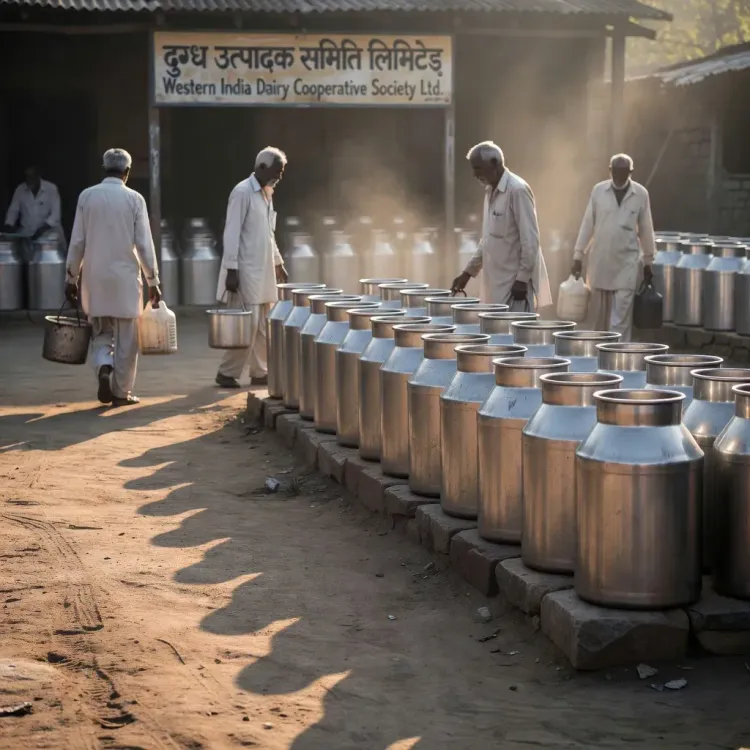
Under the direct guidance of Sardar Vallabhbhai Patel, Tribhuvandas Patel established the Kheda District Cooperative Milk Producers Union in 1946 — a single district-level body that would eventually reshape how rural India thought about collective economic power. The model was simple but radical: put dairy farmers, not middlemen, in control of production, processing, and pricing.
That cooperative became Amul, today India's largest dairy brand and one of the world's most recognisable food cooperatives. Shah described the original effort as a seed that has grown into 'a vast banyan tree' — 'vishaal vatavriksh' — grounding the prosperity of millions.
From Anand's milk co-op to India's first cooperative university
Shah also highlighted a newer milestone rooted in the same soil: Tribhuvan Cooperative University, India's first national cooperative university, established in Anand — the same Gujarat town that is home to Amul's headquarters. The university bears Tribhuvandas Patel's name and is designed to produce trained leadership for the cooperative sector, filling a long-standing institutional gap.
The establishment of the Ministry of Cooperation in July 2021, with Shah himself at the helm, was explicitly framed as an effort to give cooperatives a distinct policy home alongside public and private enterprises. The university in Anand is one of the most concrete institutional expressions of that agenda.
'Sahkar Se Samriddhi' — a slogan with deep roots
Shah closed his tribute by invoking the government's signature cooperative-sector philosophy: 'Sahkar Se Samriddhi' — 'Prosperity Through Cooperation'. He described Tribhuvandas Patel's life and dedication to the cooperative cause as a permanent inspiration for realising that vision.
The phrase is more than a tagline. It anchors a policy architecture that stretches from Operation Flood — launched in 1970 to replicate the Amul model nationally — through to today's legislative and institutional push to modernise and expand cooperative structures into sectors beyond dairy. On the day India remembers the man who made Amul possible, the government is clearly determined to frame his legacy as a living blueprint, not just a chapter in history.
Point of View
Blessed by Sardar Patel — into the current BJP government's own cooperative-sector agenda, lending historical legitimacy to the 2021 Ministry of Cooperation. By spotlighting the Tribhuvan Cooperative University in Anand, the tribute doubles as a policy announcement in warm tones, signalling that institutional infrastructure for cooperatives is being built, not just spoken about. The 'Sahkar Se Samriddhi' framing ties grassroots dairy history directly to an electoral and economic pitch aimed at rural voters and farmer communities. The tribute thus operates simultaneously as reverence, policy communication, and political positioning — all without appearing to do any of the three.
NationPress
22 Oct 2026
Frequently Asked Questions
Who was Tribhuvandas Patel and why is he famous?
Tribhuvandas Kishidas Patel was the founder of the Kheda District Cooperative Milk Producers Union in 1946, which became the foundation of Amul — India's largest dairy cooperative. He is regarded as the pioneer of India's cooperative dairy movement and the White Revolution.
What is Amul's connection to the 1946 Kheda cooperative?
The Kheda District Cooperative Milk Producers Union established by Tribhuvandas Patel in 1946 directly evolved into Amul. The union's model of farmer-owned dairy processing became the template for what is now India's most iconic dairy brand.
What is Tribhuvan Cooperative University in Anand?
Tribhuvan Cooperative University in Anand, Gujarat, is India's first national cooperative university, named after Tribhuvandas Patel. It is designed to provide trained leadership and professional education for India's cooperative sector.
What does 'Sahkar Se Samriddhi' mean?
'Sahkar Se Samriddhi' is a Hindi phrase meaning 'Prosperity Through Cooperation.' It is the guiding philosophy of India's Ministry of Cooperation, established in July 2021, which aims to strengthen cooperatives as a vehicle for rural and agricultural development.
What role did Sardar Vallabhbhai Patel play in Amul's founding?
Sardar Vallabhbhai Patel, India's first Deputy Prime Minister, provided the political guidance and encouragement that enabled Tribhuvandas Patel to establish the Kheda dairy cooperative in 1946. His mentorship is credited as a decisive factor in launching the cooperative dairy movement in Gujarat.