Amit Shah: Libraries Are the Root of Nation-Building
Synopsis
Union Home Minister Amit Shah on 11 July 2026 posted that knowledge and wisdom — accessible only through libraries — are the root of every activity that builds the nation and brings it glory, reinforcing a long-standing governmental emphasis on library infrastructure as a pillar of human-capital development.
Key Takeaways
Amit Shah posted on 11 July 2026 that libraries are the sole source of knowledge and wisdom essential for nation-building.
He stated: 'The root of every activity that builds the nation and brings it glory is knowledge and wisdom, and only a library can provide this.' The National Mission on Libraries , launched in 2014 , aims to modernise public libraries and expand digital access to knowledge resources across India .
Primary beneficiaries of strengthened library infrastructure are students and researchers , especially in underserved regions.
The post continues a pattern of senior BJP leadership linking knowledge institutions to India's civilisational and developmental ambitions.
Further policy action could include expanded digital library rollouts and fresh allocations in the upcoming education budget.
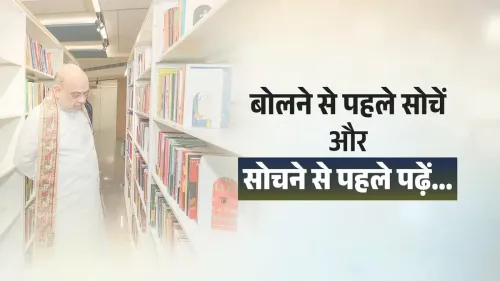
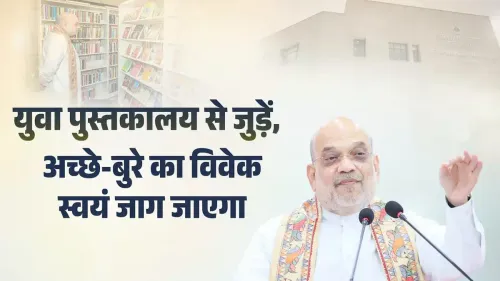
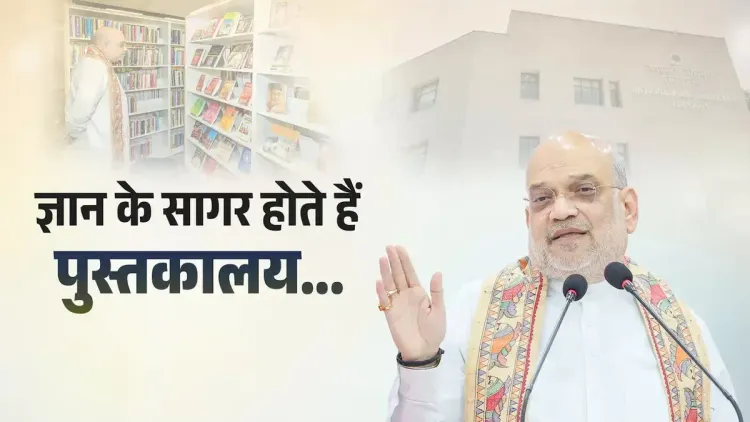
Union Home Minister Amit Shah on Saturday, 11 July 2026 shared a pointed reflection on the foundational role of libraries in national progress, posting in Hindi on X that knowledge and wisdom — accessible only through libraries — are the root of every activity that builds a nation and brings it glory.
In his post, Shah wrote: 'राष्ट्र निर्माण और उसे वैभव दिलाने वाली हर गतिविधि का मूल है - ज्ञान और विवेक और यह केवल पुस्तकालय ही दे सकता है।' — translated: 'The root of every activity that builds the nation and brings it glory is knowledge and wisdom, and only a library can provide this.'
Context
Shah's statement arrives as a philosophical assertion about the indispensable place of libraries in India's developmental vision. The post does not reference a specific event, but it aligns with a broader rhetorical pattern in which senior government figures have consistently linked access to knowledge with the country's civilisational ambitions. The emphasis on vivek (wisdom) alongside gyan (knowledge) signals a dual concern — not just information access, but its thoughtful application.
As Union Home Minister, Shah's public communications carry significant weight in setting cultural and policy tone. His choice to highlight libraries as a civic institution reflects a long-standing governmental emphasis on knowledge infrastructure as a pillar of human-capital development.
Policy Backdrop
The National Mission on Libraries, launched in 2014, was designed to modernise public libraries across India, improve digital access to knowledge resources, and integrate library networks at the national level. The mission identified public libraries as critical nodes for education, research, and lifelong learning, particularly for students and researchers in smaller towns and rural areas.
Successive central governments have treated library modernisation not merely as a cultural exercise but as an instrument of human-capital development. The digital components of the National Mission on Libraries — including digitisation of rare manuscripts and expansion of e-library access — remain an active area of policy attention heading into the annual education budget cycle.
Stakeholders and Impact
The primary beneficiaries of strengthened library infrastructure are students and researchers, who depend on accessible knowledge repositories for academic and professional advancement. In a country where equitable access to quality educational resources remains uneven across geographies and income levels, public libraries serve as equalising institutions.
Shah's framing — positioning libraries as the mool (root) of national glory — also speaks to a cultural constituency that values India's textual and intellectual heritage. It reinforces the government's broader narrative of combining traditional wisdom with modern institutional capacity.
What's Next
The statement is likely to be read in the context of upcoming parliamentary debates on the education budget and any announcements related to the National Mission on Libraries' digital rollout. Policymakers and education advocates will watch for whether this rhetorical emphasis translates into fresh budgetary allocations or programme expansions for library infrastructure across India's states and union territories. The post adds to a visible pattern of senior BJP leadership foregrounding knowledge and culture as pillars of India's rise on the global stage.
Point of View
Not merely a platitude — it ties the BJP government's nation-building narrative to knowledge infrastructure at a moment when education policy is under parliamentary scrutiny. By invoking both 'gyan' (knowledge) and 'vivek' (wisdom), he distinguishes between information access and its purposeful application, a framing consistent with the party's broader civilisational rhetoric. The reference to libraries as the 'root' of national glory also serves to elevate an often-underfunded public institution into a priority conversation. Analysts will watch whether this rhetorical investment is followed by concrete budgetary or legislative action on the National Mission on Libraries.
NationPress
11 Jul 2026
Frequently Asked Questions
What did Amit Shah say about libraries on 11 July 2026?
Amit Shah posted on X that knowledge and wisdom — which only libraries can provide — are the root of every activity that builds the nation and brings it glory.
What is the National Mission on Libraries in India?
The National Mission on Libraries is a central government initiative launched in 2014 to modernise public libraries, expand digital access to knowledge resources, and integrate library networks across India.
Why is Amit Shah talking about libraries?
Shah's post reflects a recurring government emphasis on libraries as instruments of human-capital development and nation-building, consistent with BJP leadership's broader focus on knowledge and cultural heritage.
How do libraries contribute to nation-building in India?
Public libraries serve as equalising institutions that provide students, researchers, and citizens — particularly in smaller towns and rural areas — with access to educational resources essential for personal and national advancement.
What could follow Amit Shah's statement on libraries?
Policy observers expect the statement may precede announcements on digital library expansion or fresh budgetary allocations under the National Mission on Libraries in upcoming parliamentary sessions.