Amit Shah marks 11 years of Digital India, cites key milestones

Synopsis
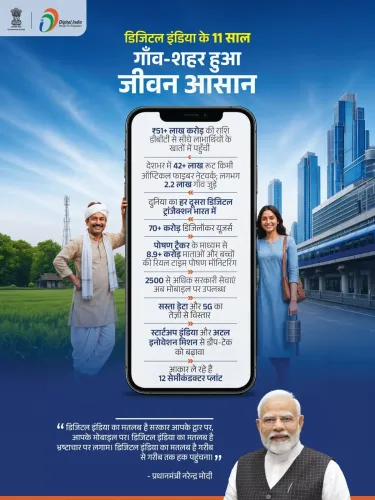
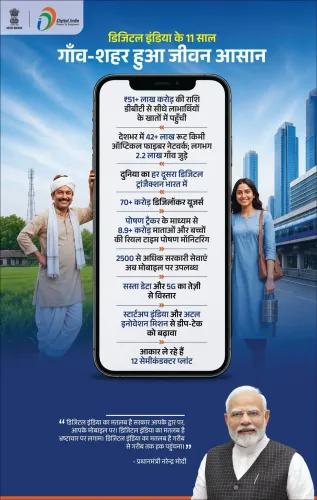
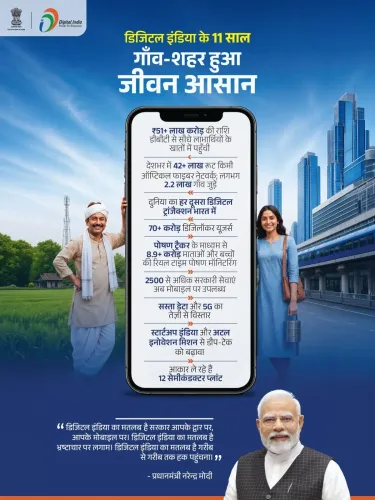
Union Home Minister Amit Shah on 1 July 2026 marked eleven years of the Digital India programme, citing 103 crore internet users, 2.2 lakh villages connected via BharatNet, ₹51 lakh crore disbursed through DBT, and India's 50 per cent share of global digital transactions, while flagging AI and semiconductors as the next frontier.
Key Takeaways
Digital India completes 11 years on 1 July 2026 , launched originally on 1 July 2015 by PM Narendra Modi .
The government claims 103 crore people are now connected to the internet under the programme.
2.2 lakh villages have been linked through the BharatNet rural broadband project. ₹51 lakh crore has been transferred directly to beneficiaries via the Direct Benefit Transfer (DBT) system.
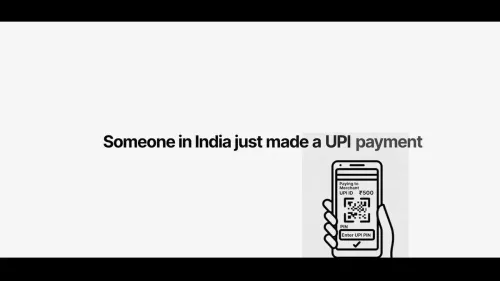
India is cited as accounting for 50 per cent of the world's digital transactions .
The government is now positioning the digital foundation as the base for growth in AI , semiconductors and electronics manufacturing .
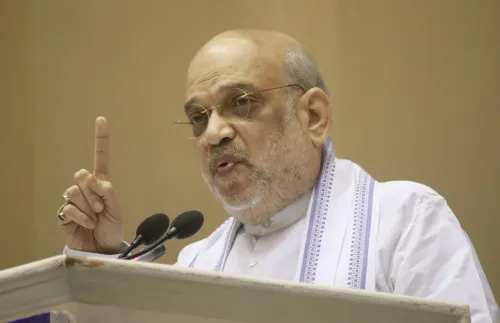
Union Home Minister Amit Shah on Wednesday, 1 July 2026 marked the 11th anniversary of the Digital India programme, crediting the Modi government with transforming India into a digital nation by connecting citizens, villages and welfare systems through technology over the past decade.
Context
The Digital India programme was launched on 1 July 2015 by Prime Minister Narendra Modi with the stated aim of converting India into a digitally empowered society and knowledge economy. The initiative brought together infrastructure development, digital literacy and e-governance under a single umbrella, and has since grown into one of the government's most prominent policy planks.
Amit Shah's post on X said the government had changed 'how people earned, learned, and were governed,' pointing to four headline achievements: connecting 103 crore people with internet, linking 2.2 lakh villages through BharatNet, disbursing ₹51 lakh crore through Direct Benefit Transfer (DBT), and accounting for 50 per cent of the world's digital transactions.
Policy Backdrop
BharatNet, originally conceived in 2011 as the National Optical Fibre Network, is the rural broadband backbone of Digital India, aimed at delivering high-speed connectivity to gram panchayats and villages across the country. The project has been executed in phases and represents one of the world's largest rural broadband rollouts.
The Direct Benefit Transfer mechanism, rolled out nationally from 2013, uses Aadhaar authentication to transfer government subsidies and welfare payments directly into beneficiaries' bank accounts, bypassing intermediaries. The government has consistently cited DBT as a tool to eliminate leakages in welfare delivery. Alongside these, the Unified Payments Interface (UPI) has been a central pillar of India's digital payments expansion, contributing to the country's outsized share of global real-time transactions.
Shah also highlighted the programme's forward-looking dimension, describing digitalisation as 'a movement integral to India, empowering startups, innovations and firing up AI, semiconductors and electronics manufacturing.' This framing aligns with newer government priorities including the India Semiconductor Mission and the National AI Mission, both of which position India as an aspirant in global technology supply chains.
Stakeholders and Impact
The programme's stated beneficiaries span a wide range: rural populations gaining first-time internet access through BharatNet, welfare recipients receiving subsidies without intermediary deductions via DBT, and urban entrepreneurs plugging into a growing startup ecosystem. India's digital public infrastructure stack — built on Aadhaar, UPI and broadband networks — has also attracted international attention as a replicable model for emerging economies.
The startup and technology sector has been a particular focus of the anniversary messaging. The government has framed the digital foundation laid over eleven years as the enabling layer for next-generation industries in artificial intelligence, semiconductor fabrication and electronics manufacturing, sectors where India is seeking to attract large-scale investment and build domestic capacity.
What's Next
Upcoming milestones to watch include further phase targets under BharatNet for villages yet to receive optical fibre connectivity, progress benchmarks under the India Semiconductor Mission, and the legislative trajectory of data protection frameworks that will govern India's expanding digital economy. The government is also expected to deepen the integration of AI-driven tools into public service delivery as the next frontier of the Digital India agenda.
As India crosses eleven years of the programme, the policy conversation is shifting from access and inclusion — largely the focus of the first decade — toward productivity, innovation and global competitiveness in deep-tech sectors.
Point of View
Concrete numbers to consolidate the BJP's narrative of governance-through-technology ahead of what remains a competitive electoral cycle. The pivot in the closing lines from connectivity and welfare to AI, semiconductors and startups signals that the government is consciously reframing Digital India's second decade around economic competitiveness rather than access alone. This mirrors a global pattern among large democracies seeking to anchor industrial policy in digital infrastructure. The emphasis on DBT as a leakage-plugging tool also quietly reinforces the government's long-running argument that direct transfers represent a structural improvement over the subsidy architecture of earlier administrations.
NationPress
1 Jul 2026
Frequently Asked Questions
When was Digital India launched and by whom?
Digital India was launched on 1 July 2015 by Prime Minister Narendra Modi to transform India into a digitally empowered society through e-governance, digital infrastructure and digital literacy.
What is BharatNet and how many villages has it connected?
BharatNet is a government project to provide optical fibre broadband connectivity to rural India. The government claims it has connected 2.2 lakh villages as part of the Digital India programme.
How much has been transferred through Direct Benefit Transfer (DBT)?
The government states that ₹51 lakh crore has been disbursed through the Direct Benefit Transfer system, which routes subsidies and welfare payments directly into beneficiaries' bank accounts using Aadhaar authentication.
What is India's share of global digital transactions?
According to the government's claims cited by Amit Shah , India accounts for 50 per cent of the world's digital transactions , driven largely by the growth of UPI and other digital payment platforms.
What are the next priorities under Digital India?
The government has flagged artificial intelligence , semiconductor manufacturing and electronics manufacturing as the next frontiers, backed by the India Semiconductor Mission and the National AI Mission , alongside further BharatNet rollout phases.