Amit Shah Critiques Maoist Ideology: No Place for Democracy or Development
Synopsis
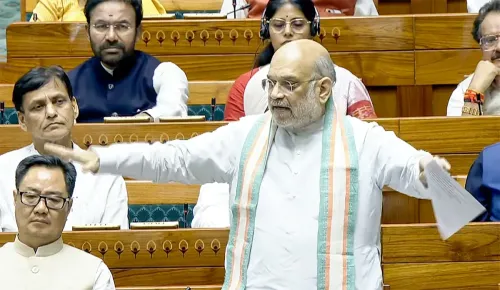
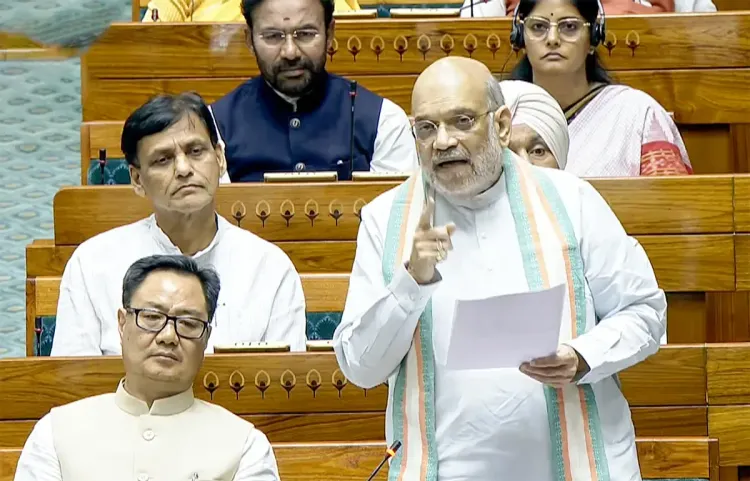
In a compelling address to the Lok Sabha, Union Home Minister Amit Shah condemned Maoist ideology, asserting that their focus on violence undermines democracy and development. Shah emphasized the government's commitment to eradicating Maoism through a dual strategy of security and infrastructure development.
Key Takeaways
Amit Shah critiques the Maoist ideology as anti-democratic.
The government aims to eradicate Maoism through security and development.
Maoists exploit socio-economic challenges in tribal areas.
Shah emphasizes the importance of infrastructure development.
Invites Maoists to surrender for dialogue opportunities.
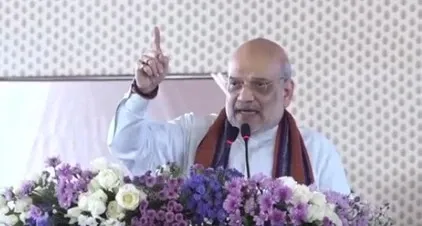
New Delhi, March 30 (NationPress) Union Home Minister Amit Shah delivered a fierce critique of the Maoist ideology in the Lok Sabha, emphasizing that their foundational belief—"political power grows out of the barrel of a gun"—indicates a complete disregard for serving the populace or fostering development.
"Their singular objective is to disseminate their ideology among tribal populations and seize power. There is no conversation regarding development, democracy, or advancement within their teachings," HM Shah stated.
The Minister condemned those who defend Maoist violence under the guise of justice. He questioned how individuals who breach the Constitution, take up arms, and kill innocent civilians can equate themselves with freedom fighters like Bhagat Singh and Birsa Munda.
"Such comparisons are entirely unacceptable," he remarked. HM Shah reinforced that the Modi government is dedicated to eliminating Maoism through a dual approach of security and development.
He paid homage to the security troops and civilians who have sacrificed their lives in combating left-wing extremism.
Discussing the historical context of Naxalism's emergence, HM Shah noted that post-Independence in 1947, the nation had limited resources, and the new government's administrative reach in remote tribal regions was initially weak.
Development could not extend to all areas at once due to financial constraints and inadequate infrastructure. The Maoists took advantage of this void, especially in the tribal regions of Central India, to spread their ideology among unsuspecting tribals, according to the Home Minister.
He highlighted that places like Naxalbari and Bastar became hotspots for extremism not solely due to economic challenges but also due to a mix of low literacy, minimal state presence, and lack of robust counter-ideologies.
HM Shah pointed out that regions with comparable economic conditions and literacy rates, such as Saharsa in Bihar and Ballia in Uttar Pradesh, did not experience the same intensity of Maoist influence, underscoring the significance of geographical and ideological factors.
The Home Minister reiterated the government's commitment to liberating India from Maoism by bolstering security operations while simultaneously enhancing infrastructure like roads, schools, and mobile connectivity in affected areas.
The minister mentioned his personal visit to Naxal-affected regions and extended an invitation to all Maoists to surrender their weapons. "Our government's strategy is to engage in talks only with those who renounce violence," HM Shah warned decisively.
Point of View
It is evident that the discourse surrounding Maoism is critical to India's socio-political landscape. Union Home Minister Amit Shah's remarks highlight the government's position on addressing extremism while emphasizing the need for development in affected regions. While the critique of Maoist ideology is necessary, it also opens a dialogue on the underlying challenges that foster such movements.
NationPress
7 Oct 2026
Frequently Asked Questions
What did Amit Shah say about Maoist ideology?
Amit Shah criticized Maoist ideology as being fundamentally opposed to democracy and development, asserting that their focus is on violence rather than serving the people.
What is the government's strategy to combat Maoism?
The government aims to eradicate Maoism through a dual approach involving enhanced security operations and development initiatives in affected areas.
How does Shah compare Maoists to freedom fighters?
Shah condemned the comparison of Maoists to freedom fighters like Bhagat Singh and Birsa Munda, stating that such comparisons are unacceptable given the Maoists' violent actions.
What historical factors contributed to Naxalism?
Shah explained that post-Independence resource limitations and weak administrative reach in remote tribal areas allowed Maoists to exploit socio-economic challenges to promote their ideology.
What invitation did Shah extend to Maoists?
Shah urged all Maoists to lay down their arms, stating that the government is open to dialogue only with those who renounce violence.