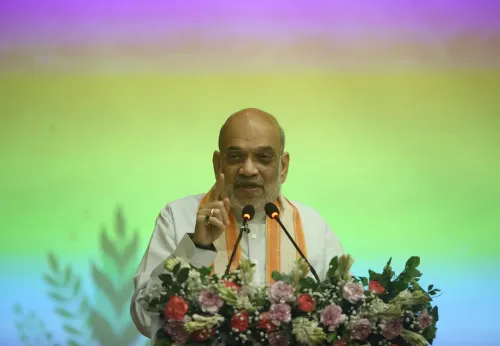
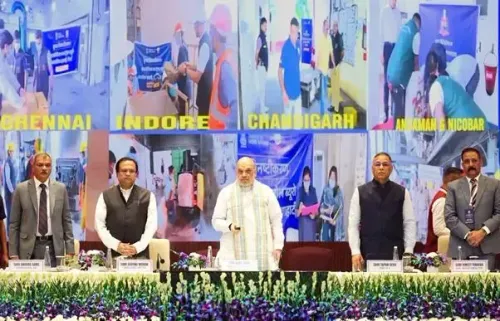
Amit Shah outlines 4-pillar roadmap to fight drugs
Synopsis
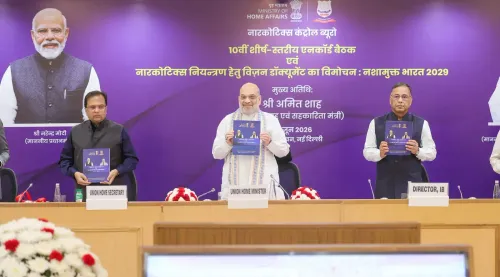
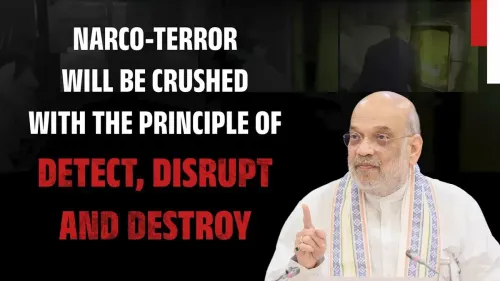
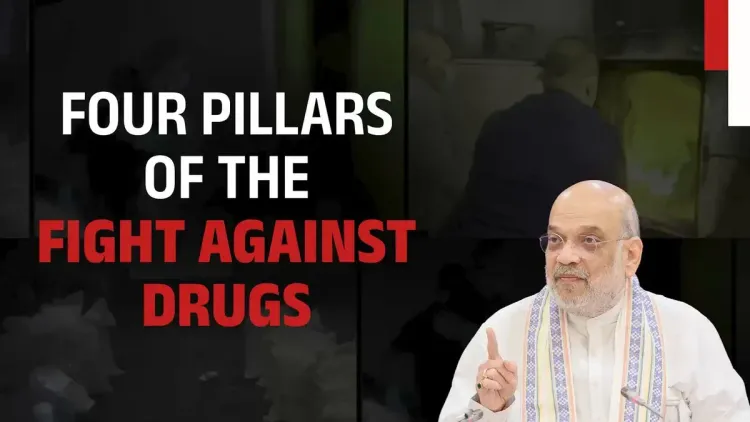
Union Home Minister Amit Shah on 26 June 2026 outlined India's four-pillar anti-narcotics roadmap — covering enforcement, synthetic drug control, demand reduction, and capacity building — signalling a comprehensive policy push against drug abuse and trafficking.
Key Takeaways
Union Home Minister Amit Shah announced a four-pillar national roadmap to fight drugs on 26 June 2026 , coinciding with the International Day Against Drug Abuse.
The four pillars are: Enforcement, Intelligence and Operations ; Precursor and Synthetic Drug Control ; Demand Reduction and Rehabilitation ; and Capacity Building and Coordination .
The framework is anchored in the NDPS Act, 1985 and the institutional mandate of the Narcotics Control Bureau , established in 1986 .
The Nasha Mukt Bharat Abhiyan , launched in August 2020 , underpins the demand-reduction and rehabilitation pillar at the grassroots level.
Explicit focus on synthetic drugs and precursor chemicals reflects a shift in trafficking patterns away from traditional opiates.
Border states, law enforcement agencies, youth, and rehabilitation networks are the primary stakeholders of this roadmap.
Union Home Minister Amit Shah on Friday, 26 June 2026 laid out a four-pillar national roadmap for combating drug abuse and trafficking, framing the framework as the government's comprehensive strategy to address both supply and demand sides of the narcotics crisis in India.
Context
Shah's post, shared on the occasion of the International Day Against Drug Abuse and Illicit Trafficking — observed annually on 26 June — outlined four strategic pillars: Enforcement, Intelligence and Operations; Precursor and Synthetic Drug Control; Demand Reduction and Rehabilitation; and Capacity Building and Coordination. The framework signals a structured, multi-agency approach that goes beyond traditional supply interdiction to address synthetic drug threats and community-level rehabilitation.
The articulation of these pillars reflects a consolidation of policy priorities that the Ministry of Home Affairs has been pursuing since 2019, when Shah assumed charge as Union Home Minister. His ministry directly oversees the Narcotics Control Bureau (NCB), the nodal enforcement agency constituted in 1986 under the Narcotic Drugs and Psychotropic Substances (NDPS) Act, 1985.
Policy Backdrop
India's anti-narcotics architecture rests on the NDPS Act, 1985, amended in 2001 and 2014 to tighten penalties and close legislative gaps. The Narcotics Control Bureau, operating under the Ministry of Home Affairs, serves as the coordinating body for drug law enforcement across central and state agencies. India also ratified the 1988 UN Convention against Illicit Traffic in Narcotic Drugs and Psychotropic Substances, binding it to international cooperation norms on precursor chemical control and cross-border trafficking.
The Nasha Mukt Bharat Abhiyan, launched in August 2020, operationalised the demand-reduction pillar at the grassroots level through awareness campaigns, community mobilisation, and treatment outreach. The explicit mention of precursor and synthetic drug control as a standalone pillar reflects a recognised shift in trafficking patterns — from traditional opiates toward synthetic drugs and pharmaceutical diversions, particularly along India's northern and western borders.
Stakeholders and Impact
The four-pillar framework directly concerns multiple stakeholders: state police forces and central enforcement agencies that conduct seizure operations; rehabilitation centres and civil-society organisations engaged in treatment and recovery; and border states — particularly those adjoining Punjab, Rajasthan, Manipur, and Jammu and Kashmir — which face acute trafficking pressure. Youth remain the most vulnerable demographic and the primary target of demand-reduction efforts.
The 'Capacity Building and Coordination' pillar has implications for inter-agency intelligence sharing, training of law enforcement personnel, and potential bilateral agreements with neighbouring countries on precursor chemical controls. Coordination between the NCB, Customs, Border Security Force, and state anti-narcotics cells is central to this pillar's execution.
What's Next
The articulation of this roadmap is likely to be followed by updated state-level action plans and renewed bilateral engagement on precursor chemical controls with countries in India's neighbourhood. Observers will watch whether the framework translates into fresh legislative amendments, enhanced inter-ministerial budgetary allocations, or new institutional mechanisms under the NCB. The government's emphasis on synthetic drug control in particular signals that regulatory and enforcement attention may increasingly focus on pharmaceutical supply chains and clandestine laboratories alongside traditional trafficking routes.
Point of View
The Home Ministry is signalling institutional coherence to both domestic enforcement agencies and international partners. The 'Capacity Building and Coordination' pillar, if backed by budgetary and legislative action, could reshape centre-state dynamics on drug enforcement. The framework also positions the government to claim ownership of the demand-reduction space, an arena traditionally dominated by civil-society actors.
NationPress
26 Jun 2026
Frequently Asked Questions
What is Amit Shah's four-pillar anti-drug roadmap?
Union Home Minister Amit Shah's four-pillar roadmap for fighting drugs comprises Enforcement, Intelligence and Operations; Precursor and Synthetic Drug Control; Demand Reduction and Rehabilitation; and Capacity Building and Coordination, announced on 26 June 2026.
What is the Nasha Mukt Bharat Abhiyan?
Nasha Mukt Bharat Abhiyan is a national campaign launched in August 2020 by the Indian government to reduce drug demand through community awareness, treatment outreach, and mobilisation of civil society, particularly targeting youth.
What is the Narcotics Control Bureau (NCB) in India?
The Narcotics Control Bureau is the central nodal agency under the Ministry of Home Affairs, constituted in 1986, responsible for drug law enforcement, coordination between central and state agencies, and implementation of India's obligations under international drug conventions.
What is the NDPS Act?
The Narcotic Drugs and Psychotropic Substances Act, 1985 is India's primary legislation governing drug offences, penalties, and enforcement. It has been amended in 2001 and 2014 to address evolving trafficking patterns and close legal gaps.
Why is synthetic drug control a focus in India's anti-narcotics policy?
Trafficking patterns in India have shifted from traditional opiates toward synthetic drugs and diverted pharmaceutical precursors, prompting the government to treat precursor and synthetic drug control as a distinct strategic priority within its anti-narcotics framework.