Amit Shah Reviews BSF Watch Tower Vigil at Siliguri Corridor

Synopsis
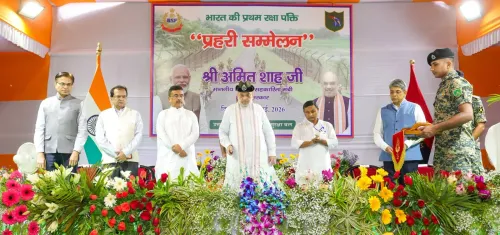
Union Home Minister Amit Shah visited the BSF 18th Battalion's Jumagachh Border Outpost in the Siliguri Corridor on 18 July 2026, reviewing watch tower surveillance. He said the corridor once marked by infiltration is now a symbol of secure borders, citing the Modi government's expansion of tech-equipped watch towers.
Key Takeaways
Union Home Minister Amit Shah visited the Jumagachh BOP of the 18th Battalion, BSF North Bengal Frontier on 18 July 2026 .
Shah observed the surveillance and monitoring system from the watch tower at the border outpost in the Siliguri Corridor .
He stated the corridor, once a 'passage for infiltration' under earlier governments, is now becoming synonymous with a secure border.
The Modi government has increased the number of watch towers along borders and equipped them with advanced technology, according to Shah.
The Siliguri Corridor — the 'Chicken's Neck' — is a roughly 22-km strip connecting mainland India to the eight Northeastern states .
The Comprehensive Integrated Border Management System (CIBMS) , piloted from 2016-17 , underpins the electronic surveillance integration at such posts.
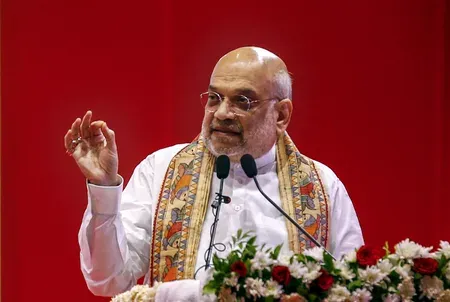
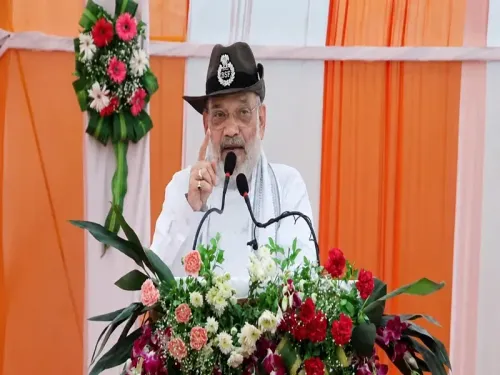
Union Home Minister Amit Shah on Saturday, 18 July 2026, visited the Jumagachh Border Outpost (BOP) of the 18th Battalion, BSF North Bengal Frontier, in the Siliguri Corridor, where he observed the surveillance and monitoring arrangements from the watch tower at the border outpost.
Posting on X, Shah declared that the Siliguri Corridor — once described as a passage for infiltration under previous governments — is now becoming synonymous with a secure border. In his words: 'जो सिलीगुड़ी कॉरिडोर पहले की सरकारों में घुसपैठ का गलियारा बन गया था, वह अब सुरक्षित सीमा का पर्याय बन रहा है' ('The Siliguri Corridor, which had become a corridor of infiltration under earlier governments, is now becoming a synonym for a secure border').
Context
The Siliguri Corridor — popularly known as the 'Chicken's Neck' — is a narrow strip of land, roughly 22 kilometres wide, in West Bengal that connects mainland India to the eight Northeastern states. Its strategic sensitivity has made it a perennial focus of security planners, given its proximity to the borders of Bangladesh, Nepal, and Bhutan. Infiltration, smuggling, and illegal migration through this corridor have historically been cited as major security concerns.
The BSF North Bengal Frontier, headquartered in Siliguri, is responsible for guarding the India-Bangladesh border in northern West Bengal. The 18th Battalion, whose Jumagachh BOP Shah visited, is one of the forward units deployed along this sensitive stretch.
Policy Backdrop
Border fencing and floodlighting along the India-Bangladesh border have been pursued across successive administrations since the 1980s, with construction phases accelerating after 2014. The Comprehensive Integrated Border Management System (CIBMS) — which integrates sensors, cameras, and electronic surveillance infrastructure — was piloted on vulnerable border stretches from around 2016-17 onward.
Shah stated that the Modi government has not only increased the number of watch towers along the borders but has also equipped them with 'state-of-the-art technology' to make border security stronger and 'impenetrable.' This framing positions the current drive as a qualitative upgrade over earlier physical-infrastructure efforts, combining hardware expansion with electronic surveillance integration.
Stakeholders and Impact
BSF personnel deployed at forward posts along the North Bengal Frontier are the most immediate beneficiaries of upgraded watch towers and surveillance systems, as enhanced technology reduces the physical burden of round-the-clock patrolling in difficult terrain. Border residents in the Siliguri belt — many of whom have historically been affected by cross-border crime and illegal movement — stand to benefit from tighter perimeter control.
The Northeastern states have a direct strategic stake in the security of the Siliguri Corridor, since any disruption to this narrow land link has outsized implications for connectivity, supply chains, and troop movement to the region. Strengthening the corridor's surveillance architecture is therefore as much a strategic imperative as it is a law-enforcement measure.
What's Next
The visit signals continued political attention to the eastern border at the highest level of the Home Ministry. Further rollout of CIBMS components — including additional sensor networks and integrated command-and-control infrastructure — is expected across vulnerable BSF frontier sectors. Any fresh allocations for border infrastructure in the upcoming Union Budget or parliamentary discussions on BSF modernisation will be closely watched as a measure of the government's stated commitment to making the border 'impenetrable.'
With the Siliguri Corridor now explicitly positioned by the Home Minister as a showcase of the government's border-security doctrine, it is likely to feature prominently in future policy announcements and parliamentary debates on internal security and northeastern connectivity.
Point of View
' Shah is weaving the border-security narrative into a broader electoral and governance argument. The emphasis on technology-equipped watch towers aligns with the government's long-running push to shift border management from purely manpower-intensive patrolling to integrated electronic surveillance. How quickly CIBMS and related systems are scaled across the full North Bengal Frontier will be the real test of the doctrine Shah articulated from the Jumagachh watch tower.
NationPress
18 Jul 2026
Frequently Asked Questions
What is the Siliguri Corridor and why is it strategically important?
The Siliguri Corridor, often called the 'Chicken's Neck,' is a narrow strip of land roughly 22 kilometres wide in West Bengal that is the only land link connecting mainland India to the eight Northeastern states. Its proximity to the borders of Bangladesh, Nepal, and Bhutan makes it one of India's most sensitive security zones.
Why did Amit Shah visit the Jumagachh BOP on 18 July 2026?
Home Minister Amit Shah visited the Jumagachh Border Outpost of the BSF's 18th Battalion, North Bengal Frontier, to observe the surveillance and monitoring arrangements from the watch tower, as part of the government's focus on strengthening border security in the Siliguri Corridor.
What is the BSF North Bengal Frontier?
The BSF North Bengal Frontier is the Border Security Force sector headquartered in Siliguri that is responsible for guarding the India-Bangladesh border in northern West Bengal, including the strategically critical Siliguri Corridor.
What is the Comprehensive Integrated Border Management System (CIBMS)?
CIBMS is an Indian government initiative that integrates sensors, cameras, and electronic surveillance equipment along vulnerable border stretches. Pilot projects were initiated around 2016-17 and the system is being progressively extended to multiple BSF frontiers.
What did Amit Shah say about border security at Siliguri?
Shah said the Siliguri Corridor, which had become a corridor of infiltration under previous governments, is now becoming synonymous with a secure border. He added that the Modi government has increased the number of watch towers and equipped them with state-of-the-art technology to make border security stronger and impenetrable.