Amit Shah Vows to Dismantle Drug Trade Ecosystem in 3 Years
Synopsis
Union Home Minister Amit Shah has vowed to deliver a decade-defining blow to India's drug-trade ecosystem within three years. The declaration, posted on 26 June 2026, signals an intensified, supply-chain-wide crackdown coordinated through the Home Ministry, NCB and NCORD against cross-border narcotics networks.
Key Takeaways
Amit Shah publicly committed to dismantling the entire drug-trade ecosystem within three years , setting a measurable policy timeline.
The Home Minister's language targets the full narcotics supply chain — financing, smuggling, distribution and money laundering — not just individual traffickers.
India's Narco Coordination Centre (NCORD) , established in 2019 , is the primary inter-agency mechanism through which this crackdown is expected to be executed.
The Golden Crescent region remains the dominant external source of cross-border drug flows into India, making border-state enforcement central to the strategy.
Possible amendments to the NDPS Act, 1985 and updated NCB seizure data will be key indicators of follow-through on Shah's commitment.
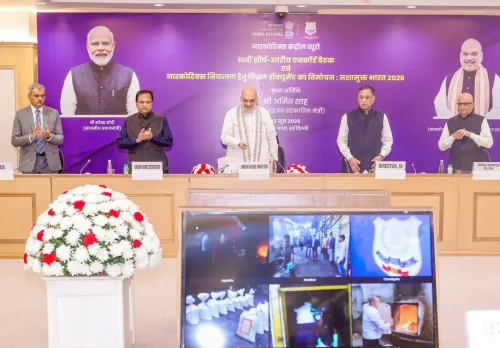
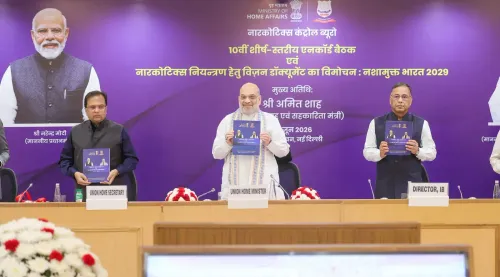
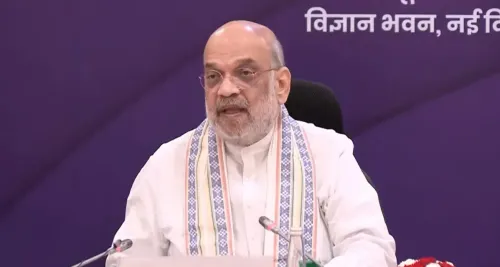
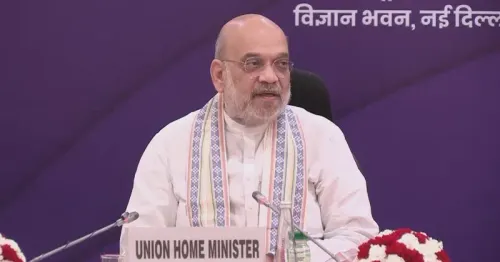
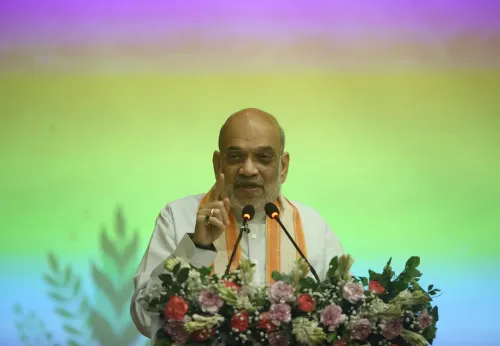
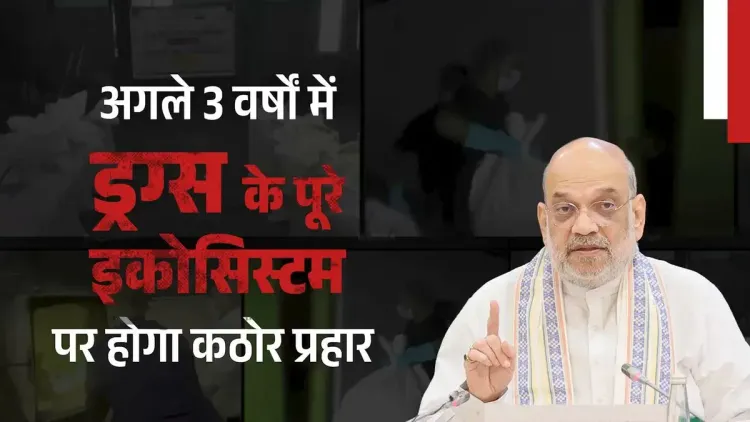
Union Home Minister Amit Shah on Friday, 26 June 2026, issued a sweeping warning to drug trafficking networks, declaring that a sustained crackdown over the next three years would strike the entire narcotics ecosystem so hard that it would not be able to recover for decades.
What Shah Said
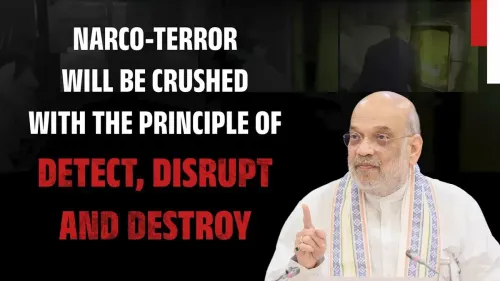
Posting in Hindi on X, Shah stated: 'Agle 3 varshon mein drugs ke karobar ke pure ecosystem par aisa prahar hoga ki wah dashkon tak khada nahi ho payega' — 'In the next 3 years, the entire ecosystem of the drug trade will be struck so hard that it will not be able to stand for decades.' The language was deliberate and unambiguous: the target is not isolated traffickers but the full supply chain, from financing to distribution.
Context
India sits at a geographic crossroads between the Golden Crescent — the opium-producing belt spanning Afghanistan, Pakistan and Iran — and domestic consumption markets. Cross-border drug flows have intensified over recent years, with seizures of heroin, methamphetamine and synthetic drugs rising consistently. The Ministry of Home Affairs, which Shah leads, has framed narcotics trafficking as a national-security threat intertwined with organised crime and terror financing.
The Narcotic Drugs and Psychotropic Substances (NDPS) Act, 1985 remains the primary legal instrument for enforcement. Amendments over the decades have stiffened penalties, but enforcement agencies have long argued that legal tools need to be paired with sustained, coordinated operational pressure to break trafficking networks structurally.
Policy Backdrop
In 2019, the Ministry of Home Affairs established the Narco Coordination Centre (NCORD) to synchronise drug-law enforcement across central agencies and state police forces. The Narcotics Control Bureau (NCB), which functions under the Ministry, has since pursued a strategy of targeting financial networks and supply chains rather than limiting action to street-level arrests.
Shah's statement signals that this approach will be deepened and given a firm multi-year timeline. The emphasis on dismantling the 'ecosystem' — a term that encompasses cultivation, smuggling, financing, distribution and money laundering — suggests coordinated action across the NCB, border-security forces, financial intelligence units and state governments.
Stakeholders and Impact
Border states — particularly Punjab, Rajasthan, Gujarat, Manipur and Mizoram — bear a disproportionate share of the drug-trafficking burden and stand to benefit most from intensified central support. Civil-society groups working on addiction rehabilitation have consistently called for supply-side disruption to reduce availability at the community level.
Drug syndicates operating transnational routes will face heightened pressure if inter-agency coordination under NCORD is tightened and financial tracking is scaled up. Experts have noted that durable disruption requires choking money flows and precursor-chemical supply, not merely seizing consignments.
What's Next
Observers will watch for concrete operational announcements, possible amendments to the NDPS Act in upcoming parliamentary sessions, and updated seizure data from the NCB that would serve as benchmarks for the three-year commitment Shah has publicly staked. The statement effectively sets a measurable accountability window for the Home Ministry's anti-narcotics record heading into the next general election cycle.
Point of View
He has created a public accountability benchmark against which the Home Ministry's anti-narcotics record will be measured. The 'ecosystem' framing reflects a strategic evolution from seizure-count metrics toward structural disruption of financing and supply chains, consistent with how the ministry has repositioned narcotics as a national-security rather than purely law-enforcement issue. The timing, ahead of a fresh electoral cycle, also allows the BJP to draw a sharp contrast on internal-security governance. Whether the commitment translates into legislative action on the NDPS Act or expanded NCORD powers will be the real test.
NationPress
26 Jun 2026
Frequently Asked Questions
What did Amit Shah say about drugs in his 26 June 2026 post?
Shah declared that within the next three years the entire ecosystem of the drug trade will be struck so hard that it will not be able to recover for decades, signalling a sweeping, supply-chain-wide crackdown.
Which agency leads India's anti-narcotics operations under the Home Ministry?
The Narcotics Control Bureau (NCB) is the central agency under the Ministry of Home Affairs responsible for coordinating drug-law enforcement. It works alongside the Narco Coordination Centre (NCORD) , established in 2019 to improve inter-agency cooperation.
What is the Golden Crescent and why does it matter for India?
The Golden Crescent is an opium-producing region spanning Afghanistan, Pakistan and Iran . It is the primary external source of heroin and other narcotics that enter India through border states, making it central to any long-term anti-drug strategy.
What is the NDPS Act and could it be amended?
The Narcotic Drugs and Psychotropic Substances Act, 1985 is India's main law governing drug trafficking and consumption. Experts and the Home Ministry have signalled that updates to the Act may be considered in upcoming parliamentary sessions to strengthen enforcement tools.
Which Indian states are most affected by cross-border drug trafficking?
Border states including Punjab, Rajasthan, Gujarat, Manipur and Mizoram face the heaviest cross-border drug-trafficking pressure and are expected to be focal points of the intensified crackdown Shah has announced.