Amit Shah: Women's prosperity via cooperatives is Modi's core goal
Synopsis
Union Home Minister Amit Shah declared on 26 September 2026 that empowering women through cooperatives is PM Narendra Modi's core objective, arguing that a prosperous woman transforms the entire household — linking grassroots cooperative policy directly to family welfare outcomes.
Key Takeaways
Amit Shah stated that women's empowerment through cooperatives is PM Narendra Modi 's 'core objective.' His framing ties female economic prosperity directly to the welfare of the entire household.
The Ministry of Cooperation was established in July 2021 specifically to modernise and focus India's cooperative sector.
Women self-help groups have been integrated with formal cooperatives under the National Rural Livelihoods Mission since 2011 , a programme expanded after 2014 .
Policy watchers are tracking whether gender-specific targets will appear in a revised National Cooperative Policy or state-level cooperative laws.
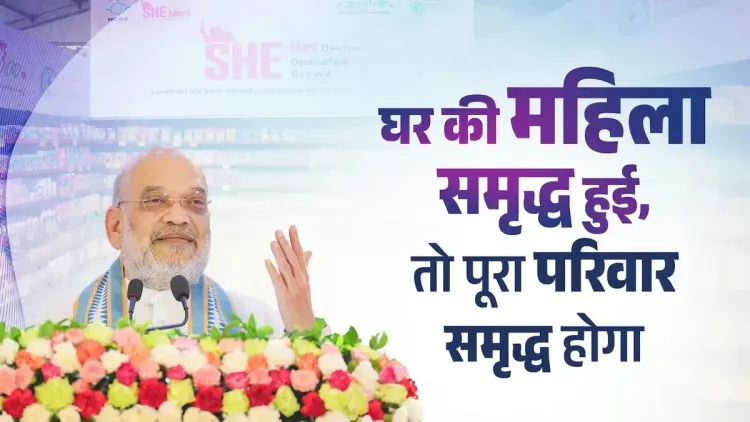
A prosperous woman at the heart of every home, and a prosperous nation as the result — Union Home Minister and Minister of Cooperation Amit Shah distilled the Modi government's cooperative policy into a single, family-centred vision on Saturday, 26 September 2026, posting in Hindi that women's empowerment through cooperatives is Prime Minister Narendra Modi's fundamental objective.
Shah's post reads: 'Sahkarita ke madhyam se mahila sashaktikaran Modi ji ka mool uddeshya hai, kyunki agar ghar ki mahila samridh hui toh poora parivaar samridh hoga.' — 'Women's empowerment through cooperatives is Modi ji's core objective, because if the woman of the household prospers, the entire family will prosper.'
Why the Ministry of Cooperation was built for this moment
The Ministry of Cooperation, carved out as a standalone ministry in July 2021, was designed precisely to give the cooperative movement the focused political and administrative weight it had historically lacked. Shah has helmed it since its inception, making women's economic inclusion a recurring legislative and rhetorical anchor. The ministry sits at the intersection of rural livelihoods, financial inclusion, and grassroots governance — all arenas where women's participation has been consistently under-represented.
The policy lineage stretches back further. Self-help groups were integrated with formal cooperatives under the National Rural Livelihoods Mission from 2011, a programme that was expanded significantly after 2014. That bridge — between informal savings circles and the structured cooperative framework — is the plumbing through which the government hopes to route credit, market access, and institutional legitimacy to rural women.
The 'prosperous household' as a policy frame
Shah's framing is deliberate and worth unpacking. By anchoring national economic outcomes to the prosperity of 'the woman of the household,' the statement does two things simultaneously: it personalises an otherwise abstract cooperative policy, and it positions the family — not just the individual — as the unit of welfare measurement. Successive Union Budgets and policy documents have highlighted increasing women's share in cooperative membership and leadership as explicit targets, reflecting a broader pattern across multiple ministries of linking household welfare outcomes to female economic empowerment.
The question now is whether this articulated vision translates into gender-specific, measurable targets — observers are watching for possible inclusion of such benchmarks in a revised National Cooperative Policy or in state-level cooperative legislation.
Point of View
Which has served as both a policy framework and an electoral message since 2014. By anchoring the cooperative ministry's mandate explicitly to household prosperity, Shah is reinforcing a political economy logic — that rural women are not merely beneficiaries but economic multipliers. The timing and the cooperative hook suggest the government is building momentum toward firmer gender-specific commitments, possibly ahead of a revised National Cooperative Policy. Whether the rhetoric translates into enforceable targets in cooperative governance remains the test of political will versus political messaging.
NationPress
26 Sept 2026
Frequently Asked Questions
What did Amit Shah say about women and cooperatives?
Amit Shah stated that women's empowerment through cooperatives is PM Narendra Modi's core objective, adding that if the woman of a household prospers, the entire family prospers.
What is the Ministry of Cooperation and when was it formed?
The Ministry of Cooperation was created in July 2021 to give focused attention to strengthening and modernising India's cooperative sector. Amit Shah has led it since its inception.
How are women self-help groups connected to cooperatives in India?
Women's self-help groups have been integrated with formal cooperatives under the National Rural Livelihoods Mission since 2011, providing rural women with access to credit, markets, and institutional support.
What is the National Cooperative Policy in India?
The National Cooperative Policy is a framework governing the cooperative sector in India. A revised version is being anticipated, with observers watching for possible inclusion of gender-specific membership and leadership targets.
Why does the government link women's empowerment to cooperatives?
The government views cooperatives as grassroots vehicles for social and economic inclusion. Empowering women within this structure is seen as a way to improve household-level prosperity and national economic outcomes simultaneously.