How is the Amrit Bharat Station Scheme Revamping Rail Infrastructure in the Northeast?
Synopsis
The Amrit Bharat Station Scheme is a groundbreaking initiative aimed at revolutionizing railway infrastructure in the Northeast, focusing on modern passenger amenities and local entrepreneurship. This ambitious project is set to change the travel experience for millions.
Key Takeaways
Comprehensive redevelopment of railway stations across Northeast India.
Focus on modernizing passenger amenities .
Encouragement of local entrepreneurship .
Creation of new economic opportunities for communities.
Integration of cultural heritage with modern infrastructure.
Guwahati, Feb 16 (NationPress) The Ministry of Railways has launched the Amrit Bharat Station Scheme (ABSS) to initiate a transformative phase in modern, passenger-centric railway infrastructure across Indian Railways, officials reported on Monday.
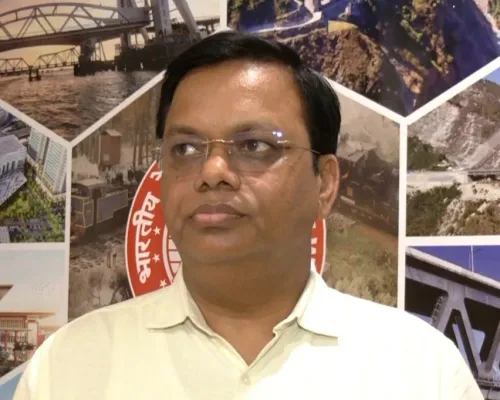
The Chief Public Relations Officer (CPRO) of Northeast Frontier Railway (NFR), Kapinjal Kishore Sharma, stated that the scheme aims for a thorough redevelopment of railway stations through a long-term, phased strategy, supported by detailed master plans for each selected station to systematically improve passenger facilities and essential infrastructure.
He mentioned that under ABSS, there is a focus on enhancing station access and circulating areas, modernizing waiting halls and restrooms, adding lifts and escalators when necessary, improving cleanliness, and offering complimentary Wi-Fi.
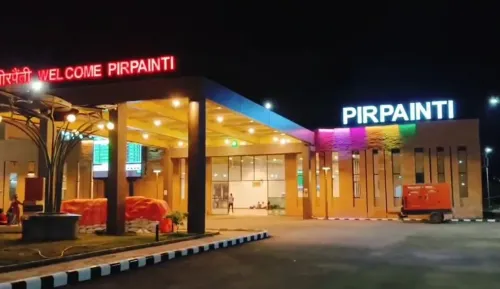
Key elements of the redevelopment include modern passenger information systems, Executive Lounges, dedicated business meeting areas, landscaping, and upgraded station façades.
This scheme also encourages local entrepreneurship through initiatives like ‘One Station One Product’ kiosks, providing new economic opportunities for local communities.
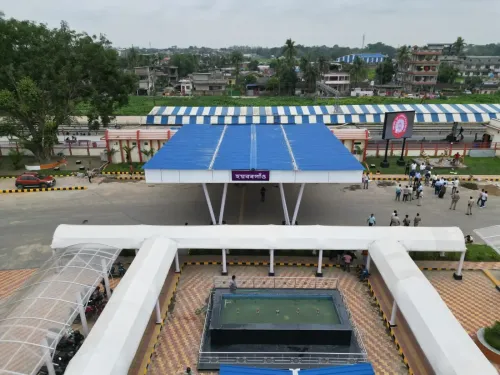
The Amrit Bharat Station Scheme is significantly changing the railway landscape of Assam and the broader Northeast, as governed by the Northeast Frontier Railway.
A total of 92 stations have been earmarked for redevelopment in the NFR zone, with 60 stations in the Northeast being prioritized under this initiative. This includes 50 stations in Assam, four in Tripura, and one each in Sikkim, Meghalaya, Arunachal Pradesh, Manipur, Mizoram, and Nagaland.
As the entry point to the Northeast, Assam stands as the largest beneficiary, with renovations spanning major urban hubs and key regional towns.
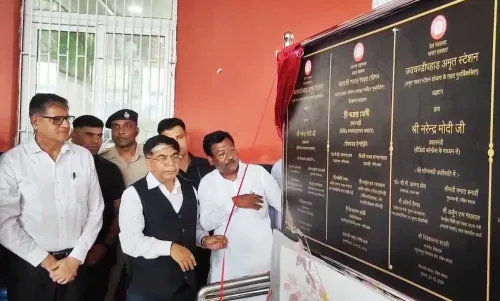
The Haibargaon railway station was the first in Assam to be completed under the Amrit Bharat Station scheme, inaugurated in May 2025 by Prime Minister Narendra Modi. The revamped station has established new standards in passenger services, infrastructure, and design.
Developed on the principle of “Virasat Bhi, Vikas Bhi,” it harmonizes modern facilities with the essence of Assamese culture and heritage, reimagining the station as a vibrant city hub featuring world-class and Divyangjan-friendly amenities, Sharma mentioned. Substantial progress has been observed across various divisions in Assam.
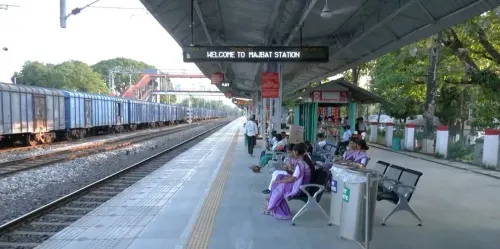
Within the Alipurduar Division, Fakiragram station has achieved 88 percent physical completion, Kokrajhar 78 percent, Dhubri 80 percent, and Gauripur 82 percent. In the Rangiya Division, Majbat railway station is at 98 percent completion, while Viswanath Chariali has attained 97 percent progress.
In the Lumding Division, Chaparmukh station has recorded 85 percent progress. In the Tinsukia Division, both North Lakhimpur station and Simaluguri Junction have reached 65 percent completion.
In Meghalaya, Mendipathar station under the Rangiya Division has reached 73 percent progress. The Amrit Bharat Station Scheme is a pivotal advancement in upgrading India’s railway infrastructure to cater to the needs of a rapidly advancing nation.
The modernized stations are anticipated to generate jobs and business opportunities, ease travel, and become centers of socio-economic activity.
By integrating enhanced connectivity, contemporary facilities, and the preservation of regional identity, the scheme demonstrates the government’s robust commitment to inclusive and future-oriented growth across Assam and the Northeast.
Point of View
The Amrit Bharat Station Scheme reflects the government's commitment to modernize India’s railway infrastructure. It aims not just to enhance passenger experience but also to stimulate local economies, creating a win-win scenario for communities across the Northeast.
NationPress
7 Oct 2026
Frequently Asked Questions
What is the Amrit Bharat Station Scheme?
The Amrit Bharat Station Scheme (ABSS) is an initiative by the Ministry of Railways aimed at redeveloping railway stations across India, focusing on modern amenities and passenger-friendly infrastructure.
How many stations are included in the scheme?
A total of 92 stations have been identified for redevelopment in the Northeast Frontier Railway (NFR) zone, with 60 stations in the Northeast, including 50 in Assam.
What improvements can passengers expect?
Passengers can expect enhanced station access, modern waiting areas, upgraded toilets, free Wi-Fi, and improved cleanliness, among other facilities.
What is the significance of local entrepreneurship in the scheme?
The scheme encourages local entrepreneurship through initiatives like ‘One Station One Product’ kiosks, which create new economic opportunities for local communities.
When was the first Amrit Bharat station completed?
The Haibargaon railway station in Assam was the first Amrit Bharat station completed, inaugurated in May 2025 by Prime Minister Narendra Modi.