Is The CEO Of Andaman & Nicobar Islands Updating Electoral Rolls?
Synopsis
The Chief Electoral Officer of Andaman & Nicobar Islands has initiated the Special Intensive Revision of electoral rolls, aiming to enhance voter list accuracy and inclusivity. The exercise fosters engagement from political parties and citizens, underlining the importance of a refined electoral database for upcoming elections.
Key Takeaways
Election Roll Revision is crucial for accurate voter lists.
Political parties are actively involved, enhancing public engagement.
Cooperation from citizens ensures a fair electoral process.
Daily bulletins will provide ongoing updates and transparency.
Eligible voters are encouraged to participate in the revision.
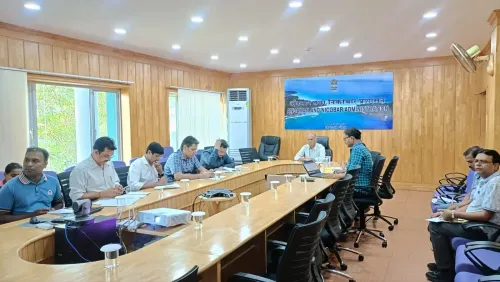
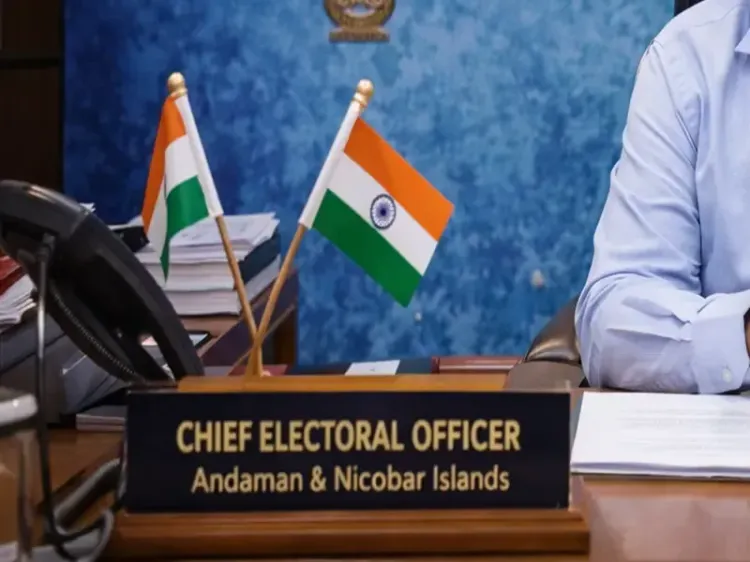
Port Blair, Jan 1 (NationPress) The Chief Electoral Officer (CEO) of the Andaman and Nicobar Islands has unveiled the inaugural daily bulletin for the Special Intensive Revision (SIR) of electoral rolls. This initiative signifies the commencement of a vital task aimed at refreshing voter lists in anticipation of possible elections.
The revision period began on December 23, 2025, and will extend until January 22, 2026, concentrating on the submission of claims and objections to ensure the creation of a precise and inclusive Draft Electoral Roll. Presently, the draft electoral roll consists of 246,390 electors across the Union Territory.
According to the bulletin, considerable activity has been observed from December 23, 2025, to January 1, 2026, notably from political parties and individual voters.
National political parties have been actively engaged in the process through their Booth Level Agents (BLAs), filing claims for inclusion and objections for exclusion. The Bharatiya Janata Party (BJP) deployed 321 BLAs and filed 45 claims for inclusion, without any objections for exclusion. The Indian National Congress (INC) followed suit with 343 BLAs and submitted five inclusion claims.
The Communist Party of India (Marxist) [CPI(M)] appointed 14 BLAs but did not submit any claims or objections, while the Bahujan Samaj Party (BSP) reported no activity during this period.
In total, political parties mobilized 678 BLAs, resulting in 50 claims for inclusion and no objections for exclusion, as reported in the bulletin.
The CEO’s office clarified that while BLAs can collect Form 6 (for inclusion) and Form 7 (for objections) from the public, general complaints or representations that lack the required forms and declarations are not deemed valid for the revision process. Names will be added to the final electoral roll only after obtaining the necessary statutory declarations, the bulletin emphasized.
Before the draft electoral roll was published, the CEO’s office received 77 Form 6 applications for additions and 173 Form 7 applications seeking deletions.
After the draft roll was published, direct submissions from electors surged significantly. A total of 2,166 Form 6 and Form 6A applications for inclusion, including those from overseas voters, were received, while merely 10 Form 7 applications for exclusion were filed.
Remarkably, no affidavits under Section 2(g) of the Representation of the People Act, 1950, were submitted by non-electors seeking inclusion or exclusion, in accordance with Rule 20(3)(b) of the Registration of Electors Rules, 1960, as stated in the bulletin.
The initial phase of the SIR exercise showcases an increase in public engagement in refining the electoral database, which is essential for conducting free and fair elections in the Union Territory.
The CEO’s office has urged all eligible citizens to submit their claims and objections within the ongoing revision period. Booth Level Officers have been assigned to assist electors in completing the necessary formalities.
Residents are encouraged to verify their details in the draft electoral roll, which can be accessed at polling stations and online via the Election Commission of India’s portal.
With no significant objections reported thus far, the process has proceeded smoothly, according to officials, who also noted that additional daily bulletins will be released to monitor developments and maintain transparency as the deadline nears.
Point of View
The release of the daily bulletin by the CEO of Andaman and Nicobar Islands indicates a proactive approach towards electoral transparency and inclusivity. This initiative not only encourages political participation but also reinforces the democratic ideals essential for fair elections across the country.
NationPress
20 Sept 2026
Frequently Asked Questions
What is the purpose of the Special Intensive Revision?
The Special Intensive Revision aims to update and refine the electoral rolls to ensure an accurate and inclusive voter list ahead of potential elections.
How long will the revision period last?
The revision period commenced on December 23, 2025, and will continue until January 22, 2026.
What forms are used for claims and objections?
Form 6 is used for claims for inclusion, while Form 7 is used for objections regarding exclusion.
How can citizens participate in the revision process?
Eligible citizens can submit their claims and objections during the revision period through the designated forms.
Where can residents verify their details?
Residents can check their particulars in the draft electoral roll available at polling stations and online on the Election Commission of India’s portal.