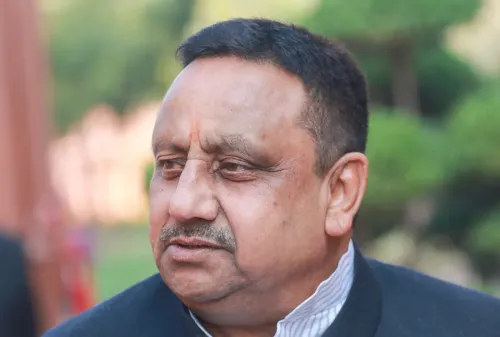
Ankit Sharma murder: Delhi court hears sentencing for Tahir Hussain today

Synopsis
Five years after IB officer Ankit Sharma was allegedly abducted, stabbed, and thrown into a drain during the 2020 northeast Delhi riots, the Karkardooma Court is now deciding whether former AAP councillor Tahir Hussain — already convicted of murder — will face life imprisonment or the death penalty. Thursday's hearing is one of the most consequential sentencing proceedings to emerge from the riots that killed 53 people.
Key Takeaways
Karkardooma Court hears sentencing arguments on 23 July for Tahir Hussain and four co-convicts in the Ankit Sharma murder case.
Hussain, a former AAP councillor, was convicted on 13 July of murder, rioting, kidnapping, and promoting enmity between groups.
He faces either life imprisonment or the death penalty depending on the court's decision.
IB officer Ankit Sharma was allegedly abducted by a mob of 20–25 people , stabbed multiple times, and dumped in a drain near Khajuri Khas on 25 February 2020 .
The 2020 northeast Delhi riots killed 53 people and caused property damage worth crores of rupees.
The case was filed at Dayalpur police station on a complaint by Sharma's father, Ravinder Kumar .
The Karkardooma Court in New Delhi is set to hear arguments on Thursday, 23 July on the quantum of sentence to be awarded to former Aam Aadmi Party (AAP) councillor Tahir Hussain and four co-convicts in the murder of Intelligence Bureau (IB) officer Ankit Sharma during the 2020 northeast Delhi riots. Hussain now faces either life imprisonment or the death penalty, depending on the court's determination.
Background: The Conviction
On 13 July, the court found Tahir Hussain and four co-accused guilty on charges including murder, rioting, kidnapping, and promoting enmity between different groups. Following the verdict, the court directed both the prosecution and the defence to present their sentencing submissions on 23 July.
How Ankit Sharma Was Killed
According to the prosecution, IB officer Ankit Sharma was killed near his residence in the Khajuri Khas area on 25 February 2020, after he was caught in clashes that had broken out between two groups near the Chand Bagh Pulia. The prosecution alleged that Sharma had attempted to pacify the warring groups when a mob of approximately 20 to 25 people allegedly abducted him, assaulted him, and stabbed him multiple times before allegedly dumping his body into a nearby drain.
What the Court Found
In its judgment, the court held Tahir Hussain guilty of promoting enmity between groups, rioting, assault, use of criminal force, and murder. The case was registered at the Dayalpur police station on a complaint filed by Sharma's father, Ravinder Kumar. After Hussain's name surfaced in the investigation, the Aam Aadmi Party suspended him from the party.
The Broader Context: 2020 Northeast Delhi Riots
The violence that swept through northeast Delhi in February 2020 claimed 53 lives, left scores injured, and caused property damage worth crores of rupees. The riots remain among the most serious episodes of communal violence in the capital in recent decades, and the Ankit Sharma case has been one of its most high-profile criminal proceedings. Notably, this is one of the few riot-related cases to reach the sentencing stage, making Thursday's hearing a significant legal milestone.
What Happens Next
The court will weigh arguments from both sides before deciding whether to impose life imprisonment or the death penalty on the convicts. The outcome is expected to set a legal precedent for the remaining riot-related cases still winding through Delhi's courts.
Point of View
Combined with his former AAP affiliation, makes the sentencing politically charged. What is often missed in coverage is that this is one of the very few 2020 riot cases to have reached the sentencing stage; dozens of others remain mired in prolonged trials. Whether the court imposes life imprisonment or recommends the death penalty will send a signal about judicial resolve on communal violence cases — and will be watched closely by families of the other 52 victims still awaiting closure.
NationPress
23 Jul 2026
Frequently Asked Questions
What is the Ankit Sharma murder case?
The Ankit Sharma murder case involves the killing of an Intelligence Bureau officer during the northeast Delhi riots of February 2020. According to the prosecution, Sharma was allegedly abducted by a mob, stabbed multiple times, and his body dumped in a drain near Khajuri Khas on 25 February 2020.
Who is Tahir Hussain and what was he convicted of?
Tahir Hussain is a former Aam Aadmi Party councillor who was convicted on 13 July by the Karkardooma Court on charges including murder, rioting, kidnapping, and promoting enmity between groups in connection with Ankit Sharma's death. He was suspended from the AAP after his name surfaced in the case.
What punishment does Tahir Hussain face?
Hussain faces either life imprisonment or the death penalty. The Karkardooma Court is hearing arguments from both the prosecution and defence on 23 July before deciding the quantum of sentence.
What were the 2020 northeast Delhi riots?
The northeast Delhi riots of February 2020 were a major episode of communal violence that claimed 53 lives, left several people injured, and caused property damage worth crores of rupees. The Ankit Sharma case is among the most prominent criminal proceedings to emerge from that violence.
Who filed the complaint in the Ankit Sharma case?
The FIR was registered at Dayalpur police station on a complaint filed by Ankit Sharma's father, Ravinder Kumar, following his son's death during the riots on 25 February 2020.