Anurag Thakur Hails 12 Years of Modi Govt's Anti-Graft Drive
Synopsis
BJP MP Anurag Thakur has credited the Modi government's 12-year tenure with cracking down on black-marketeering, financial manipulation, and corruption, posting under the #12YearsOfGaribKalyan campaign from his Hamirpur constituency. The claim draws on a policy record spanning Jan Dhan, demonetisation, GST, and Direct Benefit Transfer reforms.
Key Takeaways
BJP MP Anurag Thakur posted on June 8, 2026 from Hamirpur , crediting the Modi government's 12-year record with curbing black-marketeering, manipulation, and corruption.
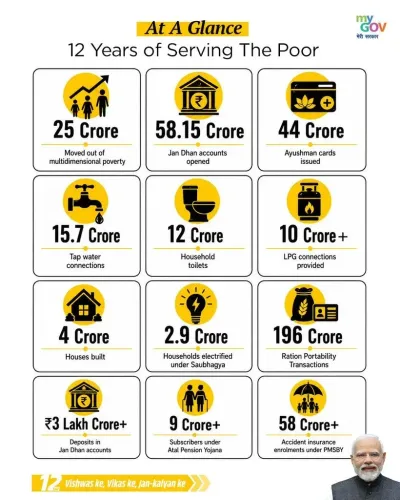
The post is part of the BJP's #12YearsOfGaribKalyan campaign marking 12 years of the party in power at the Centre.
Key policy measures cited in the broader context include Jan Dhan Yojana (2014), demonetisation (November 2016), and GST (July 2017).
The Direct Benefit Transfer framework, linked to Aadhaar, was designed to eliminate middlemen from welfare delivery and reduce subsidy leakages.
Thakur is a former Union Minister of Information and Broadcasting and Youth Affairs and Sports , and a senior BJP voice on governance issues.
Fresh Finance Ministry data on DBT savings and parliamentary movement on anti-corruption legislation remain key developments to watch.
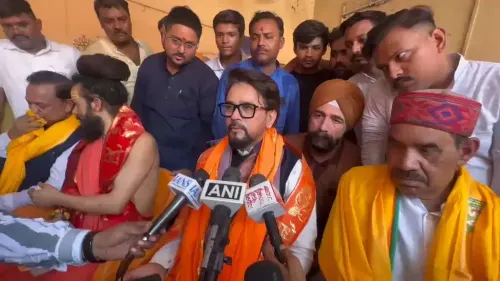
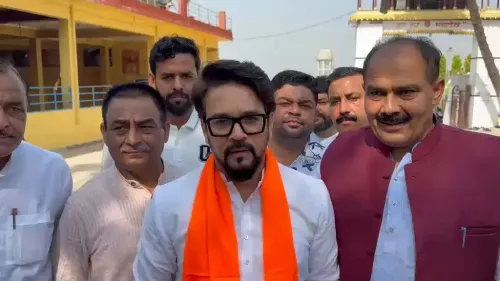
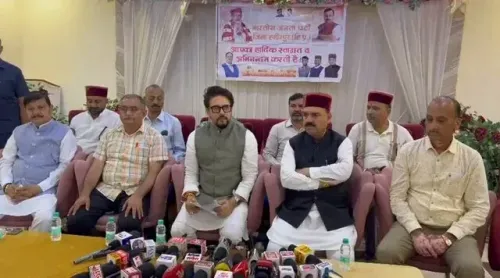
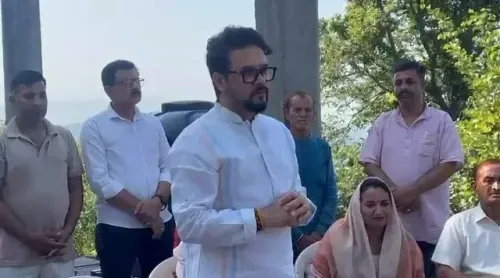
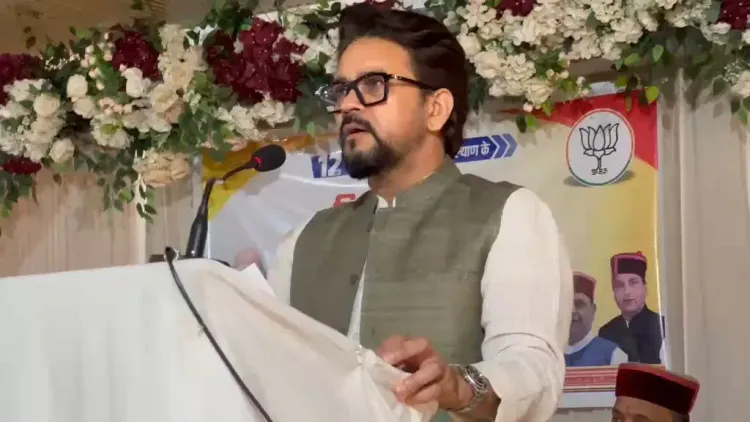
BJP MP Anurag Thakur, representing Hamirpur in Himachal Pradesh, on Monday, June 8, 2026, credited the Modi government's 12-year tenure with delivering a decisive crackdown on black-marketeering, financial irregularities, and corruption across India.
Context
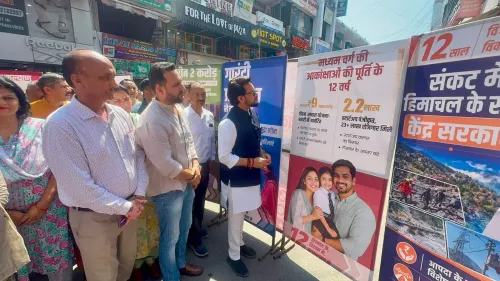
Posting from Hamirpur under the hashtag #12YearsOfGaribKalyan (12 Years of Welfare for the Poor), Thakur stated that the government had 'put a check on black-marketeering, manipulation, and corruption' during this period. The post is part of a coordinated BJP communication effort marking the party's 12th anniversary in power at the Centre, framing the governance record as one of pro-poor economic reform.
Thakur, a former Union Minister of Information and Broadcasting and Youth Affairs and Sports, is among the party's prominent voices on governance and economic policy. His constituency, Hamirpur, is one of the BJP's long-held strongholds in Himachal Pradesh.
Policy Backdrop
The Modi government, since taking office in May 2014, has pursued a series of measures aimed at formalising the economy and reducing opportunities for rent-seeking. The Jan Dhan Yojana, launched in August 2014, expanded banking access to previously unbanked households and enabled Aadhaar-linked Direct Benefit Transfer (DBT), which routes welfare payments directly to beneficiaries, cutting out intermediaries.
The demonetisation of Rs 500 and Rs 1,000 currency notes in November 2016 was explicitly aimed at disrupting black-money circulation. The rollout of the Goods and Services Tax (GST) in July 2017 consolidated a fragmented indirect-tax regime and introduced digital audit trails intended to reduce tax evasion. Faceless tax assessment processes introduced in subsequent years further reduced discretionary contact between taxpayers and officials.
Together, these measures form what the government has described as a systematic effort to eliminate middlemen from welfare delivery and reduce corruption in public procurement and taxation.
Stakeholders and Impact
The primary stated beneficiaries of these reforms are common citizens and welfare recipients — particularly those who previously lost a share of entitlements to leakages within delivery chains. The DBT framework has been cited by the government as having prevented large-scale diversion of subsidy funds, though independent assessments of the full savings figure over the 12-year period remain ongoing.
Critics have at various points questioned the pace of implementation, the disruption caused by demonetisation to informal-sector workers, and the completeness of anti-corruption outcomes. The government's position, reflected in Thakur's post, is that structural reforms have fundamentally altered the incentive landscape for corrupt actors.
What's Next
The BJP's #12YearsOfGaribKalyan campaign is expected to continue across social media and public events in the coming days, with party leaders amplifying governance milestones ahead of upcoming electoral cycles. Analysts will watch for fresh data releases from the Finance Ministry on DBT savings and leakage reduction, as well as any parliamentary movement on amendments to anti-corruption statutes, which would give legislative weight to the administrative gains the party is highlighting.
Point of View
GST, DBT — as a unified anti-corruption arc rather than discrete policy events. By anchoring the message in the #12YearsOfGaribKalyan hashtag, the party is building a cumulative governance narrative ahead of electoral cycles, targeting voters who identify corruption as a systemic grievance. The Hamirpur location tag reinforces a ground-level, constituency-connected delivery of a national message. Whether the claim translates into measurable voter sentiment will depend on how effectively the party can pair the rhetoric with verifiable outcome data in the weeks ahead.
NationPress
13 Sept 2026
Frequently Asked Questions
What is the #12YearsOfGaribKalyan campaign about?
#12YearsOfGaribKalyan is a BJP social media and public outreach campaign marking 12 years of the Modi government at the Centre, highlighting welfare and governance achievements including anti-corruption measures, Direct Benefit Transfer, and economic formalization.
What anti-corruption steps did the Modi government take in 12 years?
Key measures include the Jan Dhan Yojana for financial inclusion (2014), demonetisation of high-value currency notes (November 2016), the rollout of GST (July 2017), and Aadhaar-linked Direct Benefit Transfer to reduce leakages in welfare payments.
Who is Anurag Thakur and which constituency does he represent?
Anurag Thakur is a BJP Lok Sabha MP from Hamirpur in Himachal Pradesh and a former Union Minister of Information and Broadcasting and Youth Affairs and Sports.
What is Direct Benefit Transfer and how does it reduce corruption?
Direct Benefit Transfer (DBT) is a system that routes government welfare payments directly into beneficiaries' bank accounts via Aadhaar linkage, removing intermediaries and reducing the scope for diversion or manipulation of funds.
What is demonetisation and why was it introduced?
Demonetisation refers to the November 2016 decision by the Modi government to invalidate Rs 500 and Rs 1,000 currency notes, with the stated aim of disrupting black-money circulation and curbing corruption.